E-BUZZ ME Logo
ScienceTechnical Deep Dive

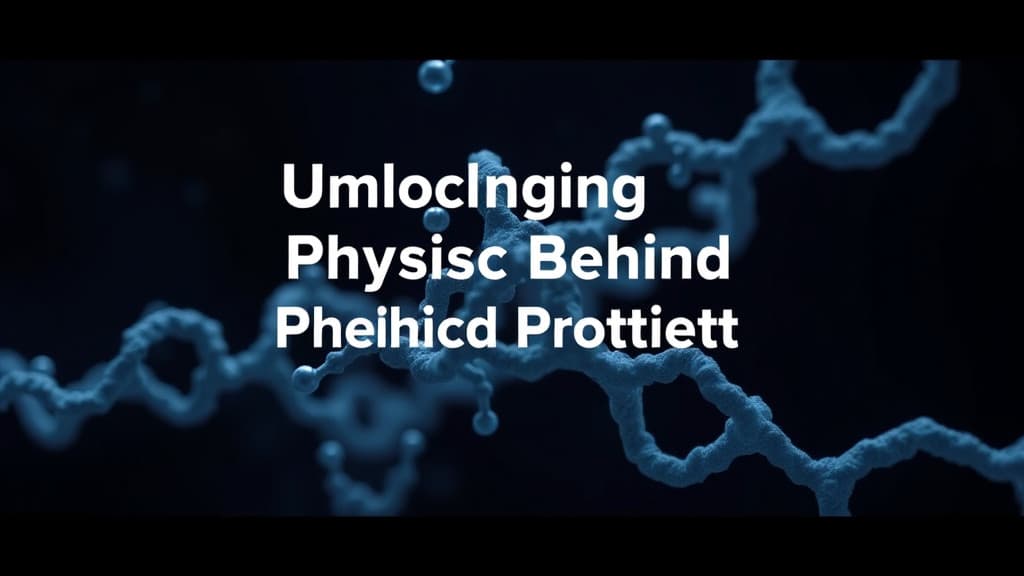
Unlocking the Physics Behind Protein Condensates

Published
Unlocking the Physics Behind Protein Condensates
1 min read159 words

The Gist

New simulations provide a deeper look into how disordered proteins cluster to form essential biomolecular condensates.

Recent research published in Physics World highlights a breakthrough in our understanding of cellular biology through the lens of computational physics. Scientists have utilized advanced simulations to explore the mechanisms by which disordered proteins transition from a scattered state into organized clusters known as biomolecular condensates.

The Role of Disordered Proteins

Unlike traditional proteins with rigid structures, intrinsically disordered proteins (IDPs) lack a fixed three-dimensional shape. This flexibility allows them to interact dynamically within the cell. The study reveals that these proteins use specific physical principles to undergo phase separation, similar to oil droplets forming in water, which allows the cell to compartmentalize biochemical reactions without the need for membrane-bound organelles.

Simulating Molecular Clustering

By modeling these interactions, researchers can now predict how changes in the protein sequence or environmental conditions affect condensate formation. This physics-based approach is crucial for understanding various biological functions and could provide insights into diseases where protein aggregation goes awry, such as neurodegenerative disorders.

Related Stories

Semantically matched articles, ranked by topic overlap and freshness.

The Impact of Ultra-Processed Foods on Long-Term Brain Health
Science60%

The Impact of Ultra-Processed Foods on Long-Term Brain Health

New research highlights a concerning link between ultra-processed diets and increased risks of depression, anxiety, and dementia.

Working Memory Rapidly Re-Prioritizes After Distractions, New Study Reveals
Science58%

Working Memory Rapidly Re-Prioritizes After Distractions, New Study Reveals

A new study highlights the brain's remarkable ability to swiftly update working memory priorities to maintain focus on immediate tasks despite frequent interruptions.

Early Childhood Infections Linked to the Sibling Earnings Gap
Science58%

Early Childhood Infections Linked to the Sibling Earnings Gap

New research suggests that the lower average earnings of younger siblings may be driven by exposure to respiratory infections brought home by their older brothers and sisters.

Astronomers Detect Massive Wandering Black Hole via Stellar Destruction
Science58%

Astronomers Detect Massive Wandering Black Hole via Stellar Destruction

A supermassive black hole has been identified straying far from its galactic center after it was caught consuming a nearby star.

Genetic Factors Determine Cancer Outcomes Following DNA Damage
Science57%

Genetic Factors Determine Cancer Outcomes Following DNA Damage

New research suggests that inherited genetics play a critical role in whether DNA damage leads to cancer development.

Mapping the Mind: Two Neural Pathways Explain Habit Formation
Science56%

Mapping the Mind: Two Neural Pathways Explain Habit Formation

New research identifies the specific brain mechanisms that transition deliberate actions into automatic routines, explaining why some habits feel harder to break than others.

Innovative Treadmill Therapy Shows Promise for PTSD Recovery
Science56%

Innovative Treadmill Therapy Shows Promise for PTSD Recovery

Researchers at the University of Alberta have found that combining physical motion with memory confrontation significantly improves PTSD treatment outcomes.

NASA Astronaut Chris Williams and Crew Return to Earth After Eight-Month Mission
Science56%

NASA Astronaut Chris Williams and Crew Return to Earth After Eight-Month Mission

NASA astronaut Chris Williams and two Roscosmos cosmonauts safely landed in Kazakhstan on Sunday, concluding a 240-day science mission aboard the International Space Station.