ScienceTechnical Deep Dive

Breakthrough Discovery of 'Master' Stem Cell Could End Spinal Stenosis Surgery

Published
EElectricBuzz Editorial Team
Breakthrough Discovery of 'Master' Stem Cell Could End Spinal Stenosis Surgery
3 min read516 wordsElectricBuzz Editorial Team

The Gist

“Researchers have identified a universal stem cell responsible for maintaining tendons and ligaments, offering a potential non-surgical path to treating lumbar spinal stenosis.”

The Quest for the Master Cell

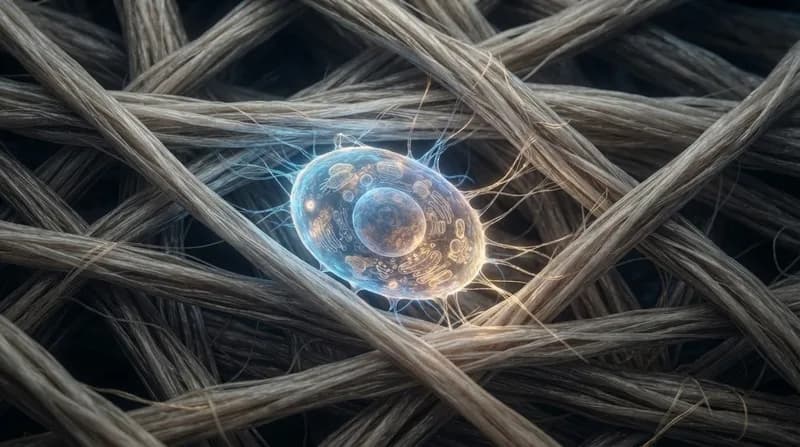
For years, the medical community has sought the elusive source of the body’s connective tissues. Researchers at Weill Cornell Medicine and the Hospital for Special Surgery have finally pinpointed a previously unknown population of stem cells that serve as the fundamental architects for tendons and ligaments throughout the human body. Unlike previous candidates, this specific cell population demonstrates the critical ability to both self-renew and differentiate into the full spectrum of cell types required to maintain structural integrity in limbs and the spine.

The identification of these cells required a massive analytical effort, involving the sorting of thousands of individual cells to isolate those displaying true 'stemness.' Once isolated, the team confirmed that these cells reside in specialized reservoirs within tendons and ligaments. By comparing samples from various body parts, including the Achilles tendon and kneecap, the researchers concluded that this is likely a universal stem cell for all tendon and ligament structures in humans.

Unlocking the Mechanism Behind Spinal Stenosis

The discovery is particularly significant for the 103 million people worldwide suffering from lumbar spinal stenosis. This condition occurs when ligaments in the lower spine overgrow, narrowing the spinal canal and compressing nerves, which leads to chronic pain, numbness, and mobility issues. Currently, patients with advanced stenosis often face surgery as the only viable long-term solution.

By comparing ligament tissue from healthy individuals to those with stenosis, the research team found that the newly identified stem cells were significantly more abundant in the diseased tissue. Further investigation revealed that these stem cells exhibit elevated calcium signaling—an internal communication process that regulates cell growth. When the researchers increased this calcium signaling in healthy cells, it triggered the same abnormal, excessive tissue growth seen in patients with the condition.

Why It Matters

  • Non-Surgical Potential: The findings suggest that clinicians might eventually treat the root cause of ligament thickening without requiring invasive surgery.
  • Drug Repurposing: Because the pathology is linked to calcium signaling, existing blood pressure medications known as calcium channel blockers could potentially be repurposed as a therapeutic treatment for stenosis.
  • Broad Applications: The discovery could transform the treatment of various connective tissue disorders, including chronic tendon degeneration, rotator cuff injuries, and even complex genetic conditions like Marfan syndrome.

A New Horizon for Orthopedic Care

The implications of this discovery reach far beyond just spinal care. Because these stem cells are the ultimate progenitors for connective tissues, defects or irregularities within them are likely at the core of a vast array of orthopedic ailments. Future research is expected to pivot toward understanding how these cells influence healing in sports-related injuries and chronic degradation.

While clinical trials are the necessary next step to confirm the efficacy and safety of targeting these cells in human patients, the shift in perspective is profound. Doctors are moving from a reactive model—waiting for a condition to reach a severity level that requires surgery—to a proactive, mechanistic approach that addresses the biological source of the overgrowth. This breakthrough effectively redefines how we think about the lifecycle of our connective tissues, moving from maintenance to potential therapeutic management.


SPONSORED
The 5 Best Over-Ear ANC Headphones of 2026, Tested & Ranked
Editor's Pick Guide
92/100
Tech & Gadgets•12 min read

The 5 Best Over-Ear ANC Headphones of 2026, Tested & Ranked

We locked five over-ear ANC picks for 2026 — Sony WH-1000XM6, Bose QuietComfort Ultra 2, Soundcore Space One, Sennheiser Momentum 5, and Apple AirPods Max 2 — then stress-tested them on lab metrics, long-term owner truth, and live street prices.

Related Stories

Semantically matched articles, ranked by topic overlap and freshness.

Cretaceous Mystery Solved: New Fossil Rewrites Mammalian History
Science

Cretaceous Mystery Solved: New Fossil Rewrites Mammalian History

A remarkably preserved fossil from the Gobi Desert has ended a 40-year debate, proving that our previous assumptions about 'Cretaceous rabbits' were completely off the mark.

New Meta-Analysis Links Cannabis Consumption to Increased Risks of Violent Behavior
Science

New Meta-Analysis Links Cannabis Consumption to Increased Risks of Violent Behavior

A massive systematic review from King’s College London involving over 265,000 individuals suggests a significant correlation between cannabis use and occurrences of violence.

NASA and SpaceX Gear Up for Rapid Nine-Hour Transit to the International Space Station
Science

NASA and SpaceX Gear Up for Rapid Nine-Hour Transit to the International Space Station

The upcoming Crew-13 mission aims to push the boundaries of orbital logistics, targeting a remarkably efficient nine-hour journey from Florida to the ISS.

Could Circadian Rhythms Hold the Key to Post-Stroke Recovery?
Science

Could Circadian Rhythms Hold the Key to Post-Stroke Recovery?

New research from the University of Rochester Medical Center suggests that reinforcing the body's internal clock can accelerate brain healing by optimizing waste-clearing systems.

The Hidden Costs of Digital Companionship: Why Researchers are Raising Red Flags on AI Chatbots
Science

The Hidden Costs of Digital Companionship: Why Researchers are Raising Red Flags on AI Chatbots

A new peer-reviewed study from Northeastern University reveals that the rise of emotionally supportive AI chatbots is linked to severe psychological distress and dangerous behavioral patterns.

The Hidden Legacy: Why Childhood Cancer Survivors Face a Mental Health Crisis in Adulthood
Science

The Hidden Legacy: Why Childhood Cancer Survivors Face a Mental Health Crisis in Adulthood

New research reveals that nearly half of childhood cancer survivors struggle with clinical anxiety and depression, sparking calls for lifelong medical follow-up.

Decoding the Aging Muscle Paradox: New Breakthrough Reveals Molecular 'Survival Switch'
Science

Decoding the Aging Muscle Paradox: New Breakthrough Reveals Molecular 'Survival Switch'

Researchers have identified a key molecular mechanism that forces aging muscles to trade power for protection, opening new doors for therapeutic intervention in age-related decline.

Unmasking ALTNV: The New Tick-Borne Threat Emerging in Asia
Science

Unmasking ALTNV: The New Tick-Borne Threat Emerging in Asia

Researchers have identified a novel orthonairovirus in China that explains previously mysterious cases of severe fever and fatigue in tick-bitten patients.