Understanding the Muscle Paradox
As we age, our physical performance inevitably wanes. Muscle fibers, categorized broadly into fast-twitch—geared for explosive power—and slow-twitch—optimized for endurance—undergo a peculiar transformation. Typically, aging muscle becomes weaker and mitochondrial function degrades. Surprisingly, these same muscles often shift their composition toward slow-twitch fibers, which are heavily reliant on those very mitochondria that are struggling to function. This biological contradiction has long puzzled researchers: why would the body force a transition toward a failing energy system?
A recent study published in Nature Aging by researchers at the University of Copenhagen suggests this is not a sign of failure, but a calculated trade-off. The study pinpoints a specific molecular "switch" that governs how muscles adapt to metabolic stress, suggesting that our tissues are attempting to protect themselves from damage at the cost of peak physical performance.
The Role of Cardiolipin
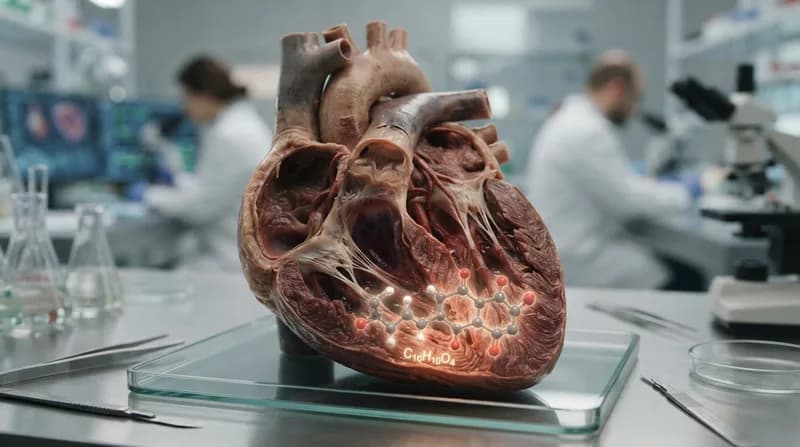
At the heart of this research is cardiolipin, a specialized fat molecule located exclusively in the inner mitochondrial membrane. Cardiolipin is essential for maintaining the structural integrity of mitochondria, enabling them to produce energy efficiently. The team discovered that as humans and mice age, cardiolipin levels decline, leading to distorted mitochondrial architecture and impaired function.
To confirm the causal link, the researchers experimentally depleted cardiolipin in young, healthy mice. The result was a mirror image of the aging process: the mice exhibited a shift in muscle fiber types and a decline in overall muscle health. Conversely, when the researchers partially restored cardiolipin levels, they witnessed a significant reversal of muscle wasting and an improvement in survival outcomes, proving that this lipid acts as a master regulator of muscle health.
The Protective Trade-Off
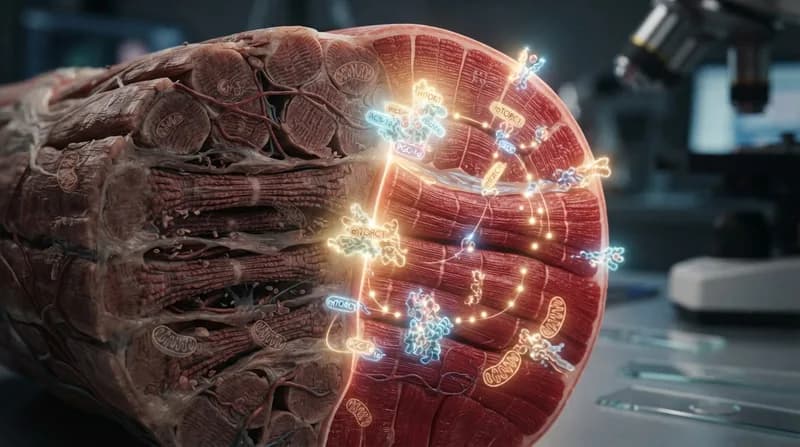
The study reveals that the shift toward slow-twitch fibers is triggered by a nuclear receptor protein known as ERRγ. As mitochondrial function falters and cardiolipin levels drop, these organelles produce reactive oxygen species (ROS), which can damage cells. However, in a surprising twist, the cell interprets these ROS signals as a warning to remodel its infrastructure.
When ERRγ is activated, it forces the muscle to adopt a slow-twitch configuration. This is not to enhance speed or power, but to protect the cell from oxidative damage. These remodeled fibers shift their metabolism to shunt glucose into the production of internal antioxidants rather than ATP. It is a strategic pivot: the muscle sacrifices its ability to generate high-intensity force to stave off cellular destruction. The researchers found that interfering with this process by prematurely mopping up ROS actually worsened muscle health, confirming that the fiber switch is a necessary, albeit debilitating, defense mechanism.
Future Implications for Healthy Aging
While the study was primarily conducted in murine models, the implications for human health are significant. The researchers suggest that because ERRγ is a nuclear receptor—a class of proteins frequently targeted by existing FDA-approved drugs—there is a clear path toward developing treatments that could preserve muscle function in the elderly.
- Therapeutic Potential: Existing FDA-approved drugs for conditions like Barth syndrome, such as elamipretide, could potentially stabilize cardiolipin.
- Molecular Targeting: Activators of the ERRγ protein are already in preclinical development, offering a targeted approach to managing muscle degradation.
- Healthy Aging: The ability to restore cardiolipin levels could mitigate the shift toward dysfunctional muscle fiber types, potentially maintaining mobility and strength during the aging process.
The research concludes that the path forward lies in understanding whether we can safely tune this "survival switch." By increasing cardiolipin or modulating ERRγ activity, clinicians may eventually be able to help aging muscles bypass this protective trade-off, allowing them to remain both functional and healthy for longer.