Unlocking the Secrets of the E-Ring
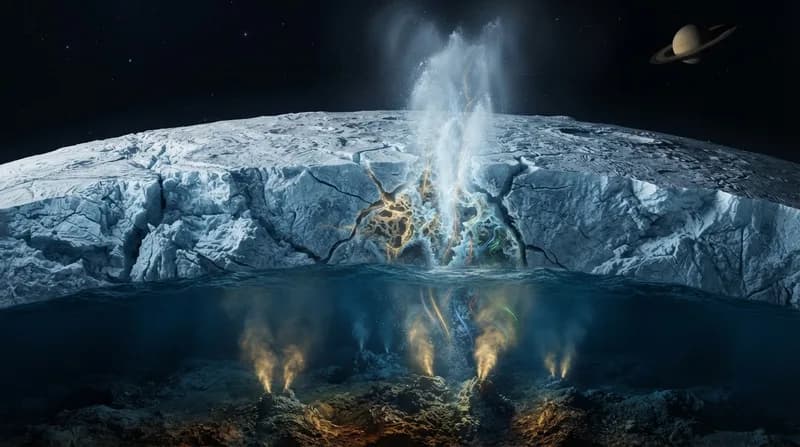
For years, the icy plumes of Saturn’s moon Enceladus have been the focus of intense astrobiological study. As one of the most promising candidates for life in our solar system, this moon possesses a hidden, global ocean that vents water vapor and ice particles directly into space. When NASA’s Cassini spacecraft traversed the moon's E-ring between 2004 and 2017, it captured thousands of ice grains, revealing a chemical diversity that baffled researchers. Why would particles from the same source ocean exhibit such wildly different compositions? A new study published in Science Advances offers a breakthrough answer: Enceladus is performing its own complex sample preparation.
Led by researchers from the Earth-Life Science Institute (ELSI) at the Institute of Science Tokyo, the team discovered that the journey from the subsurface ocean to the vacuum of space is not a simple, rapid spray. Instead, the process involves a series of physical mechanisms—specifically slow freezing and fragmentation—that naturally separate and concentrate chemical species within the ice grains. This discovery changes how we interpret past data and how we will design future missions to explore this enigmatic world.
The Laboratory of the Vents
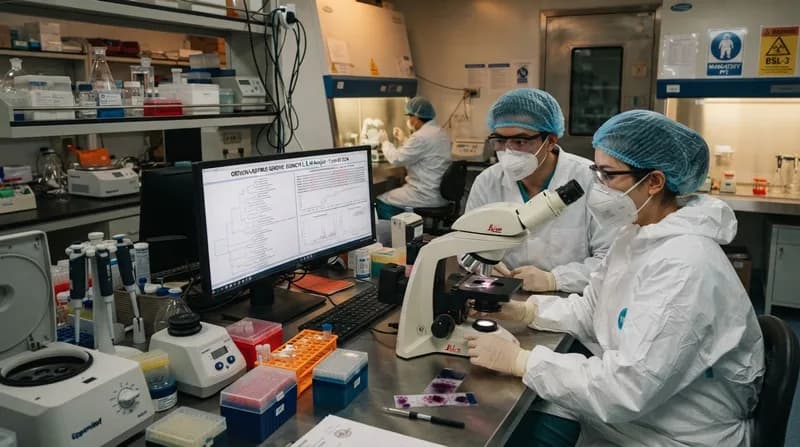
To understand why the ice grains varied so significantly—with some being rich in carbonates while others favored sodium chloride—the team simulated Enceladus-like conditions in the laboratory. By creating droplets containing the suspected composition of the moon’s ocean and freezing them at varying speeds, they observed a critical phenomenon. When cooling occurs slowly, the salts within the droplets do not freeze into a uniform mixture. Instead, they segregate into distinct regions.
The study proposes that the vents in Enceladus' icy crust act as a natural conduit for this process. As ocean spray rises through the fractures, it travels slowly, allowing the water droplets to cool at a rate that promotes chemical segregation. Near the surface, these frozen, chemically segregated droplets collide with the narrow walls of the icy vents. These impacts shatter the larger particles into smaller fragments. Because each fragment originates from a different section of the original droplet, the resulting ice grains are highly specialized, containing elevated concentrations of specific compounds that would otherwise be too dilute to detect easily.
Why It Matters
- Natural Sample Preparation: Nature is doing the heavy lifting by separating and concentrating compounds, potentially amplifying signals that were previously thought to be too faint for detection.
- New Interpretive Framework: The variability observed by Cassini is now understood as a physical consequence of the journey through the ice, rather than a reflection of deep-ocean heterogeneity.
- Refining Life Searches: Understanding this concentration process helps future spacecraft prioritize which types of ice grains to analyze, as certain particles may naturally trap higher concentrations of organic compounds.
- Prebiotic Chemistry: The process of trapping liquid brine in pockets within ice crystals creates concentrated environments, which are theoretically ideal for the complex molecular interactions required for the emergence of life.
Implications for Future Space Missions
This research provides a powerful roadmap for future exploration. If Enceladus is indeed naturally concentrating organic building blocks, future probes will not need to drill through kilometers of ice to access high-quality samples. By intercepting these plumes and analyzing the diverse chemical signatures of individual grains, instruments can potentially detect signs of biological processes without ever touching the moon's surface. Furthermore, the realization that this freezing and recycling process occurs repeatedly means that the moon is constantly refreshing its plume material, keeping the contents of its hidden ocean accessible and potentially concentrated. As we look toward future missions to the Saturnian system, this insight into the "mechanical" filtering of the moon's subsurface chemistry represents a significant leap forward in our capability to identify signs of habitability.