E-BUZZ ME Logo
ScienceTechnical Deep Dive

The Erosion of Argentine Science: Idle Tools and Empty Desks

Published
The Erosion of Argentine Science: Idle Tools and Empty Desks
1 min read156 words

The Gist

A poignant report from physicist Faramarz S. Gard highlights the decline of Argentina's scientific infrastructure amid ongoing economic and institutional challenges.

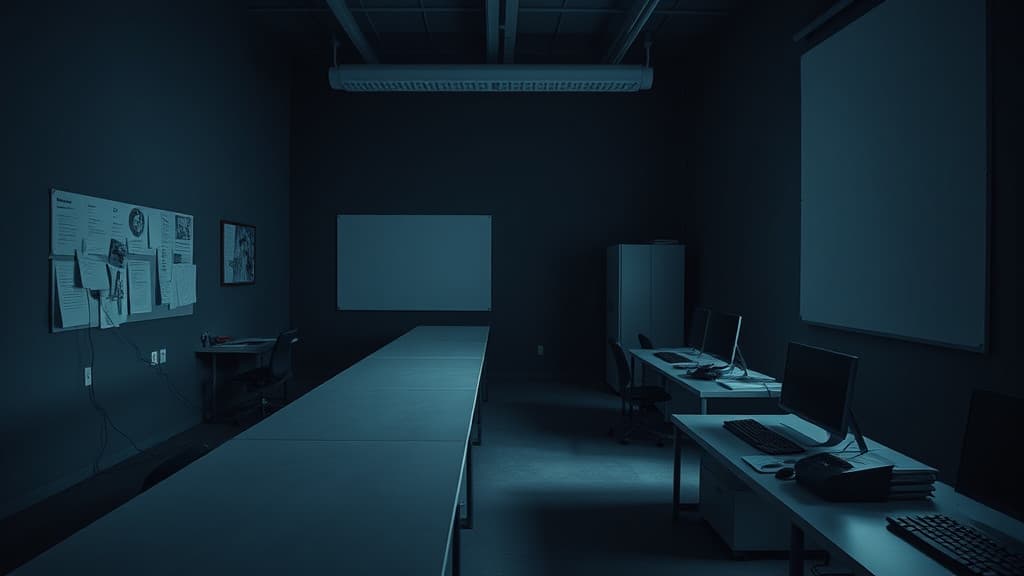
In a recent dispatch from Argentina, physicist Faramarz S. Gard describes a troubling scene within the nation's research institutions: empty desks and idle electron microscopes. These sights serve as potent symbols for what Gard characterizes as the rapid erosion of the country’s scientific landscape.

A System in Decline

The report, published in Physics World, laments the deteriorating state of research in Argentina. The lack of activity in once-vibrant laboratories suggests a systemic failure to maintain both human capital and high-tech equipment. When sophisticated tools like electron microscopes sit unused, it signals not only a lack of funding for maintenance and operation but also a departure of the skilled researchers who operate them.

Broader Implications

This decline in scientific productivity has long-term consequences for Argentina's global standing in the STEM fields. The 'empty desk' phenomenon reflects a growing brain drain, as scientists seek more stable environments abroad, leaving behind an infrastructure that is increasingly difficult to revive.

Related Stories

Semantically matched articles, ranked by topic overlap and freshness.

The Future of Medical Imaging: Insights from Simon R. Cherry
Science69%

The Future of Medical Imaging: Insights from Simon R. Cherry

Former PMB editor-in-chief Simon R. Cherry discusses the evolving landscape of molecular imaging and non-invasive technologies in medical physics.

Quarks and Qubits: The Quantum Computing Revolution in Particle Physics
Science67%

Quarks and Qubits: The Quantum Computing Revolution in Particle Physics

New research explores how the intersection of quantum information and general relativity could redefine our understanding of subatomic particles.

Unlocking New Conductivity Pathways in Mott Insulators
Science65%

Unlocking New Conductivity Pathways in Mott Insulators

Recent research into laser-driven feedback effects in Mott insulators reveals groundbreaking methods for engineering conductivity in strongly interacting systems.

Predictable Antarctic Ice Loss Offers Decades for Sea Level Preparation
Science62%

Predictable Antarctic Ice Loss Offers Decades for Sea Level Preparation

New research suggests that Antarctic ice retreat may remain predictable through 2050, giving governments a critical window to implement coastal defenses.

Anish Kapoor’s Hayward Gallery Exhibition Explores the Science of Perception
Science61%

Anish Kapoor’s Hayward Gallery Exhibition Explores the Science of Perception

A new exhibition by Anish Kapoor at the Hayward Gallery uses light-absorbing Vantablack and visceral forms to challenge our understanding of reality and science.

New Study Challenges the Existence of Dark Energy
Science61%

New Study Challenges the Existence of Dark Energy

A controversial research paper suggests that the universe’s expansion may not be accelerating, potentially eliminating the need for dark energy as a scientific explanation.

Fields Medal 2026: Mathematicians Honored for Unifying Physics Laws
Science60%

Fields Medal 2026: Mathematicians Honored for Unifying Physics Laws

The prestigious Fields Medal has been awarded to mathematicians whose groundbreaking work bridges the gap between geometry and the fundamental laws of physics.

Nvidia Extends AI Reach to the Lunar Surface
Artificial Intelligence60%

Nvidia Extends AI Reach to the Lunar Surface

Nvidia's hardware is heading to the moon as the tech giant seeks to provide computational power in the furthest reaches of the universe.