A New Frontier in mRNA Technology
The global success of mRNA vaccines during the COVID-19 pandemic provided a blueprint for how quickly we can respond to emerging health threats. However, scientists have long looked beyond standard mRNA toward 'self-amplifying' mRNA (saRNA) as the next major evolution in medicine. Unlike traditional mRNA that delivers a static instruction to the body, saRNA is designed to replicate within the host cell. This replication process theoretically allows for longer-lasting immunity at significantly lower doses, which could make mass vaccination efforts faster and more economically efficient.
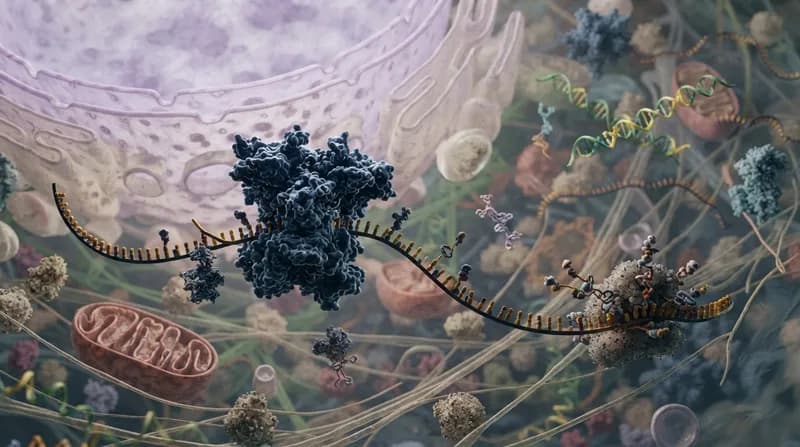
Despite the immense potential, the development of saRNA vaccines has been hindered by a frustrating biological catch-22. When saRNA begins to replicate, it creates double-stranded RNA (dsRNA). Our cells, evolved to identify and destroy viral intruders, immediately recognize this dsRNA as a threat, triggering an antiviral immune response. This process essentially shuts down the vaccine's machinery before it can finish its job, limiting the amount of protein produced and rendering the treatment less effective than it could be.
The Breakthrough: Taming Antiviral Defenses
A team of researchers at Queen Mary University of London, led by Dr. Pierre Maillard and Dr. Raul Yusef Sanchez David, has identified a critical mechanism to overcome this biological bottleneck. By investigating the Nodamura virus—which has a unique way of persisting in host cells—the researchers identified a specific protein known as NoV B2. This protein acts as an inhibitor to the cell's RNA interference, effectively acting as a 'shield' that prevents the cell from prematurely dismantling the beneficial saRNA.
By incorporating the NoV B2 protein, the team was able to allow the saRNA to replicate freely within both stem cells and regular cells without triggering the cell's natural 'panic' button. Remarkably, this suppression of the local antiviral response did not impede the saRNA's ability to stimulate the broader immune system, which remains the primary goal of any vaccine. The study, published in Nature Communications, offers a viable pathway to finally achieving the full potential of self-replicating genetic instructions in a clinical setting.
Why It Matters
- Enhanced Potency: By allowing cells to produce more of the target protein, vaccines can be made more effective while using smaller quantities of base materials.
- Broader Medical Applications: Beyond infectious diseases, this tech could revolutionize cancer immunotherapy and gene replacement therapy by allowing the body to produce its own therapeutics.
- Improved Accessibility: Higher efficacy at lower doses could significantly reduce the cost of manufacturing and distribution for global vaccination campaigns.
- Shift in Treatment Models: This research suggests a future where protein replacement therapy is no longer a cycle of repeated medical infusions, but rather a treatment where the patient's own body produces the medicine required to maintain health.
Implications for Future Research
The successful integration of the NoV B2 protein into saRNA platforms could fundamentally change how we approach complex chronic conditions. For cancer patients, this could mean more potent vaccines that prime the body to recognize tumor cells more aggressively. In the realm of gene therapy, it could increase the safety and efficacy of corrections, potentially offering a more affordable route for treating genetic disorders that currently require invasive and expensive interventions.
Currently, the team at Queen Mary is collaborating with the university's innovation branch to transition this discovery from the laboratory to potential clinical applications. As the world navigates the shifting landscape of medical research funding, these findings highlight the necessity of continued investment in foundational mRNA research, proving that there is still vast room for refinement in the core technologies that changed modern medicine forever.