Closing the Feline Genetic Gap
For years, the genetic drivers of feline cancer remained an elusive "black box." While domestic cats have long been cherished companions, scientific understanding of their cellular pathologies has lagged significantly behind our knowledge of human and canine cancers. That silence has officially been broken. A massive international study published in the journal Science has mapped the oncogenome of the domestic cat on an unprecedented scale, providing researchers with a comprehensive genetic resource that promises to revolutionize both veterinary care and human cancer research.
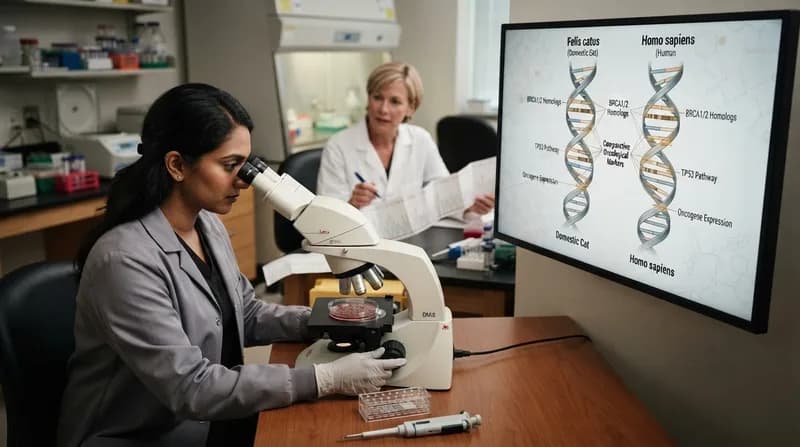
Led by a consortium of institutions including the University of Guelph, the Wellcome Sanger Institute, and the University of Bern, the research team analyzed tumor samples from nearly 500 cats. By sequencing DNA from tissues previously gathered for diagnostic purposes, the scientists were able to identify the key mutations that drive tumor growth in felines, revealing a landscape of genetic changes that share startling commonalities with human oncology.
The Shared Language of Cancer Driver Genes
The study’s most significant discovery is the overlap between feline and human "driver genes." These are the specific genetic sequences that, when mutated, force cells to multiply uncontrollably. Among the most notable findings is the mutation of the FBXW7 gene, which was present in more than 50 percent of the feline mammary tumors examined. In humans, this same gene is frequently implicated in breast cancer and is often associated with a poorer prognosis. This parallel suggests that the molecular mechanisms driving aggressive cancers are deeply conserved across species.
Beyond mammary tumors, the research team uncovered consistent genetic signatures across cancers affecting the bones, lungs, skin, gastrointestinal tract, and central nervous system. By identifying these mutations, the researchers have laid the groundwork for "precision oncology" in cats. This approach moves away from a one-size-fits-all treatment model, allowing veterinarians to tailor therapies based on the specific molecular profile of a cat’s tumor, much like the sophisticated, personalized care paths increasingly available to human patients.
The One Medicine Approach
This breakthrough is a cornerstone for the "One Medicine" philosophy, which posits that human and veterinary health are inextricably linked. Because domestic cats share their living environments with humans—breathing the same air, encountering the same household chemicals, and navigating similar lifestyles—they serve as an ideal model for understanding how environmental factors intersect with genetic predispositions to trigger cancer.
- Enhanced Veterinary Care: Providing a roadmap for diagnostic and therapeutic interventions that were previously unavailable to cat owners.
- Environmental Insights: Offering clues on how shared pollutants and household triggers influence the development of cancer in both species.
- Drug Efficacy Studies: Establishing that certain chemotherapy drugs perform differently based on specific gene mutations (such as FBXW7), paving the way for more effective, targeted drug trials.
- Open Data Sharing: Creating a freely accessible genetic database for the global scientific community to accelerate future oncology discoveries.
Future Outlook and Implications
The potential for a two-way flow of medical data is immense. Treatments that prove successful in naturally occurring feline cancers could expedite human clinical trials, while advancements in human genomic medicine can be adapted to improve feline quality of life. By treating the cat oncogenome as a mirror to our own, researchers are moving closer to a future where cancer diagnoses are not just managed, but are understood and treated with the surgical precision of individualized molecular medicine.