The Quest for Functional Bionic Vision
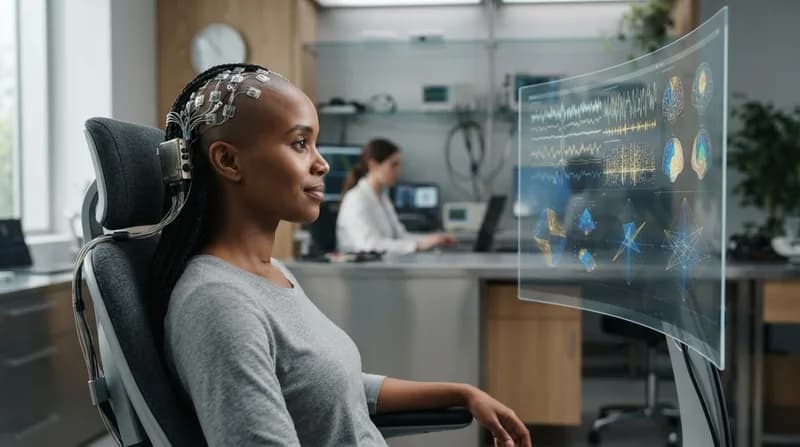
For years, the development of visual cortical prostheses—often referred to as bionic eyes—has faced a fundamental hurdle: the brain is not a static monitor. While engineers have treated electrodes like pixels on a screen, assuming that stimulating a specific point would yield a predictable 'phosphene' or flash of light, human neurobiology is significantly more complex. A landmark study published in the journal Neuron, led by UC Santa Barbara in collaboration with ETH Zurich and Miguel Hernández University, marks a turning point by applying AI to decode this chaotic neural dialogue.
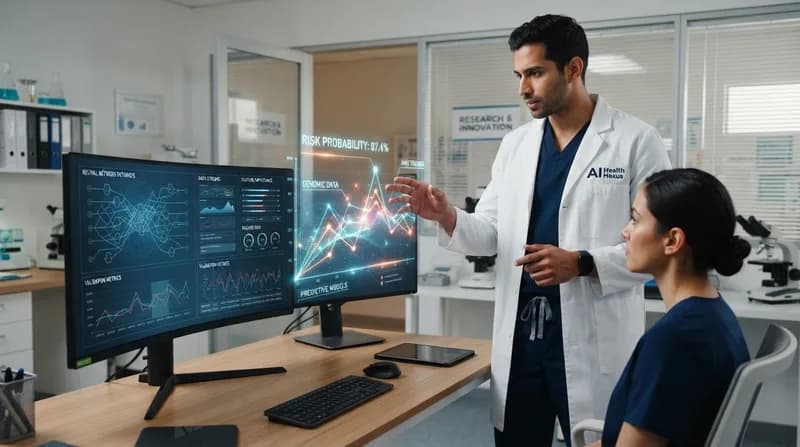
By shifting from rigid electrical protocols to an adaptive, AI-driven model, the research team is moving away from the 'one-size-fits-all' approach. This new methodology focuses on the brain's internal state, using deep learning to predict how an individual's visual cortex will respond to stimulation in real-time, effectively creating a feedback loop that bridges the gap between hardware and perception.
The Role of Deep Learning in Neural Decoding
The core of this breakthrough lies in the use of a deep neural network that acts as a translator between the device and the visual cortex. During a 2024 trial at Hospital IMED Elche in Spain, researchers worked with a 27-year-old participant who had lost his sight due to a traumatic brain injury. The subject was equipped with an implant containing 96 electrodes, capable of both stimulating the cortex and recording electrical activity back from it.
Instead of relying on predetermined electrical 'recipes,' the researchers trained the AI to monitor the brain's resting state before and during stimulation. The system learned that neural responses fluctuated based on internal activity, meaning the same electrical input could produce different visual outcomes depending on the brain's 'current mood.' By feeding these variables into the model, the team identified signal combinations that triggered consistent, reliable visual sensations, requiring less power and achieving higher precision than traditional methods.
Why it Matters: Beyond Static Stimulation
- Personalization: Unlike past technologies that relied on fixed settings, this AI system learns the unique neural signature of the individual user.
- Bypassing Damaged Pathways: By stimulating the visual cortex directly, this technology offers hope to those with damaged optic nerves or retinal trauma—conditions previously considered untreatable.
- Predictive Accuracy: The AI model successfully predicted perceived visual sensations by analyzing direct neural responses, which proved to be a more accurate metric than simply measuring the electrical settings of the electrodes.
- Adaptive Response: The technology accounts for temporal changes in brain activity, meaning the implant can adapt to the user’s neural state over hours, days, or weeks.
The Path Toward Restorative Sight
The potential implications of this research extend far beyond the generation of simple light flashes. As the team notes, moving from a rigid system to a fluid, adaptive one is essential for any prosthetic intended for long-term daily use. The ultimate goal is to move from creating simple phosphenes toward generating coherent visual structures that could allow individuals with blindness to navigate their environments with newfound independence.
While this remains a proof-of-concept study, the ability to successfully use AI to 'read' the brain's reaction to bionic stimulation is a significant leap forward. It suggests that the future of visual restoration lies in high-bandwidth, bi-directional communication between man and machine, where the hardware learns the language of the brain rather than forcing the brain to learn the limitations of the hardware.