Revolutionizing Soil Nutrient Analysis
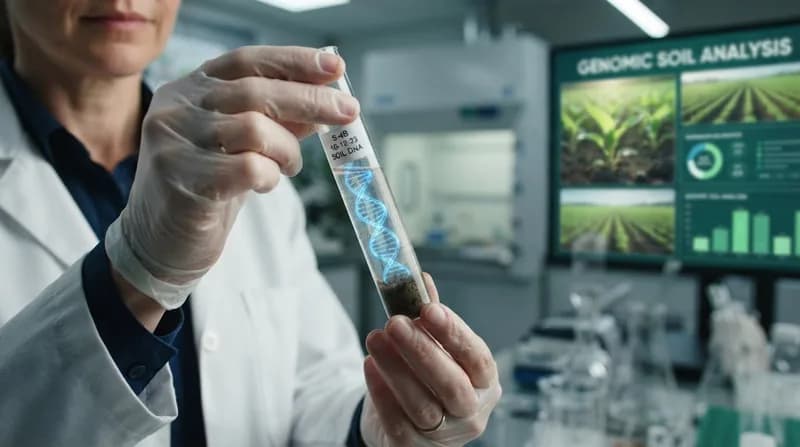
Phosphorus is an essential building block for global agriculture, yet it remains a finite and precious resource. As farmers and environmental scientists struggle to balance high crop yields with the need to minimize fertilizer runoff and environmental degradation, understanding how phosphorus behaves within the soil ecosystem has become a top priority. A new research breakthrough, published in the Journal of Agricultural and Marine Sciences, introduces a streamlined analytical method for measuring DNA-bound phosphorus (DNA-P), providing a more accessible way to observe the nutrient cycle in action.
This innovative approach was developed by an international coalition including experts from Sultan Qaboos University, the James Hutton Institute, and various environmental authorities. By refining existing protocols, the team has created a system that is not only less expensive to implement but also significantly more efficient. This advancement allows for larger-scale testing across diverse soil types, helping researchers decode the complex relationships between microbial life and nutrient availability.
The Science of DNA-Bound Phosphorus
DNA-P represents a critical segment of organic phosphorus that is intrinsically linked to living microorganisms. Because soil microbes are in a constant state of flux—taking up, transforming, and releasing nutrients—tracking DNA-P offers a real-time look at the 'biologically active' portion of the soil phosphorus cycle. Unlike stable, long-term reserves, DNA-P acts as a dynamic indicator of immediate biological productivity within the earth.
The research team successfully tested this updated procedure across 32 different soil varieties found throughout the United Kingdom. Their primary challenge was maintaining precision while simplifying the process. By rigorously evaluating the protocol, the scientists discovered that certain complex enzyme treatments—previously thought to be essential—were actually redundant. By removing these steps, the team significantly lowered the barrier to entry for laboratories aiming to conduct these critical environmental assessments.
Key Technical Findings
- Ultrafiltration is Essential: While the researchers successfully streamlined many aspects of the test, they confirmed that ultrafiltration remains a vital step. This process effectively isolates DNA-bound phosphorus from other phosphorus-containing compounds, ensuring the accuracy of the final measurement.
- Strong Correlations: The data revealed that DNA-P levels share significant correlations with soil pH, organic matter content, and microbial biomass phosphorus, rather than just long-term stable mineral reserves.
- Scalability and Sustainability: The simplification of this test allows for more widespread adoption in agricultural research, ultimately paving the way for more precise fertilization strategies that reduce waste without sacrificing crop health.
Implications for Future Agriculture
The ability to track DNA-P with greater ease and lower cost holds profound implications for sustainable farming. Agriculture currently faces immense pressure to manage phosphorus resources more efficiently as reserves diminish worldwide. By better understanding how microbial communities influence the availability of this nutrient, scientists can help farmers optimize their nutrient management plans.
This methodology does not just aid in laboratory research; it provides a practical framework for land management. As we look toward the future, these insights could lead to tailored agricultural practices that work with soil biology rather than against it, ensuring that phosphorus is managed as a precious, living cycle rather than a simple chemical input.