Revolutionizing Cellular Aging Analysis
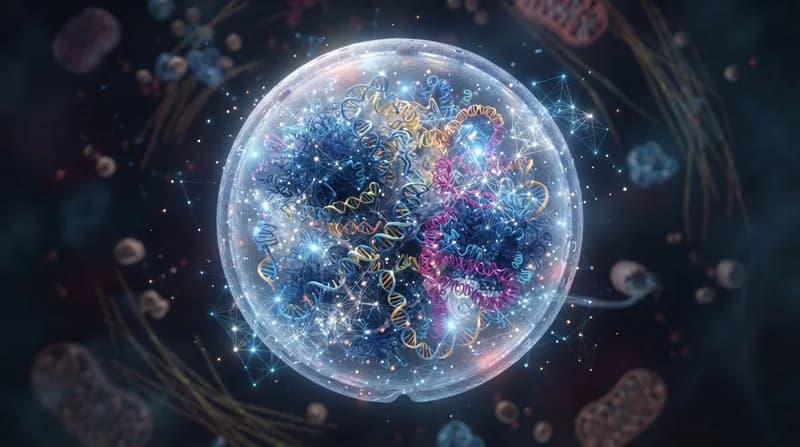
The quest to understand the mechanisms of biological aging has taken a significant leap forward with the introduction of ChromAgeNet. Developed through a collaborative effort led by the Bellvitge Biomedical Research Institute (IDIBELL) and the Barcelona Supercomputing Center (BSC-CNS), this artificial intelligence-based tool offers a novel way to visualize and quantify the aging process within hematopoietic stem cells—the essential units responsible for blood production. By focusing on the three-dimensional organization of chromatin within the nucleus, the research team has unlocked a method to observe physiological decline at a scale previously invisible to human eyes.
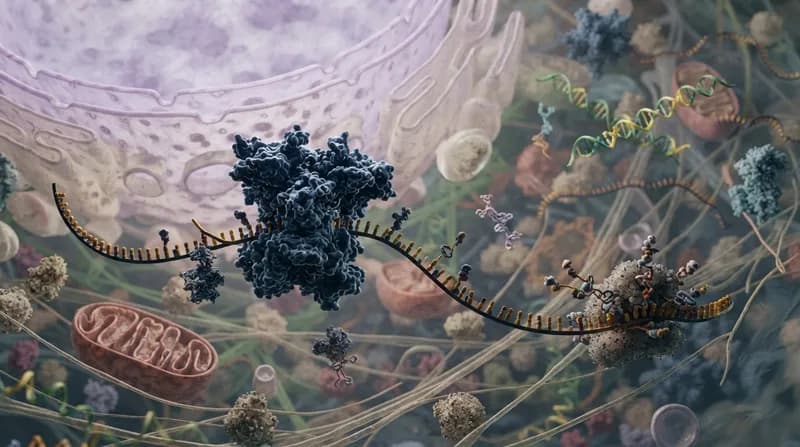
Chromatin, the complex structure of DNA and proteins that packages genetic material, acts as a primary regulator of gene activity. As cells age, the spatial arrangement of this material shifts, altering how genes are expressed and how the cell functions. ChromAgeNet utilizes a specialized convolutional neural network trained on microscopy images to detect these subtle, age-dependent structural shifts, effectively serving as a high-precision diagnostic for cellular health.
How ChromAgeNet Works
To train the model, researchers utilized high-resolution, three-dimensional imaging of mouse hematopoietic stem cell nuclei stained with DAPI, a widely accessible and cost-effective fluorescent stain. The resulting neural network outperformed traditional machine learning models, achieving a 77% accuracy rate in distinguishing between young and aged cells. This level of precision is remarkable given the heterogeneous and elusive nature of stem cell aging.
The study highlights specific architectural features that the AI relies on to make its predictions. Key markers include chromatin entropy, the density of heterochromatin at the nuclear periphery, and the presence of specific chromatin condensates. Identifying these variables allows scientists to look beyond simple classification, providing a window into the exact physical changes occurring within the DNA structure as an organism matures.
Why It Matters
- Scalability: By using standard DAPI staining and a low-parameter model, ChromAgeNet is optimized for high-throughput workflows, allowing for the rapid analysis of large-scale samples.
- Complementary Biomarkers: While traditional epigenetic clocks measure chemical DNA changes like methylation, ChromAgeNet provides structural data, offering a more comprehensive look at biological aging.
- Therapeutic Screening: The platform has already been tested as a screening tool to evaluate whether specific epigenetic drugs can shift the nuclear architecture of aged cells back toward a youthful configuration, potentially accelerating the search for rejuvenation therapies.
- Open Science: The researchers have made both the dataset and the AI model publicly available, encouraging the scientific community to further develop and refine tools for analyzing cellular aging.
Implications for Future Research
The ability to quantify the aging of blood stem cells through image analysis represents a massive advancement in regenerative medicine. By providing an objective, AI-driven metric for aging, ChromAgeNet allows researchers to screen vast numbers of pharmacological compounds for their potential to preserve or restore stem cell function. This efficiency is critical, as it bridges the gap between basic laboratory research and the development of clinical applications.
Furthermore, because the model is designed to be lightweight and compatible with standard laboratory imaging protocols, it stands to become a fixture in labs focused on aging and longevity. As the team at IDIBELL and BSC-CNS continues to refine these algorithms, the broader implication is clear: we are moving toward a future where the physical state of our cells can be monitored and influenced with unprecedented speed and precision, opening doors to therapies that were once considered the realm of speculation.