A New Chapter for Residential Charging
The UK Department for Transport has officially confirmed a landmark regulatory shift designed to dismantle one of the most persistent hurdles facing electric vehicle adoption in England. Following a comprehensive consultation, the government is moving to introduce permitted development rights for cross-pavement charging solutions. This change, which is set to move through Parliament in Autumn 2026, will eliminate the requirement for homeowners to seek individual planning permission when installing charging infrastructure that crosses public walkways.
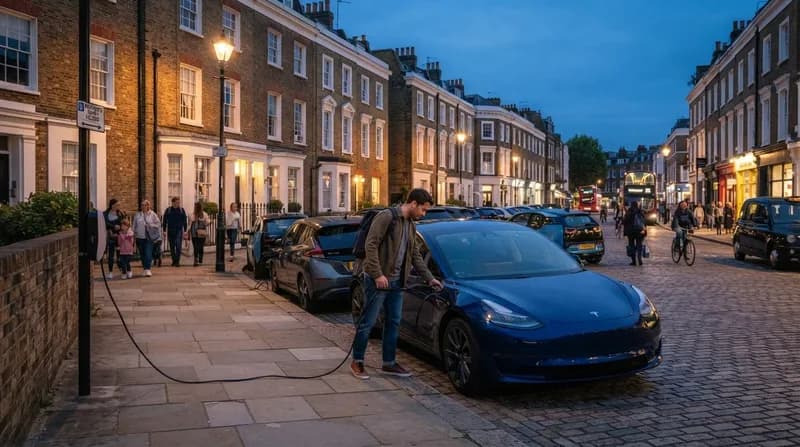
For years, the process of bringing power from a home to an on-street parking spot has been bogged down by complex administrative requirements, involving both local planning boards and highway authorities. By streamlining these rules, the government aims to empower the millions of households that lack dedicated driveways, allowing them to install safe, reliable charging setups at home. This shift is a key component of the broader national strategy to bolster EV charging accessibility, ensuring that the transition to sustainable transport does not leave behind those without private off-street parking.
Why It Matters
- Bridge the Gap: Approximately 40% of UK households currently lack off-street parking, forcing these drivers to rely on public charging networks, which are often significantly more expensive than residential rates.
- Administrative Ease: By classifying these setups as permitted developments, the government removes the costly and time-consuming burden of filing separate planning applications.
- Safety and Oversight: Despite the reduction in planning bureaucracy, installations will still be subject to standard safety protocols. Local highway authorities will retain oversight under Section 178 of the Highways Act 1980, and specific street works permissions will remain necessary to ensure public safety is not compromised.
Implications for the EV Market
Industry stakeholders, including EVA England, have lauded the decision as a critical win for equity in the transport sector. CEO Vicky Edmonds noted that the move is essential for making EV ownership a realistic proposition for all, rather than a luxury reserved for those with garages. By simplifying the installation process, the policy encourages more households to transition to electric vehicles, knowing that the convenience of "at-home" charging is no longer restricted to property owners with driveways.
While the new legislation will have specific exclusions—such as properties designated as listed buildings, where historical integrity takes precedence—the core of the ruling is clear: the state is prioritizing functional infrastructure to meet climate goals. As Parliament prepares to review the secondary legislation, the industry expects a surge in demand for innovative cross-pavement charging technologies. Companies specializing in flush-fit cabling and gully systems are well-positioned to benefit from this policy, as the barrier to entry for their customers has effectively been lowered by the state's intervention.