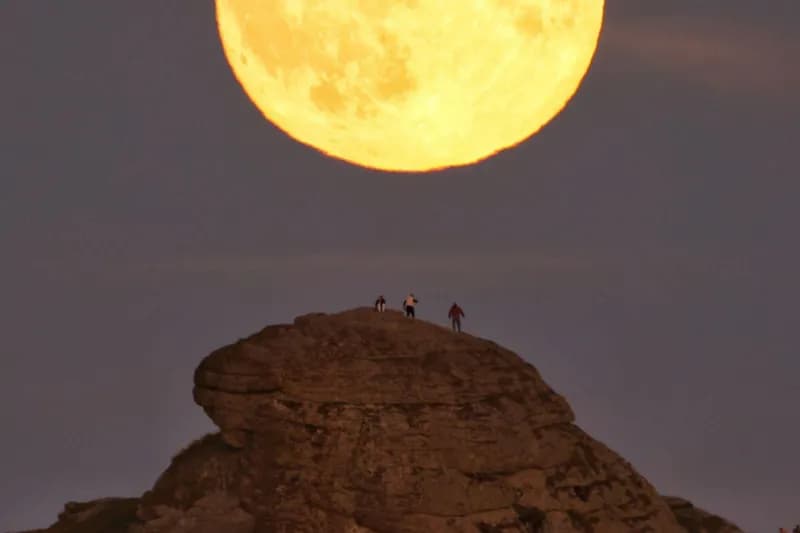
The Moon is not a static fixture in our sky; it is slowly moving away from Earth at a rate of approximately 1.5 inches per year. While this shift is imperceptible on a human timescale, the long-term scientific implications for our planet are profound.
Impact on Tides and Rotation
The gravitational dance between the Earth and the Moon is the primary driver of our ocean tides. As the Moon moves further away, its gravitational pull weakens, leading to less dramatic tidal fluctuations. Furthermore, this process is linked to the gradual slowing of Earth's rotation, meaning that in the distant future, days on Earth will become significantly longer.
The End of Total Eclipses
One of the most visible changes will be the loss of total solar eclipses. Currently, the Moon's size and distance allow it to perfectly cover the Sun. As it recedes, it will eventually appear too small in the sky to fully block the solar disk, leaving only annular eclipses—or 'rings of fire'—for future observers.
Stability and Life
Beyond the visual and tidal changes, the Moon plays a crucial role in stabilizing Earth's axial tilt. Scientists suggest that a more distant Moon could lead to greater planetary wobbling, potentially causing extreme climate shifts over millions of years. Understanding these changes is vital for modeling the very long-term habitability of our world.