E-BUZZ ME Logo
ScienceTechnical Deep Dive

The Impact of Independent Linac Commissioning on Radiotherapy Safety

Published
The Impact of Independent Linac Commissioning on Radiotherapy Safety
1 min read169 words

The Gist

Medical physics expert James Giltz discusses why independent verification of linear accelerators is essential for patient safety and treatment accuracy.

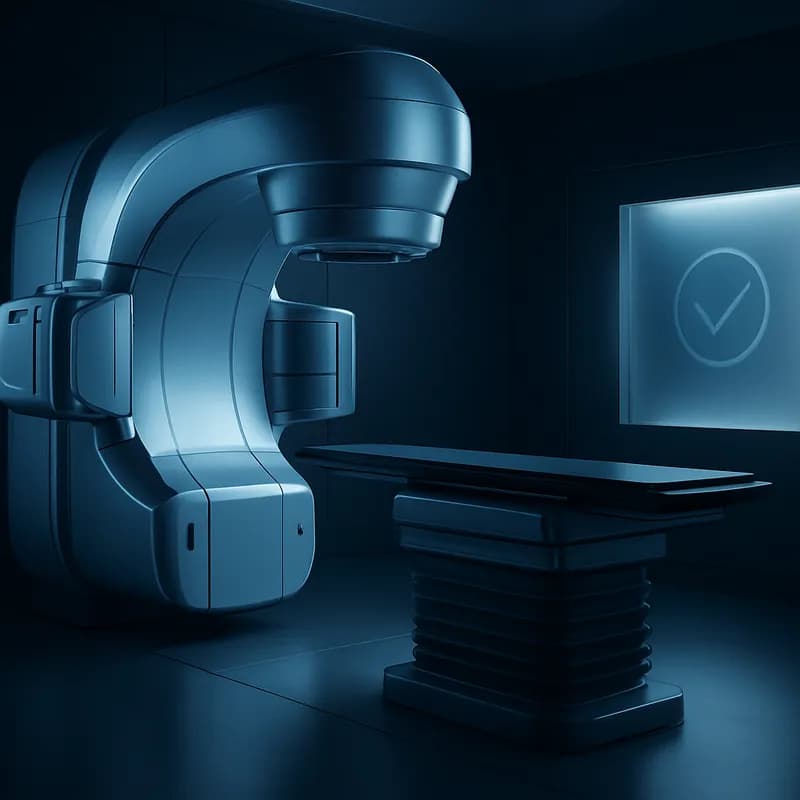
In the latest episode of the Physics World podcast, James Giltz from One Physics highlights the critical importance of independent commissioning for linear accelerators (linacs) in radiotherapy departments. As these machines become increasingly complex, the role of external verification has moved from a luxury to a clinical necessity.

Ensuring Accuracy Beyond the Manufacturer

Commissioning is the process of testing a new linac to ensure it meets the required safety and performance standards before it is used for patient treatment. While manufacturers provide their own set of benchmarks, Giltz argues that independent commissioning provides an essential layer of oversight. This third-party verification helps identify potential calibration discrepancies that could lead to sub-optimal treatment outcomes.

By utilizing specialized experts who focus solely on the intricacies of beam data collection and modeling, healthcare facilities can achieve a higher level of precision. This process not only safeguards patients but also streamlines the workflow for in-house medical physicists, allowing them to focus on clinical operations with the confidence that their equipment is perfectly tuned.


Related Stories

Semantically matched articles, ranked by topic overlap and freshness.

GPS Satellite Network Provides Two Decades of Space Radiation Data
Science71%

GPS Satellite Network Provides Two Decades of Space Radiation Data

A massive cross-calibration effort involving 25 GPS satellites has unlocked twenty years of continuous space radiation tracking.

The Future of Open Access: Navigating Structural Challenges and AI Integration
Science69%

The Future of Open Access: Navigating Structural Challenges and AI Integration

As the scientific community pushes for an open-access future, experts warn that systemic issues and the rise of AI must be addressed to ensure sustainability.

The Physics Behind the Snap: Understanding the Venus Flytrap
Science67%

The Physics Behind the Snap: Understanding the Venus Flytrap

New research delves into the complex physics that allows the Venus flytrap to snap shut with incredible speed to capture its prey.

John Bell and the Legacy of the Journal 'Physics'
Science67%

John Bell and the Legacy of the Journal 'Physics'

A look back at the short-lived journal where John Bell published his ground-breaking theorem, forever changing our understanding of quantum mechanics.

New Class of Magnons Exhibits Hundred-Fold Increase in Lifespan
Science66%

New Class of Magnons Exhibits Hundred-Fold Increase in Lifespan

A breakthrough discovery of long-lived magnons could pave the way for scalable, nanoscale quantum information technologies on-chip.

NASA’s Deep Space Network Threatened by Wildfire
Science60%

NASA’s Deep Space Network Threatened by Wildfire

One of the three critical communication stations enabling NASA to talk to deep space missions is currently facing a direct threat from an active wildfire.

Protect AI and Hugging Face Report: 4 Million Models Scanned for Security Risks
Artificial Intelligence59%

Protect AI and Hugging Face Report: 4 Million Models Scanned for Security Risks

Six months into their partnership, Protect AI and Hugging Face have analyzed over 4 million machine learning models to identify critical security vulnerabilities.

Sweden Explores Rare Earth Deposits to Challenge Global Supply Dominance
Science59%

Sweden Explores Rare Earth Deposits to Challenge Global Supply Dominance

Researchers are mapping Sweden's mineral wealth to create magnets from natural element combinations, aiming to reduce reliance on Chinese exports.