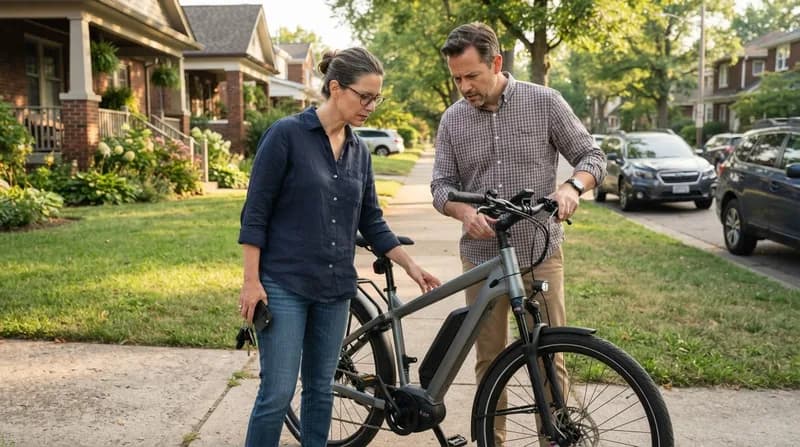
The Rise of E-Bikes and the Parental Knowledge Deficit
Electric bikes have rapidly transformed from niche luxury items into ubiquitous urban tools, appearing on sidewalks, bike lanes, and suburban streets at an unprecedented rate. Yet, a recent study from the University of Michigan Health C.S. Mott Children's Hospital National Poll on Children's Health highlights a concerning reality: the surge in adoption has significantly outpaced public awareness. According to the data, a staggering two-thirds of parents admit to knowing little or nothing about the technology powering these vehicles, with only 6% identifying themselves as truly knowledgeable.
This knowledge gap extends beyond the mechanics of the bikes to the very fundamentals of road safety. Nearly 50% of surveyed parents reported being unsure about where e-bikes are legally permitted to operate. This uncertainty is critical, as these battery-powered machines—which can achieve speeds up to 28 miles per hour—present a different risk profile compared to traditional bicycles. As the technology continues to integrate into daily family life, the lack of standardized guidance is leaving parents to navigate complex safety decisions without a clear roadmap.
The Safety Dilemma: Weighing Risks Against Utility
The urgency behind this poll stems from tangible safety concerns. Research presented at the American Academy of Orthopedic Surgeons indicates that e-bike-related accidents are rising sharply. Injuries sustained by children in these incidents are often more severe, with significantly higher rates of fractures and limb trauma compared to accidents involving standard pedal-powered bicycles. These statistics have put many parents on edge, with 82% acknowledging that e-bikes pose an inherent risk to the riders themselves, and 62% expressing concern for pedestrian safety.
Despite these risks, the poll makes it clear that parents are not calling for a total prohibition. In fact, only 1 in 10 respondents support a complete ban on e-bikes. Instead, there is a strong call for structural improvements, such as mandatory helmet usage, age-appropriate power restrictions, and clearly defined municipal infrastructure. Parents recognize the utility of these vehicles—citing them as vital alternatives for transportation, sources of recreation, and tools that provide teenagers with greater autonomy. The consensus among families is not an rejection of the technology, but rather a plea for better, more accessible information on how to integrate these devices safely into their neighborhoods.
Why It Matters: Contextualizing Modern Mobility
- Regulatory Void: The rapid influx of e-bikes has left many municipalities scrambling to create infrastructure and rules of the road that the public can easily understand.
- Injury Trends: Higher mass and speed translate to higher kinetic energy in collisions, contributing to the increased severity of pediatric injuries noted in medical literature.
- Safety Perception: Parents currently categorize e-bikes as riskier than traditional bicycles, though they often view them as comparable in danger to skateboarding or ATV usage, suggesting a need for nuance in public safety messaging.
- Policy Opportunity: The strong parental support for regulation, including training and labeling, provides a clear mandate for manufacturers and local governments to collaborate on safety standards.
Ultimately, the survey serves as a wake-up call for the entire e-mobility ecosystem. As manufacturers continue to push the performance boundaries of e-bikes, the responsibility for safe adoption must be shared by stakeholders. Without proactive education, clear regulatory frameworks, and standardized training, the full potential of these devices may be overshadowed by the preventable risks they currently present to young riders.