Decoding the Coherence of Thought
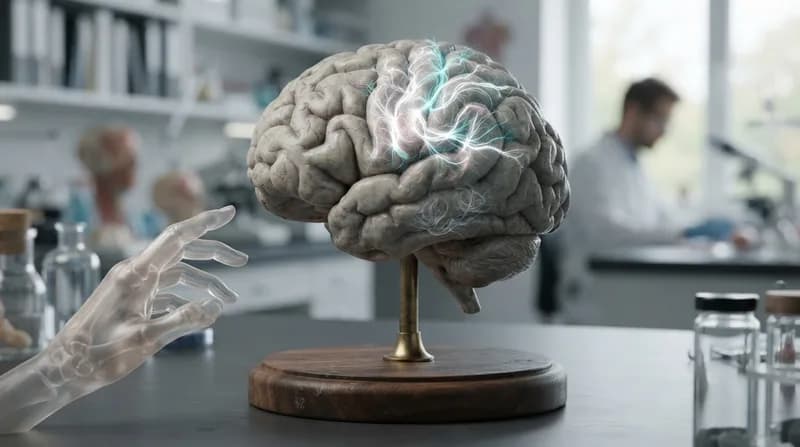
How do we perceive a seamless, unified world when our brains are essentially a patchwork of specialized, fragmented processing units? It is a question that has long puzzled neuroscientists. A groundbreaking study from the Cold Spring Harbor Laboratory (CSHL), published in Nature Neuroscience, suggests the answer lies in a dynamic, real-time negotiation process between different regions of the neocortex. By examining how visual areas exchange data, researchers have identified a mechanism that acts as the 'glue' for our perception, ensuring that the brain ignores noise and prioritizes agreement.
Lead researcher and Cynthia R. Stebbins Fellow, Mitra Javadzadeh, and her team focused on two key nodes in the visual system: the primary visual cortex (V1) and the lateromedial visual area (LM). Rather than viewing these areas as simple components in a linear assembly line, the team modeled them as collaborative partners in a constant state of bidirectional communication. Their findings provide a fascinating look at how the brain filters out visual ambiguity, such as when a shadow is briefly misidentified as a face.
The Mechanics of Consensus Building
To unravel this mystery, the researchers utilized a series of controlled experiments involving mice trained to distinguish between differently oriented visual patterns. By observing neural activity when these specific regions were active—and even when one was temporarily silenced—the team was able to construct an artificial neural network model of the V1-LM circuit. This model offered a window into the 'debate' occurring between these brain regions during sensory input processing.
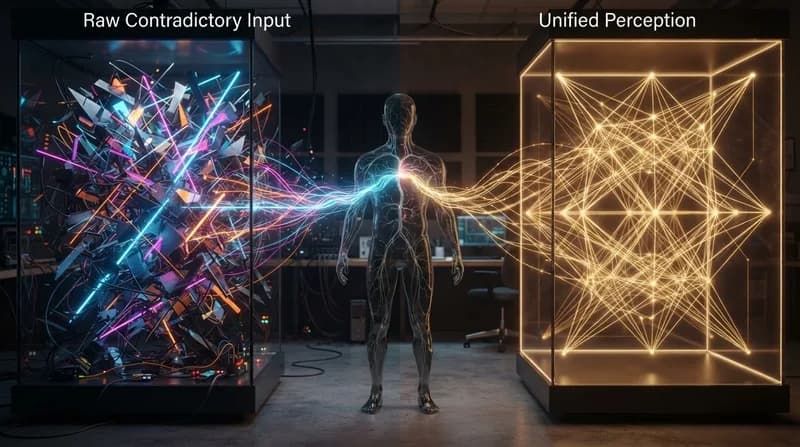
The results were conclusive: the brain prioritizes consensus. When V1 and LM produced matching signals, that neural activity was amplified and persisted, cementing the perception in the mind of the subject. However, when the two regions produced conflicting interpretations of the same stimulus, that disagreement was discarded with remarkable speed, typically fading away in mere fractions of a second. This 'consensus building' acts as a biological filter, discarding disjointed or contradictory sensory noise so that our conscious experience remains stable and coherent.
Why it Matters: Implications Beyond Biology
This research does more than explain the quirks of human vision; it bridges the gap between biological neuroscience and artificial intelligence. Understanding how the brain reconciles conflicting sensory streams provides a blueprint for building more robust AI architectures that must process massive, often contradictory data sets.
- Unified Perception: Explains how the brain transitions from specialized sensory processing to a holistic, singular worldview.
- Error Correction: Identifies the specific mechanism (consensus building) used to discard sensory 'errors' or conflicting inputs before they reach conscious awareness.
- AI Synergy: Offers a potential framework for designing neural networks that can handle ambiguity and reconcile conflicting data streams by prioritizing agreement over fragmentation.
Looking ahead, the researchers are keen to determine if this consensus-building process is a universal feature of the neocortex. If these principles extend to other sensory modalities—for example, how the brain reconciles a discrepancy between what we see and what we hear—it could revolutionize our understanding of cognitive function. By moving beyond the study of individual neural 'building blocks' and focusing on the communication protocols between them, scientists are finally beginning to see the full architecture of the mind.