Scaling the Underground Vision
The Boring Company has officially secured a massive $3 billion in a Series D funding round, pushing its total valuation to an impressive $23 billion. This significant infusion of capital, led by the United Arab Emirates with support from prominent investment firms like Sequoia Capital and A16Z, marks a pivotal moment for Elon Musk’s decade-old quest to solve the global crisis of urban traffic congestion. The company intends to deploy these funds to aggressively expand its workforce across engineering, operations, and production divisions, ensuring it can keep pace with its growing project pipeline.
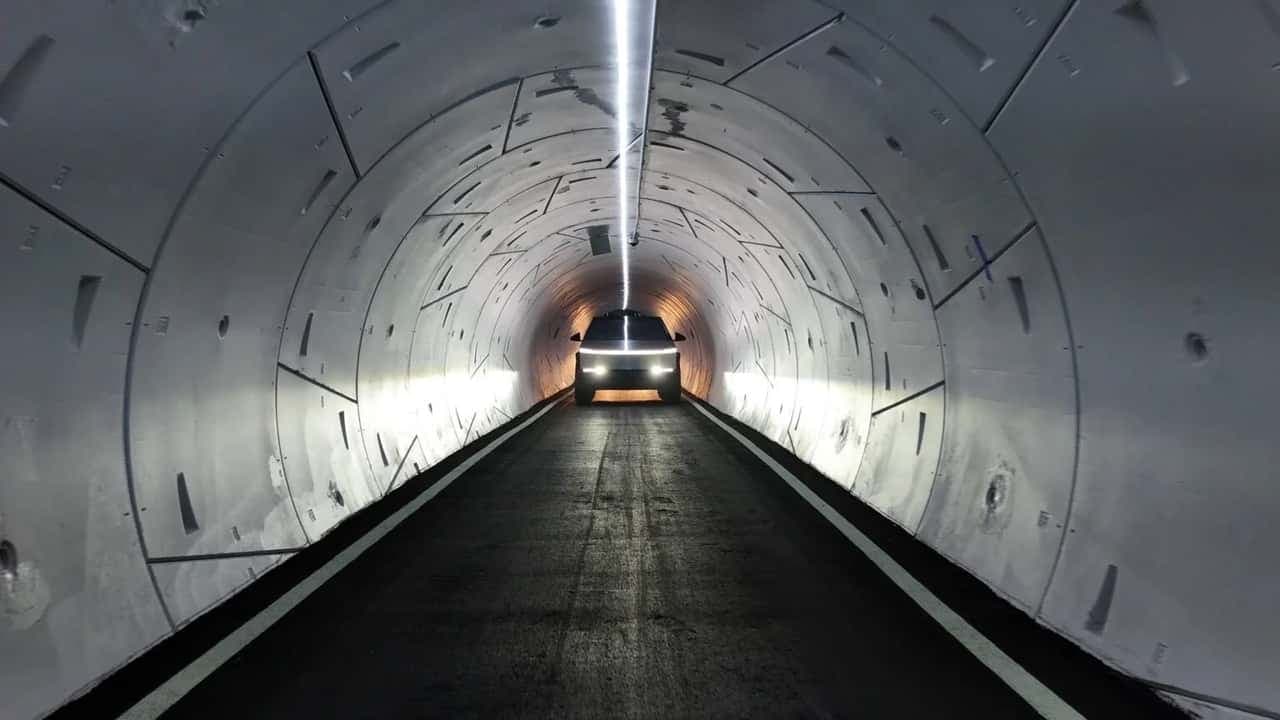
The primary focus for this new capital is the acceleration of the company's 'Loop' systems. Currently, the most visible proof-of-concept is the Las Vegas Loop, which recently expanded its utility by integrating the Tesla Cybertruck into its fleet and initiating limited transport services to the Las Vegas airport. With this financial backing, The Boring Company aims to turn these isolated tunnels into comprehensive, high-capacity underground transit networks that prioritize efficiency and speed over traditional surface-level congestion.
Global Expansion and Technical R&D
Beyond existing projects, a significant portion of the capital is earmarked for international growth and next-generation tunnel boring technology. The partnership with the UAE is perhaps the most ambitious piece of the puzzle, with plans to excavate at least 150 kilometers of subterranean infrastructure in the region. This initiative complements the planned Dubai Loop, which is currently slated for construction to begin in 2026. These efforts are designed to integrate the company’s proven transit model into dense, rapidly growing urban environments that have historically struggled with gridlock.
Internally, the investment will fuel the continued research and development of the Prufrock boring machine. Prufrock represents the company’s core hardware innovation; by improving the speed and cost-effectiveness of these machines, the company aims to make the daunting task of urban tunneling economically viable on a global scale. As the company digs its 25th tunnel—its 14th in Las Vegas alone—the transition from experimental pilot programs to large-scale urban infrastructure seems to be reaching a critical tipping point.
Why It Matters
- Validation of the 'Loop' Model: Securing $3 billion signals strong institutional confidence in the feasibility of subterranean transit networks, particularly as a solution for specific high-traffic corridors like airports or convention centers.
- Technological Scalability: By prioritizing R&D for the Prufrock machine, the company is attempting to lower the barrier to entry for tunneling, which has historically been prohibitively expensive and slow.
- Operational Integration: The shift toward integrating the Tesla Cybertruck and developing autonomous navigation systems demonstrates that the company is moving toward a fully integrated ecosystem where hardware and infrastructure operate in tandem to optimize throughput.
While the company has faced criticism in the past for ambitious projects that have yet to materialize—such as the conceptual high-speed Hyperloop between New York and D.C.—the focus today remains firmly on the practical execution of the Loop. With deep-pocketed backers and a clear roadmap for both domestic and international deployment, The Boring Company is signaling that the era of subterranean, electric-only transit is moving from a niche experiment to an essential pillar of future urban mobility.