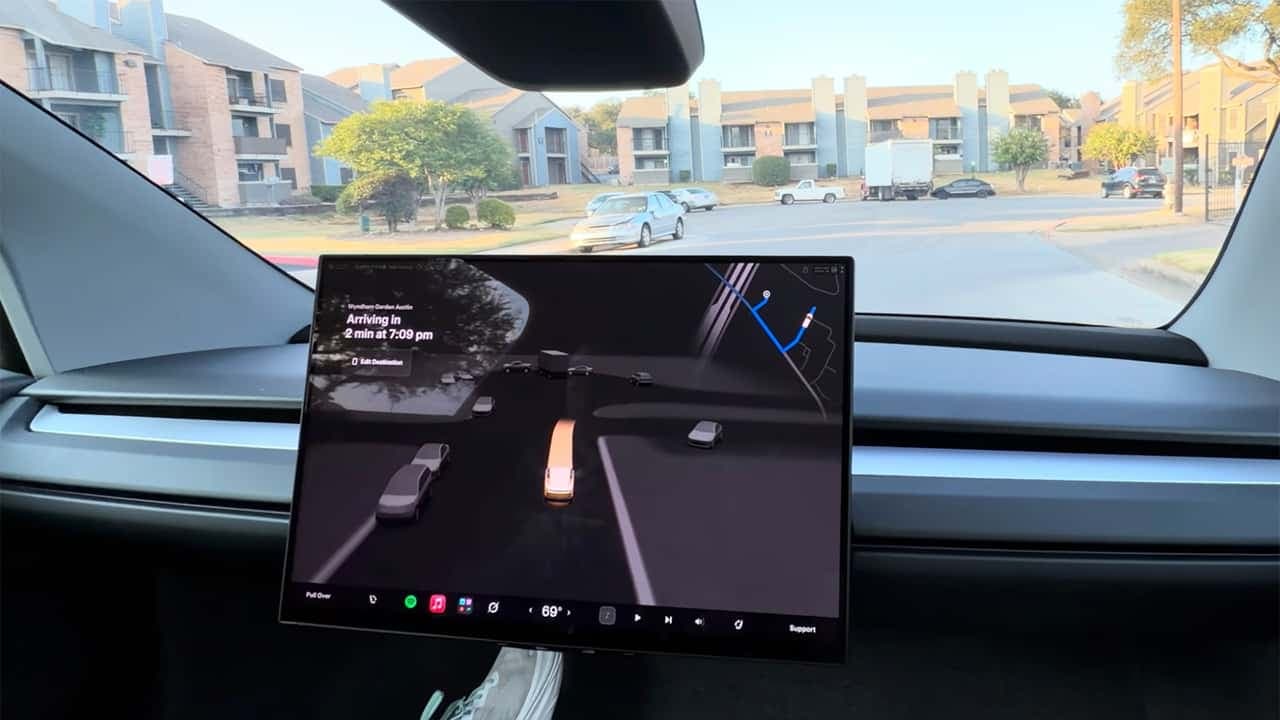
Recent incidents involving Tesla's FSD Lite v14.1 have highlighted significant challenges in the system's ability to detect road hazards. Drivers have reported failures to recognize obstacles like fallen trees and large logs, leading to near-collision situations necessitating manual intervention.
Key Issues with FSD Lite
FSD Lite, introduced in June 2023, operates on Tesla's Hardware 3. This hardware version has lower computational capacity, relying on older 1.2-megapixel cameras, while the newer Hardware 4 utilizes more advanced 5-megapixel cameras. This disparity in technology reflects on the performance and overall reliability of the system.
- Two Tesla owners demonstrated FSD Lite v14.1 failing to detect a fallen tree and a large log.
- This led to near-collision situations where drivers had to intervene manually.
- Hardware 3 debuted in 2019 with 8 GB of RAM, whereas Hardware 4 doubles this to 16 GB.
Tesla CEO Elon Musk previously indicated on an earnings call that Hardware 3 would not support full self-driving capabilities. This has fueled ongoing criticisms regarding FSD Lite's effectiveness in real-world driving scenarios.
User Feedback and Concerns
Many users have reported a range of issues with FSD Lite, including hardware overheating and lane tracking inaccuracies. These experiences contribute to a growing skepticism about the technology's readiness for safe autonomous driving.
As Tesla continues to evolve its autonomous driving features, the limitations of FSD Lite serve as a stark reminder of the challenges ahead in achieving fully reliable self-driving capabilities.