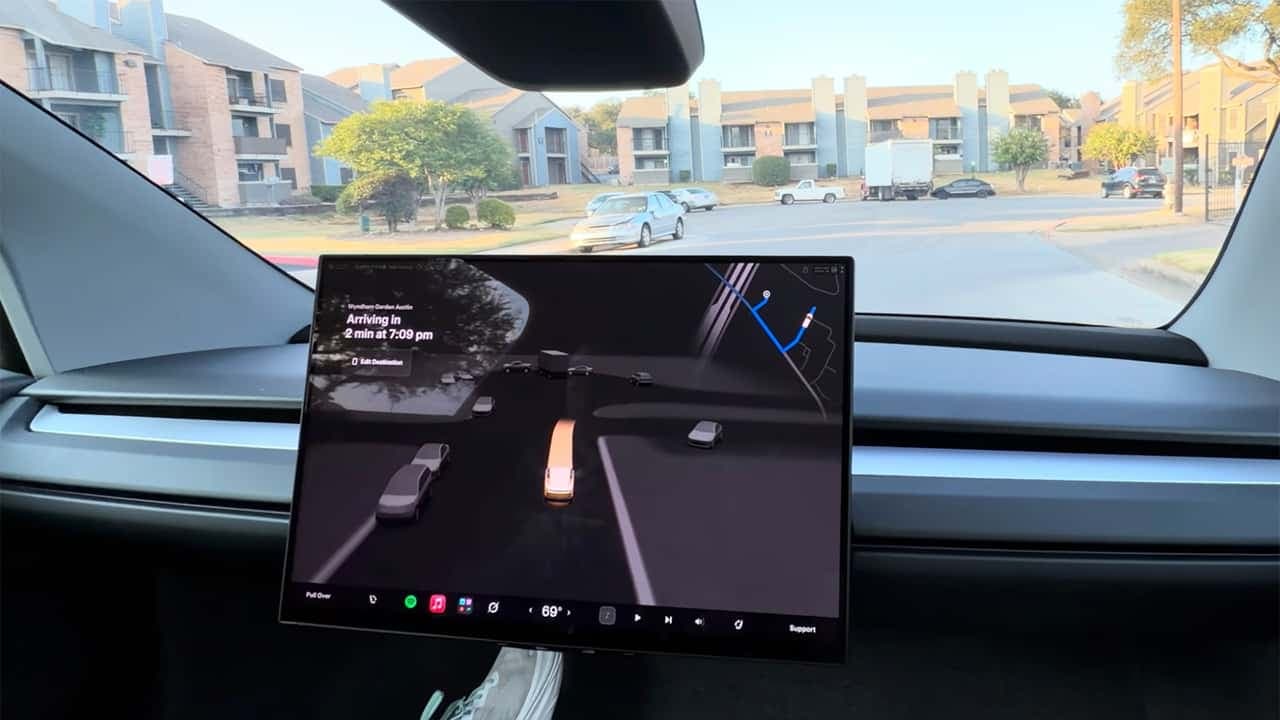
Recent user reports have exposed critical shortcomings in Tesla's Full Self-Driving (FSD) Lite version 14.1. The software, designed for earlier Hardware 3 systems, struggles notably with object detection, particularly in recognizing substantial roadside obstacles such as fallen trees. These challenges prompt serious questions about its readiness for full self-driving functionality.
Key Points
- Users reported multiple instances of FSD Lite v14.1 failing to detect fallen trees, resulting in potential collision risks, highlighted by videos shared on social media on August 21.
- FSD Lite operates on Tesla's Hardware 3, introduced in 2019. This version features significantly lower computing capacity compared to the newer Hardware 4, which began rolling out in 2023.
- Technical limitations of Hardware 3 include lower-resolution cameras (1.2 megapixels versus 5 megapixels) and reduced RAM (8 GB compared to 16 GB in newer systems), which negatively impact self-driving capabilities.
- Elon Musk acknowledged Hardware 3's limitations during an earnings call earlier this year, stating it would not support true self-driving functionality once available for consumer vehicles.
- Despite being marketed as a more affordable option for older models, reports of FSD Lite facing issues such as overheating hardware and poor lane tracking continue to circulate, leading to increased customer dissatisfaction.
These findings underscore continuing concerns regarding the effectiveness of Tesla's self-driving technology, particularly for users relying on older hardware. As the competition in the autonomous vehicle space intensifies, the pressure will be on Tesla to rectify these issues rapidly.