Manufacturing Stability Regained
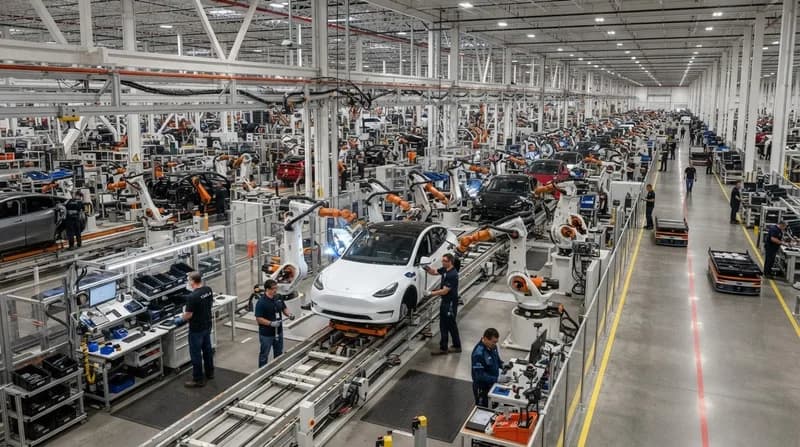
Tesla has officially navigated back to a path of operational consistency. According to the company's latest figures for the third quarter of 2026, the automaker produced 464,000 electric vehicles, a milestone that effectively mirrors the production highs last seen in the third quarter of 2024. This performance represents a 3.7 percent increase over the same period last year and a 2.7 percent rise compared to the second quarter of 2026, signaling that the factory floor is once again firing on all cylinders.
Beyond the manufacturing lines, delivery figures also reflect an upward trajectory. Tesla moved 486,000 units into the hands of customers during this quarter. While this reflects a modest 1.2 percent uptick from the previous quarter, it serves as a critical stabilization point following a seasonally slower start to the year. While the company did not quite reach the half-million vehicle delivery mark as it did in some previous high-water periods, the data confirms that production bottlenecks have largely subsided, allowing for a more predictable flow of inventory to global markets.
The Core Drivers: Model 3 and Model Y
As has been the case for several years, the high-volume duo of the Model 3 and Model Y remains the backbone of Tesla's financial and operational health. During Q3 2026, these two models accounted for the vast majority of the company's output, with 457,387 units produced and 478,237 vehicles delivered.
These figures highlight the continued dominance of Tesla's entry-level strategy. By focusing resources on these mid-range offerings, the company has managed to maintain its market share against an increasingly crowded field of global competitors. The reliability of these two platforms allows Tesla to maintain factory utilization rates that would be difficult to sustain with more niche vehicle segments.
Niche Segments and Energy Storage
While the Model 3 and Model Y provide the bulk of the volume, the "other" category—encompassing the Cybertruck, the Semi, and remaining legacy units of the Model S and Model X—continues to occupy a specialized corner of the production mix. Collectively, these vehicles accounted for 7,004 units produced and 8,295 units delivered during the third quarter.
Furthermore, Tesla’s influence extends well beyond the automotive sector. The company reported the deployment of 13.7 GWh in energy storage solutions, covering both residential Powerwall systems and utility-scale battery installations. This segment remains a vital pillar of the company’s broader strategy as it diversifies revenue streams away from purely passenger vehicle sales.
Why it Matters
- Production Consistency: After a volatile 2025, the ability to maintain predictable output suggests that Tesla’s manufacturing logistics and supply chains have been successfully optimized.
- Portfolio Strategy: The massive gap between volume models (Model 3/Y) and specialized models (Cybertruck/Semi) underscores a deliberate focus on mass-market penetration while keeping advanced programs in the ramp-up phase.
- Energy Growth: The 13.7 GWh storage figure highlights the growing importance of the energy division as a non-automotive contributor to Tesla's total bottom line.
Investors and analysts are now looking toward October 21, when Tesla is scheduled to release its comprehensive third-quarter financial results. This report will provide the final piece of the puzzle, revealing how these production and delivery numbers translate into bottom-line revenue and overall profit margins for the quarter.