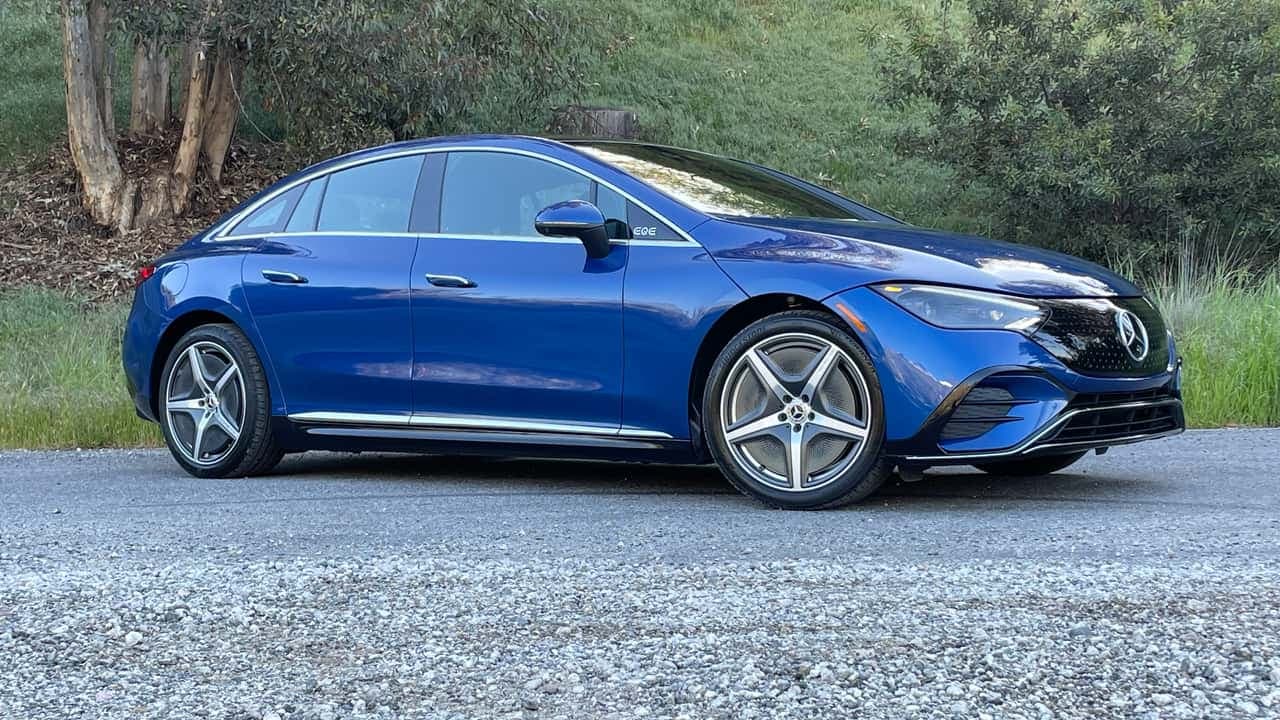
1. The Mercedes-Benz EQE Sedan
In a move that signals a significant shift in Mercedes-Benz's North American electrification strategy, the German automaker has confirmed the total discontinuation of the EQE sedan starting with the 2027 model year. Serving as the electric counterpart to the iconic E-Class, the EQE struggled to gain significant traction with American consumers during its three-year tenure. Despite offering a suite of cutting-edge technology and the hallmark luxury expected from the brand, the sedan’s distinctive, aerodynamic "bean-shaped" design often proved polarizing.
While the model failed to achieve strong sales figures in the U.S. market, its departure leaves a notable gap in the brand’s entry-level executive electric offerings. Market analysts suggest that the decision to pull the plug is a response to both cooling demand for high-end electric sedans and a pivot toward more traditional, unified design languages that the company is currently implementing in newer models like the upcoming CLA and GLC platforms.
2. The Mercedes-Maybach EQS 680 SUV
Luxury at its peak was not enough to save the ultra-opulent Mercedes-Maybach EQS 680 SUV from the 2027 cull. With a starting price point in the neighborhood of $180,000, this flagship electric utility vehicle represented the zenith of the brand's sustainable luxury efforts. It featured bespoke materials, unparalleled cabin refinement, and an expansive feature set designed to cater to the most discerning buyers in the segment.
Its discontinuation suggests that even the most exclusive tiers of the electric market are being re-evaluated in favor of leaner, more focused production runs. While the standard EQS SUV lineup will continue to be a staple of the Mercedes-Benz showroom, the Maybach-branded iteration will no longer be part of the domestic inventory, marking the end of its short-lived presence in the American luxury electric landscape.
3. The Mercedes-AMG S63 E Performance
The performance world is also feeling the impact of this streamlining effort, as the high-output Mercedes-AMG S63 E Performance plug-in hybrid sedan is excluded from the 2027 U.S. roadmap. This vehicle was a mechanical marvel, pairing a powerful 4.0-liter twin-turbocharged V-8 engine with an electric motor to generate a staggering 791 horsepower. It was never intended to be an efficiency champion; instead, it was a showcase for brute force and the potential of hybrid power in a luxury chassis.
Despite its performance credentials, the S63 E faced the practical limitations of its segment, including a 10.4-kWh battery pack that offered only a modest 16 miles of all-electric range. With a base price exceeding $191,000, it was a niche offering that prioritized status and raw output over long-distance sustainability. Its removal underscores a broader trend where manufacturers are pivoting away from complex, high-cost performance hybrids in favor of more dedicated, simplified powertrain solutions.
Why it Matters
The decision to trim these models from the 2027 U.S. lineup serves as a clear indicator that Mercedes-Benz is re-assessing its "EV-first" philosophy. By moving toward a design strategy where electric and internal combustion variants share a more uniform aesthetic, the company aims to reduce development complexity and better align its offerings with consumer preferences that favor traditional design language over the distinct, futuristic look of the first-generation EQ models.