ScienceTechnical Deep Dive

Sugar Intake Could Be Fueling Microbiome Damage During Antibiotic Treatment

Published
EElectricBuzz Editorial Team
Sugar Intake Could Be Fueling Microbiome Damage During Antibiotic Treatment
3 min read537 wordsElectricBuzz Editorial Team

The Gist

“New research reveals a significant link between dietary sugar consumption and intensified gut microbiome disruption for patients taking antibiotics.”

The Sugar-Antibiotic Connection

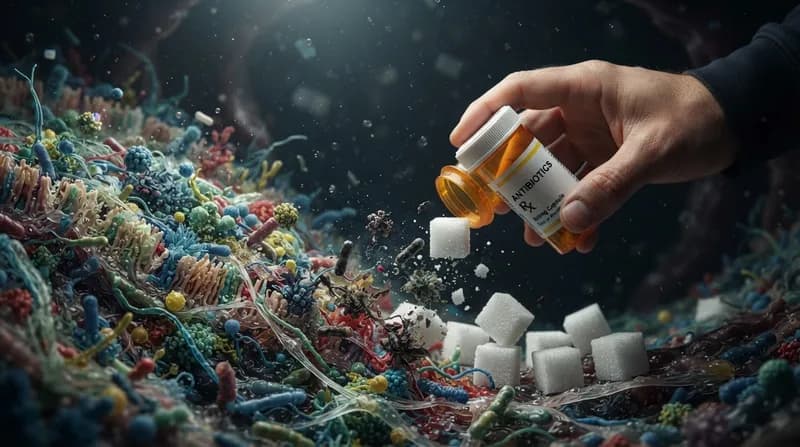
A recent collaborative study led by researchers from NYU Langone Health, City of Hope, and Memorial Sloan Kettering Cancer Center has uncovered a startling relationship between dietary habits and the efficacy of antibiotic treatments. The research, published in the journal Nature, indicates that consuming high levels of sugar while undergoing antibiotic therapy significantly exacerbates the damage done to the gut microbiome. While antibiotics are essential for fighting infections, they are often blunt instruments, killing both harmful and beneficial bacteria, which leaves the gut ecosystem vulnerable to colonization by dangerous pathogens.

By analyzing over 9,419 individual meals consumed by 173 hospitalized blood cancer patients, researchers were able to quantify the impact of sugar. The results were consistent: for every 100 grams of sugar consumed during the 48-hour window surrounding antibiotic administration, patients experienced a 21% reduction in alpha diversity—a crucial metric for measuring the variety and health of beneficial gut bacterial species. This depletion of diversity often provides a foothold for opportunistic, antibiotic-resistant bacteria to thrive.

Understanding the Mechanism of Microbial Disruption

The study highlights a particularly concerning trend regarding the bacterial species Enterococcus faecium. As beneficial bacterial communities are decimated by antibiotics, the presence of dietary sugar appears to act as a catalyst for the rapid expansion of this harmful species. In parallel animal trials, subjects treated with the antibiotic biapenem while being fed a diet high in sucrose saw a 16.3-fold increase in Enterococcus populations within just three days, a figure that climbed to 33.4-fold by the sixth day.

Researchers hypothesize that the simple sugars provide a readily available energy source that allows surviving, potentially harmful bacteria to outcompete any remaining beneficial flora. This essentially turns a medical necessity—the antibiotic—into a double-edged sword when paired with an indulgent diet. By fueling the growth of unwanted pathogens, high sugar intake may prolong recovery times and increase the risk of secondary infections, especially in immunocompromised patients.

Why it Matters

  • Clinical Implications: Patients with compromised immune systems, such as those undergoing stem cell transplants, are already at high risk for gut microbiome injury, which is directly linked to higher mortality and infection rates.
  • Dietary Intervention: The research suggests that a temporary, intentional reduction in simple sugars during and immediately after a course of antibiotics could be a low-cost, effective strategy to preserve microbial health.
  • Future Research: While the data is compelling, the team emphasizes that controlled clinical trials are required to determine the exact biological mechanism and confirm whether dietary modifications can definitively improve patient clinical outcomes.

The Road Ahead

This study represents one of the most comprehensive investigations into the intersection of nutrition and pharmacology to date. Because the researchers had access to granular, daily meal records and corresponding biological samples from patients in a hospital setting, the findings offer a rare, high-resolution look at the human microbiome under stress. The academic team behind the study now looks toward designing future trials that test if dietary sugar restriction can serve as a standard protocol for patients prescribed heavy courses of antibiotics. Until those trials conclude, the findings serve as a potent reminder that the environment of the human gut is highly sensitive to the fuel we provide, even when we are focused on healing.


SPONSORED
The 5 Best Over-Ear ANC Headphones of 2026, Tested & Ranked
Editor's Pick Guide
92/100
Tech & Gadgets•12 min read

The 5 Best Over-Ear ANC Headphones of 2026, Tested & Ranked

We locked five over-ear ANC picks for 2026 — Sony WH-1000XM6, Bose QuietComfort Ultra 2, Soundcore Space One, Sennheiser Momentum 5, and Apple AirPods Max 2 — then stress-tested them on lab metrics, long-term owner truth, and live street prices.

Related Stories

Semantically matched articles, ranked by topic overlap and freshness.

Scaling Up: How Pooled Sputum Testing Could Eradicate TB's 'Missed Millions'
Science

Scaling Up: How Pooled Sputum Testing Could Eradicate TB's 'Missed Millions'

A landmark global study reveals that pooling sputum samples can double testing capacity for tuberculosis, effectively cutting costs and reaching thousands more patients.

NASA Pinpoints Earth’s Shifting Center of Mass with New Satellite Precision
Science

NASA Pinpoints Earth’s Shifting Center of Mass with New Satellite Precision

A groundbreaking study has revealed that Earth's center of mass is constantly in motion, with NASA researchers unveiling a high-precision method to track the seasonal dance of our planet's weight.

Breakthrough Lung Organoids With Integrated Immune Systems Could Revolutionize Respiratory Medicine
Science

Breakthrough Lung Organoids With Integrated Immune Systems Could Revolutionize Respiratory Medicine

Researchers at Stanford Medicine have engineered human lung organoids that possess their own functional immune systems, offering a new, animal-free pathway for studying respiratory diseases and testing local vaccination strategies.

Cosmic Car Crashes: Webb Telescope Reveals Secrets of Violent Planetary Collisions
Science

Cosmic Car Crashes: Webb Telescope Reveals Secrets of Violent Planetary Collisions

NASA's James Webb Space Telescope has uncovered evidence of high-energy planetary impacts in distant star systems, offering a mirror into our own Moon's violent origins.

Groundbreaking In Vivo CRISPR Breakthrough Could Revolutionize Cancer Therapy
Science

Groundbreaking In Vivo CRISPR Breakthrough Could Revolutionize Cancer Therapy

Researchers at UCSF have successfully reprogrammed immune cells directly inside the body, potentially eliminating the need for complex, costly, and time-consuming laboratory manufacturing in cancer treatment.

Mitochondrial DNA Levels Emerges as a New Frontier in Cancer Diagnostics
Science

Mitochondrial DNA Levels Emerges as a New Frontier in Cancer Diagnostics

A recent study identifies mitochondrial DNA copy number as a pivotal marker for tumor progression and chemotherapy response, opening new doors for precision oncology.

Unlocking the Neural Mechanism Behind Cannabis-Induced Anxiety
Science

Unlocking the Neural Mechanism Behind Cannabis-Induced Anxiety

Researchers at Northwestern University have identified specific neurons in the brain’s fear center that trigger anxiety during cannabis use, potentially paving the way for new clinical treatments.

Silencing the Signal: A Revolutionary Approach to Combating Gum Disease
Science

Silencing the Signal: A Revolutionary Approach to Combating Gum Disease

Researchers have discovered a breakthrough method to treat gum disease by disrupting bacterial communication rather than using traditional, indiscriminate antibiotics.