E-BUZZ ME Logo
ScienceTechnical Deep Dive

Stunning Fossil Reveals Internal Organs of 245-Million-Year-Old Marine Reptile

Published
Stunning Fossil Reveals Internal Organs of 245-Million-Year-Old Marine Reptile
1 min read150 words

The Gist

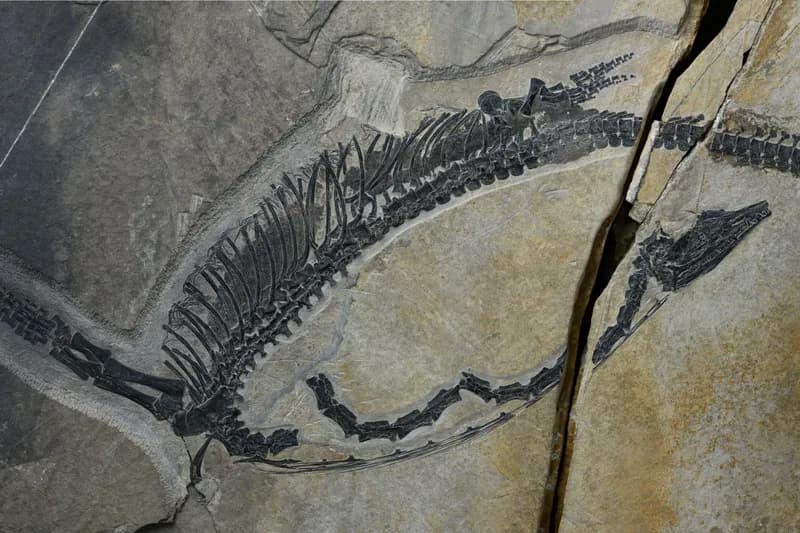
Researchers have discovered a remarkably preserved fossil of Austronaga minuta, an ancient marine reptile that offers a rare glimpse into prehistoric internal anatomy.

Paleontologists have identified a spectacular new fossil specimen that sheds light on the early evolution of marine life. The creature, named Austronaga minuta, lived approximately 245 million years ago during the Triassic period. What makes this find particularly significant is the exceptional preservation of its internal organs, a rarity in the fossil record.

A Precursor to Giants

While small in stature, Austronaga minuta appears to be a miniature architectural precursor to the massive ocean predators that would dominate the seas millions of years later. Researchers note its striking resemblance to later plesiosaurs, the iconic long-necked marine reptiles of the Jurassic and Cretaceous periods.

This discovery provides critical data for understanding how these reptiles adapted to aquatic life. By studying the preserved soft tissues and organ placement, scientists can better reconstruct the physiology and lifestyle of these early swimmers, filling a vital gap in the evolutionary history of marine vertebrates.


Related Stories

Semantically matched articles, ranked by topic overlap and freshness.

Earth’s Subterranean 'Gold Kitchen' Discovered Beneath the Seafloor
Science65%

Earth’s Subterranean 'Gold Kitchen' Discovered Beneath the Seafloor

New research reveals how submarine volcanoes act as natural refineries, concentrating gold through intense mantle melting processes.

The Gut-Brain Connection: How Digestion Shapes Memory Formation
Science62%

The Gut-Brain Connection: How Digestion Shapes Memory Formation

New research suggests that signals sent from the gut to the brain via the vagus nerve are essential for turning nutritional experiences into lasting memories.

New Simulations Challenge Hopes for Shallow Water Reservoirs on Europa
Science62%

New Simulations Challenge Hopes for Shallow Water Reservoirs on Europa

New research suggests that water from Europa's hidden ocean may struggle to reach the surface, complicating the search for life on Jupiter's icy moon.

Painless Liquid Treatment Could Replace Drilling for Childhood Cavities
Science61%

Painless Liquid Treatment Could Replace Drilling for Childhood Cavities

A major U.S. clinical trial reveals that silver diamine fluoride can stop tooth decay in children without the need for needles or drills.

Daily Multivitamin Use Linked to Improved Functional Health in Older Adults
Science61%

Daily Multivitamin Use Linked to Improved Functional Health in Older Adults

A new study suggests that daily multivitamin supplements could play a key role in helping seniors maintain the physical strength and stamina required for independent living.

The Evolutionary and Physical Science Behind Super-Long Fingernails
Science57%

The Evolutionary and Physical Science Behind Super-Long Fingernails

A new scientific inquiry explores the mechanics and motivations behind 'artificially elongated fingernails,' moving beyond mere aesthetics to understand their physical impact.

New 'Photonic Multi-Lane Highway' Achieves Topological Protection Without Insulators
Science57%

New 'Photonic Multi-Lane Highway' Achieves Topological Protection Without Insulators

Researchers have developed a breakthrough photonic valley half-semimetal that allows for robust light transport without the need for traditional insulators.

New Scientist Book Club Applauds Claire North’s Space Opera 'Slow Gods'
Science57%

New Scientist Book Club Applauds Claire North’s Space Opera 'Slow Gods'

Claire North’s latest space opera, 'Slow Gods', has received rare unanimous praise from the New Scientist Book Club for its ambitious conceptual depth.