E-BUZZ ME Logo
ScienceTechnical Deep Dive

Scientists Rewind Quantum Time, Unlocking Future Tech

Published
Scientists Rewind Quantum Time, Unlocking Future Tech
1 min read182 words

The Gist

In a stunning display of quantum mastery, researchers have developed techniques that can make a quantum system effectively run backward in time, paving the way for revolutionary advancements.

Bending the Arrow of Time

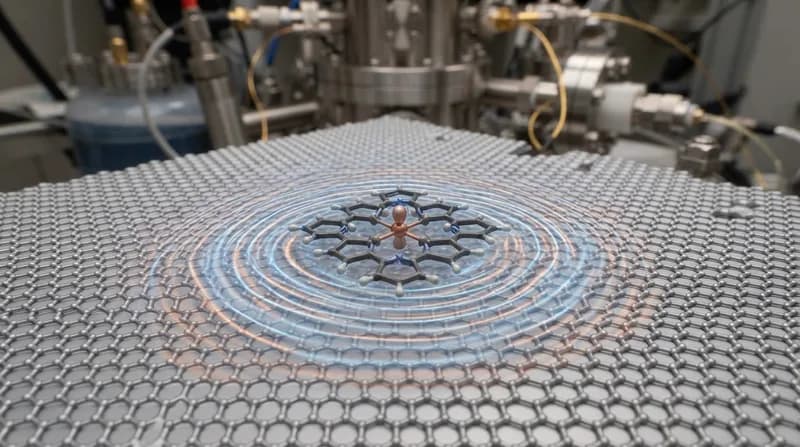
In a groundbreaking physics revelation, scientists have successfully manipulated quantum systems to appear as if they are running backward in time. This isn't science fiction, but a remarkable achievement in quantum control that could redefine our understanding of fundamental physics and unlock a new era of technological innovation.

The team developed sophisticated quantum control techniques, focusing on precise management of quantum measurements. By carefully orchestrating these measurements, they were able to reshape the system's inherent "arrow of time." What's even more astonishing is their ability to harvest energy directly from this measurement process, a feat that defies conventional wisdom.

Implications for Tomorrow's Tech

This unprecedented control over quantum processes isn't just a theoretical marvel; it carries immense practical potential. Researchers believe this breakthrough could directly lead to:

  • More Powerful Quantum Computers: Enhancing processing capabilities and stability.
  • Revolutionary Quantum Batteries: Potentially more efficient and longer-lasting energy storage.
  • Advanced Technologies: Fueling developments across various quantum-enabled fields.

This work pushes the boundaries of quantum mechanics, offering a tantalizing glimpse into a future powered by principles once thought impossible to harness.


Related Stories

Semantically matched articles, ranked by topic overlap and freshness.

New Class of Magnons Exhibits Hundred-Fold Increase in Lifespan
Science70%

New Class of Magnons Exhibits Hundred-Fold Increase in Lifespan

A breakthrough discovery of long-lived magnons could pave the way for scalable, nanoscale quantum information technologies on-chip.

Self-Repairing Bio-Textiles: Scientists Create Clothing From Living Fungi
Science64%

Self-Repairing Bio-Textiles: Scientists Create Clothing From Living Fungi

Researchers have developed a revolutionary biodegradable textile using the parasitic fungus Cordyceps militaris that can clean and repair itself.

Sweden Explores Rare Earth Deposits to Challenge Global Supply Dominance
Science63%

Sweden Explores Rare Earth Deposits to Challenge Global Supply Dominance

Researchers are mapping Sweden's mineral wealth to create magnets from natural element combinations, aiming to reduce reliance on Chinese exports.

Sulfur-Based Compound Identified as Potential Breakthrough for Aging Muscle Repair
Science63%

Sulfur-Based Compound Identified as Potential Breakthrough for Aging Muscle Repair

Researchers have discovered a compound named LASSS that protects proteins essential for muscle recovery, offering hope for combating age-related muscle loss.

John Bell and the Legacy of the Journal 'Physics'
Science63%

John Bell and the Legacy of the Journal 'Physics'

A look back at the short-lived journal where John Bell published his ground-breaking theorem, forever changing our understanding of quantum mechanics.

The Physics Behind the Snap: Understanding the Venus Flytrap
Science62%

The Physics Behind the Snap: Understanding the Venus Flytrap

New research delves into the complex physics that allows the Venus flytrap to snap shut with incredible speed to capture its prey.

Unprecedented Warming: Earth's Current Climate Shift Outpaces Geological History
Science62%

Unprecedented Warming: Earth's Current Climate Shift Outpaces Geological History

New analysis of Earth's climate history reveals that the current rate of global warming is faster than any previously recorded geological event.

China’s Tianwen-1 Orbiter Captures Rare Footage of Interstellar Comet 3I/ATLAS
Science61%

China’s Tianwen-1 Orbiter Captures Rare Footage of Interstellar Comet 3I/ATLAS

The Tianwen-1 Mars orbiter has successfully imaged the interstellar visitor 3I/ATLAS, providing a rare look at material originating from outside our solar system.