Testing the Boundaries of Automotive Opulence
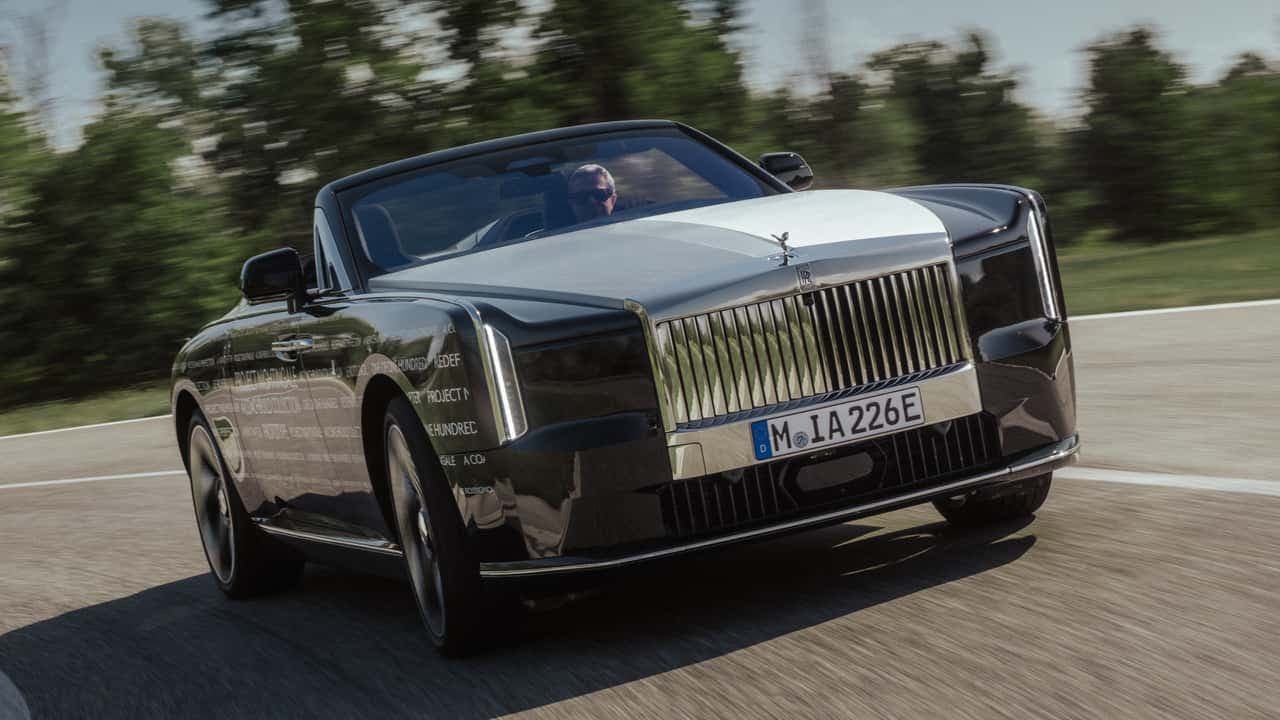
Rolls-Royce has officially entered the real-world testing phase for its latest marvel, Project Nightingale. This low-volume, coachbuilt electric convertible represents a new pinnacle for the British marque, combining high-voltage electrification with the kind of bespoke craftsmanship rarely seen in the automotive sector. However, the path to production for a vehicle as opulent as the Nightingale is fraught with engineering hurdles that go far beyond standard performance metrics.
Perhaps the most unconventional challenge in the car's development is its retractable roof, which features a bespoke cashmere lining. While typical convertible materials are tested for standard weather resistance, Rolls-Royce must ensure this premium fabric maintains its integrity, texture, and structural performance under extreme thermal stress. The engineering team is currently subjecting the roof to temperatures as high as 176°F (80°C) to simulate the intense heat of desert climates. This is just one of ten rigorous procedural tests the roof mechanism must pass to ensure the final product meets the brand's exacting standards.
Mechanical Precision and Endurance
Beyond the thermal testing of its interior textiles, Project Nightingale is undergoing a grueling mechanical stress program. A primary focus is the vehicle’s innovative, side-opening 'Piano Boot.' To ensure this hallmark feature functions with the effortless grace expected of a Rolls-Royce, the testing protocol mandates that the trunk be opened and closed 15,000 times during development. The goal is to guarantee that the mechanism remains perfectly calibrated throughout the vehicle's lifespan.
The testing program is as global as it is intense. Prototypes are currently navigating the roads of Southern Europe, a historic testing ground for the company, and will ultimately log a combined 350 weeks of endurance driving. The testing cycle includes everything from the icy terrain of the Arctic Circle to the arid expanses of the Arabian Peninsula, with vehicles ascending to altitudes of over 9,000 feet. This exhaustive approach ensures that the silent, dual-motor electric powertrain performs flawlessly regardless of the operating environment.
Key Development Facts
- Performance Foundation: Utilizes the advanced Architecture of Luxury aluminium spaceframe, shared with the electric Spectre.
- Powertrain: Equipped with a dual-motor setup generating over 600 horsepower and 800 pound-feet of torque.
- Aero-Acoustics: 1,430 hours dedicated to wind tunnel testing to maintain a near-silent cabin environment.
- Exclusivity: A strictly limited production run of only 100 units is planned.
- Timeline: First customer deliveries are targeted for 2028, with estimated pricing ranging between $5 million and $10 million.
Refining the Experience
Beyond the powertrain and exterior design, Rolls-Royce is obsessively focusing on the in-cabin experience. Because the electric powertrain is inherently quiet, the engineers are working to eliminate even the smallest unwanted mechanical or external wind noises. This includes the development of a specialized electric wind deflector, which has been subjected to high-speed testing at up to 155 mph to ensure it minimizes turbulence without disrupting the serene atmosphere of the cabin. Every aspect of the Nightingale is being sculpted to ensure that it lives up to the reputation of the Rolls-Royce marque, merging high-tech electric performance with an unmatched level of artisanal luxury that remains functional even in the world's most unforgiving climates.