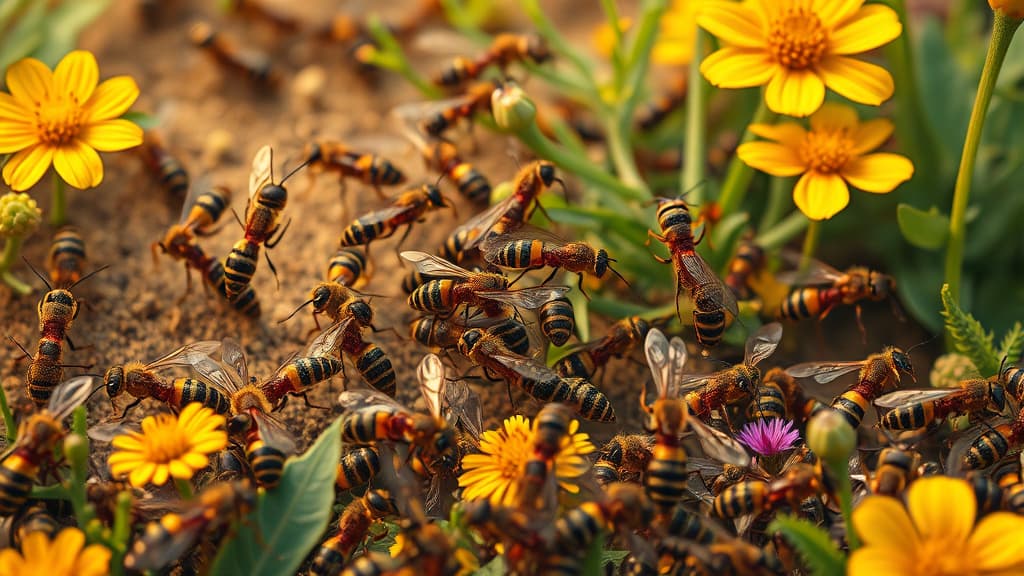
A massive insect study challenges a 60-year-old genetic explanation for how ants, bees, and wasps became masters of social living, suggesting that genetics alone can’t explain it—and the real secret may lie in other traits unique to these insects. The research found that eusociality does seem to arise more often among insects with a haplodiploid genetic system, but this pattern can be traced to one particular group, the aculeate Hymenoptera, which includes stinging wasps, bees and ants.
Key Insights
The study's findings underscore the complexity of social evolution in insects, highlighting that the development of complex social colonies cannot be attributed solely to genetic factors. Instead, the research points towards a multifaceted explanation that includes both genetic and non-genetic traits unique to certain groups of insects, such as the aculeate Hymenoptera.