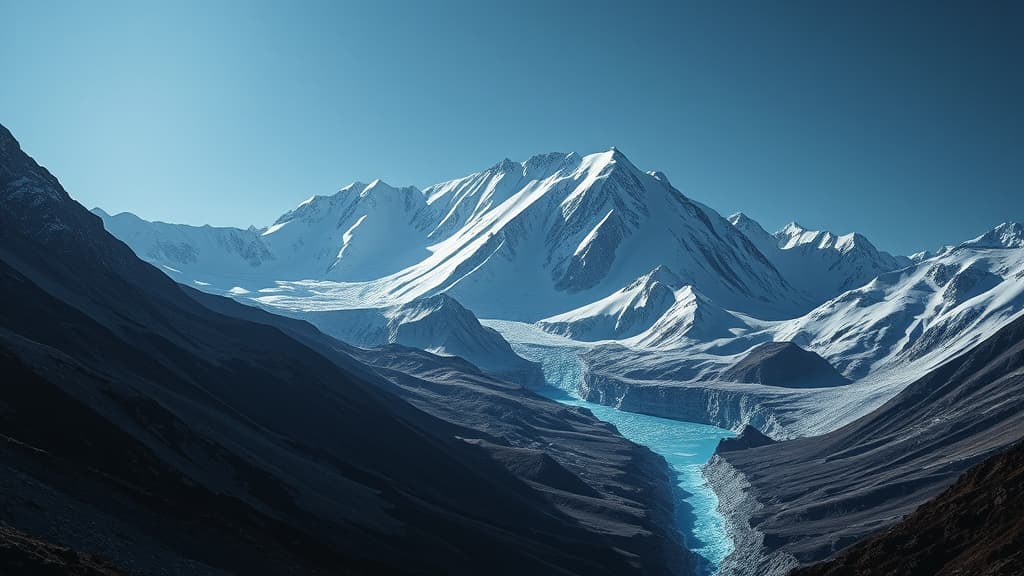
Scientists from the University of Utah have unveiled a substantial ice reservoir located beneath Mount Timpanogos, revealing a rock glacier composed of approximately 83% ice. This discovery estimates the total ice volume at about 1.5 million cubic meters—equivalent to filling 600 Olympic-sized swimming pools.
The research highlights the important presence of ice reservoirs in Utah's mountainous regions and has significant implications for global water resource understanding.
Key Facts
- Location: The Timpanogos Rock Glacier is situated in the Wasatch Mountains.
- Volume: Contains around 1.5 million cubic meters of ice.
- Composition: Made up of 83% ice and 17% loose rock.
- Formation: Rock glaciers form when snow gets buried under rock debris, preserving the ice for millennia.
- Global Context: Researchers estimate that about 50,000 rock glaciers worldwide hold a collective volume of around 48 gigatons of water.
- New Insights: The study contradicts previous beliefs, suggesting that Utah's rock glaciers are not merely Ice Age remnants but formed in response to changing climatic conditions after the Ice Age.
A groundbreaking method using gravity measurements enabled the researchers to create a 3D model of the glacier, revealing its structure and composition. This approach not only shed light on Utah’s glacial landscape but also opens doors for further research into ice reservoirs as critical water sources.
Understanding such ice mass can provide insights into future water availability, particularly as climate conditions evolve and water scarcity becomes increasingly relevant.