A Paradigm Shift in Cellular Biology
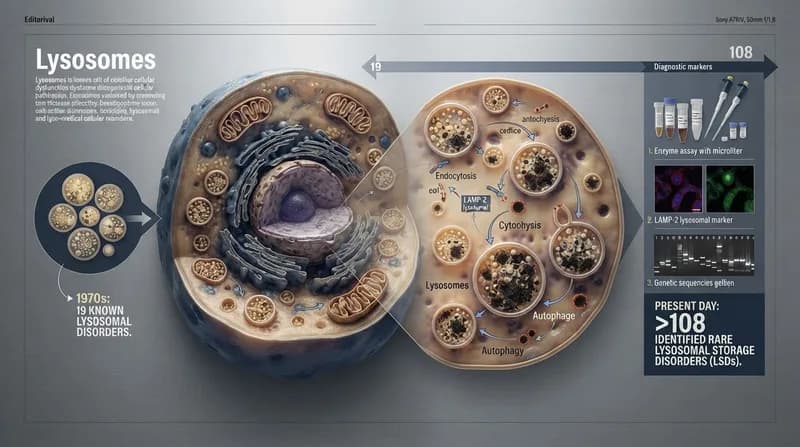
For decades, the medical community viewed lysosomes primarily as the cell’s internal waste-disposal units. Under this traditional model, lysosomal disorders were understood as narrow issues where a lack of specific enzymes led to a toxic accumulation of cellular debris. However, a major collaborative study led by the University of Sheffield has fundamentally challenged this narrative, unveiling a new framework that identifies 108 distinct lysosomal conditions—a significant jump from the 70 previously recognized.
This new classification, published in the Journal of Inherited Metabolic Disease, incorporates modern insights into cellular function. Researchers now recognize that lysosomes are far more than simple dump sites; they are central to complex processes like nutrient sensing, cellular signaling, membrane trafficking, and autophagy—the essential process where cells recycle their own internal components. By looking at these broader functions, scientists have identified genetic defects across 102 genes that contribute to metabolic dysfunction, marking a turning point in how these rare conditions are categorized.
The Multi-System Impact of Metabolic Disorders
The study highlights that these disorders are rarely confined to a single organ. Because lysosomes are fundamental to cellular health, their failure often results in a cascading effect throughout the body. The researchers found that roughly 80% of patients diagnosed under the new framework present with neurological issues, ranging from cognitive decline to severe nerve damage. Furthermore, 68% of identified cases involve eye complications, while digestive, skeletal, and hematological issues are frequently comorbid.
This systemic complexity is exactly why the previous, narrow classification system was failing patients. By expanding the lens to include non-enzyme deficiencies and broader metabolic disruptions, clinicians are now better equipped to recognize the multisystem nature of these diseases. This shift is critical for early diagnosis, as it allows doctors to connect dots between seemingly unrelated symptoms that might have previously been overlooked or misdiagnosed.
Why it matters: A Path to Shared Therapies
The real-world impact of this research lies in its potential to accelerate pharmaceutical innovation. Historically, developing treatments for ultra-rare disorders has been hampered by small patient populations, making standard clinical trials difficult to justify and execute. The new framework changes the game by grouping diseases according to shared biological pathways rather than just individual gene mutations.
- Precision Diagnostics: The framework offers a clearer taxonomy, aiding genetic counselors and clinicians in interpreting complex patient data.
- Shared Disease Targets: By identifying common underlying mechanisms, researchers can now design therapies that address groups of disorders, potentially fast-tracking treatments that would be unfeasible for single, rare conditions.
- Strategic Screening: These findings provide a data-driven foundation for developing next-generation newborn screening programs, ensuring that early intervention becomes the standard of care.
Lead author Dr. Eamon McCarron emphasized that understanding the lysosome as a dynamic cellular hub is the key to unlocking future therapies. By bringing together international expertise from institutions like the NIH, the University of Oxford, and University Children's Hospital Zürich, the study creates a roadmap for future research that moves beyond siloed disease classification and toward integrated, pathway-based medicine.