A Leap Forward for Solid-State Power
The electric vehicle industry has long viewed solid-state batteries as the "holy grail" of energy storage, promising a future of lightning-fast charging and superior safety. Now, that future is arriving ahead of schedule. Taiwan-based ProLogium has officially transitioned to mass production, marking one of the most significant shifts in battery technology in recent years. By utilizing a gigawatt-capable facility in Taoyuan, the company has begun rolling out its Generation 3.5 Lithium Ceramic Battery (LCB) cells, signaling a tangible move away from the liquid electrolytes that currently define the global EV market.
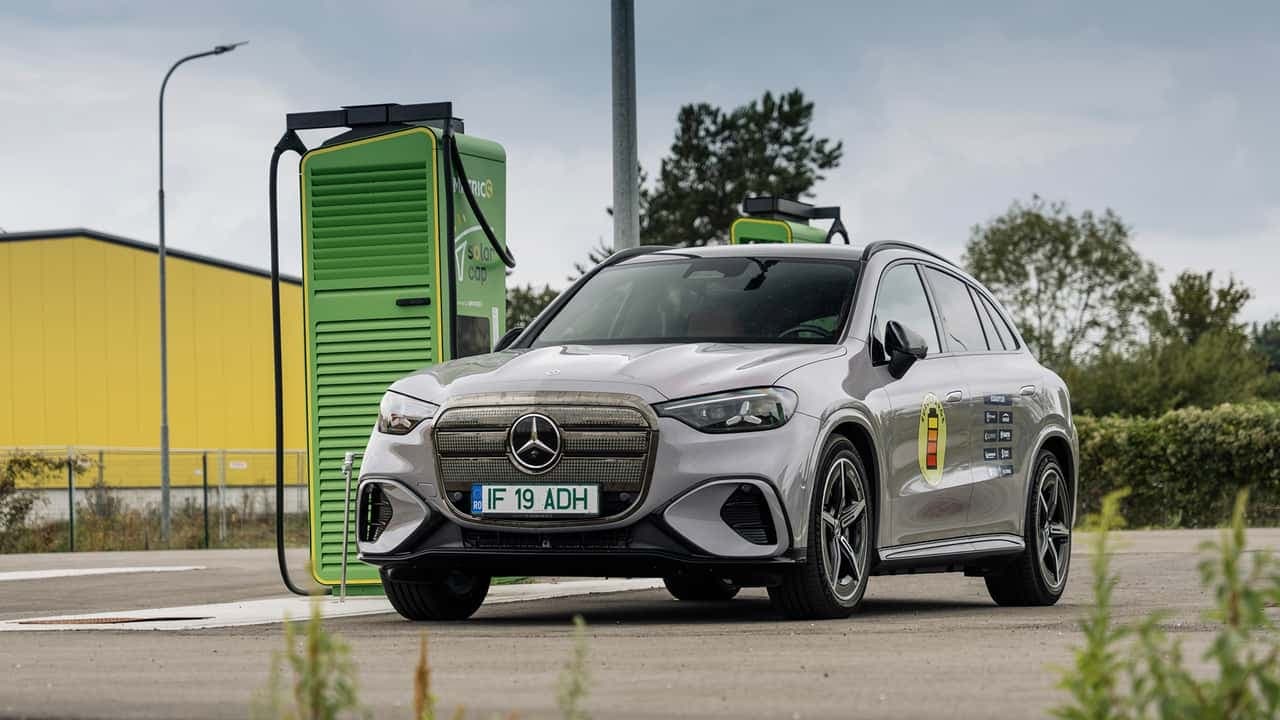
This production milestone is backed by major industry partnerships, most notably with Mercedes-Benz. While previous claims from other startups have often remained theoretical or experimental, ProLogium’s transition to active assembly lines provides the empirical evidence needed to satisfy skeptical markets. The company’s LCB architecture has already undergone rigorous independent validation, clearing hurdles that have historically trapped other firms in the prototype phase.
The Performance Edge
The technical specifications of the Gen 3.5 cells reveal why the industry is paying close attention. Tested by Germany’s TÜV, these large-format 185.4 ampere-hour cells boast a gravimetric energy density of 381 Wh/kg and a volumetric density of 903 Wh/liter. To put these numbers in perspective, they represent a roughly 30% increase over the nickel-manganese-cobalt (NMC) cells found in many of today’s leading premium EVs, which typically hover around 300 Wh/kg at the cell level. Furthermore, they drastically outperform lithium-iron-phosphate (LFP) alternatives, which are often limited to 150–200 Wh/kg.
Beyond raw capacity, safety and charging speed are the primary value propositions. The LCB cells demonstrated remarkable stability during safety testing conducted under the strict GB/T 43568-2026 methodology. In extreme vacuum and heat testing, the cells lost less than 0.05% in weight, comfortably meeting the criteria for true all-solid-state classification. This structural integrity is supported by a proprietary ceramic separator and an edge-frame design that prevents internal short-circuiting, allowing for fast-charging intervals that can bring a battery from 5% to 80% charge in under nine minutes.
Global Expansion and Future Outlook
While the initial production capacity at the Taoyuan site is currently set at 0.5 gigawatt-hours—enough to support approximately 6,000 standard 80kWh electric vehicle packs—this is merely the opening chapter. ProLogium has outlined an aggressive growth strategy to reach scale. The company plans to double its Taiwanese production capacity by 2030 while simultaneously launching a massive 44GWh facility in Dunkirk, France. That site is expected to begin operations by 2028.
Looking even further ahead, the company is already preparing to transition to its Gen 4 architecture. This next evolution will feature a fully inorganic superfluidized electrolyte system designed to further enhance low-temperature performance and charging throughput. Crucially, the company claims that its manufacturing lines are designed with modularity in mind; factories currently producing Gen 3.5 cells will require only a 10% equipment upgrade to begin manufacturing the next-generation cells, ensuring that the cost-to-performance ratio remains competitive as the company scales up to meet global demand.