The Challenge of Collateral Damage in Leukemia Treatment
For patients facing aggressive blood cancers like acute myeloid leukemia (AML) and myelodysplastic syndrome (MDS), stem cell transplantation is often the final frontier of treatment. However, clinicians have long faced a brutal trade-off: many of the proteins targeted by life-saving therapies are also expressed on healthy blood stem cells. This shared biological identity means that modern treatments, including CAR-T cell therapy, often struggle to distinguish between malignant cells and the vital, healthy cells a patient needs to recover after a transplant. This phenomenon results in 'friendly fire,' where the treatment inadvertently wipes out the very cells intended to rebuild the patient's immune system.
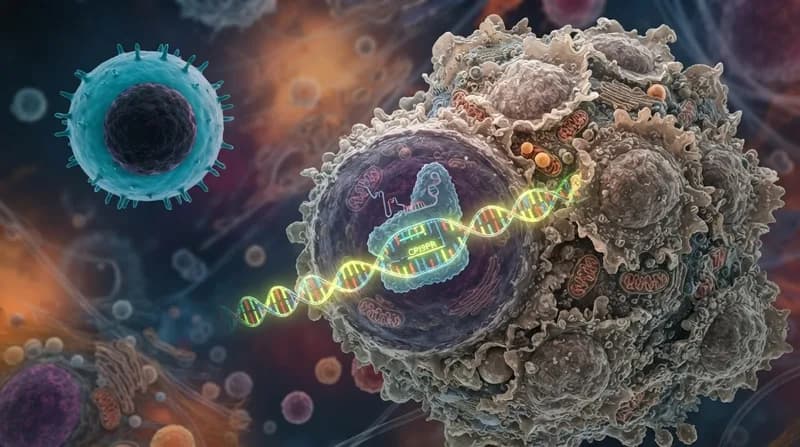
Researchers at Washington University School of Medicine in St. Louis have recently unveiled a promising solution to this dilemma using CRISPR-Cas9 gene editing. By modifying donor stem cells before they are ever transplanted, scientists can essentially strip away specific 'tags' that therapies use to identify cells, creating a shield that allows healthy cells to survive while cancer cells remain vulnerable.
The Engineering Behind Trem-Cel
The core of this innovation is a therapy known as tremtelectogene empogeditemcel (trem-cel), which targets the CD33 protein. CD33 is naturally found on blood-forming cells but is also highly expressed on the surface of many leukemia cells. By using CRISPR to delete the gene responsible for CD33, researchers created donor stem cells that are functionally invisible to CD33-targeted therapies. Because humans born without this specific protein do not appear to suffer related health deficits, removing it serves as a highly effective, safe 'stealth mode' for transplanted cells.
In a phase 1/2 clinical trial involving 30 high-risk patients, the results were striking. Every patient successfully achieved engraftment by day 28, with recovery times for blood cell production mirroring those seen in standard, unmodified transplants. When these patients were administered a CD33-targeted maintenance drug, the engineered cells remained healthy and productive, proving that the CRISPR modification provided the intended shield against the otherwise toxic effects of the therapy.
Why It Matters
- Increased Precision: This approach moves medicine toward a 'targeted-attack' model, enabling physicians to use more potent immunotherapies that were previously considered too toxic for transplant recipients.
- Overcoming Resistance: By separating healthy cell survival from cancer cell destruction, doctors can treat post-transplant relapses more aggressively without triggering life-threatening inflammation or bone marrow failure.
- Clinical Validation: The successful engraftment and subsequent remission cases highlight that gene-edited stem cells can function normally in the long term, marking a major milestone for CRISPR in clinical oncology.
A New Horizon for Immunotherapy
The implications of this study extend far beyond a single clinical trial. While the initial data focused on the safety and efficacy of the engraftment, the ultimate goal is to pair these CRISPR-modified transplants with advanced immunotherapies, such as CD33-targeting CAR-T cells. Early evidence already supports this potential; a single-case study reported previously showed a patient in high-risk remission who received both a CD33-deleted transplant and subsequent CAR-T treatment, remaining cancer-free for over a year with fully restored, healthy blood cell production.
As research continues, this strategy could redefine the standard of care for blood cancers that have historically resisted treatment. By turning healthy cells into 'impenetrable shields,' medicine is gaining a new, sophisticated way to turn up the heat on cancer without burning down the patient's biological infrastructure in the process.