ScienceTechnical Deep Dive

Orcas Observed Using High-Speed Impact Strategy to Shred Sunfish

Published
EElectricBuzz Editorial Team
Orcas Observed Using High-Speed Impact Strategy to Shred Sunfish
1 min read159 wordsElectricBuzz Editorial Team

The Gist

“Researchers in the Gulf of California have documented a previously unseen hunting behavior where orcas use high-speed collisions to dismantle sunfish carcasses.”

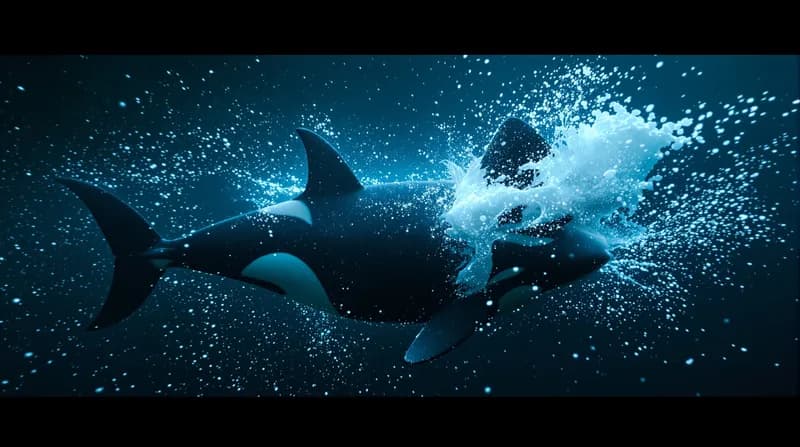
Marine researchers have captured unprecedented footage in the Gulf of California, documenting a highly coordinated and violent feeding behavior among orcas. The observation, which has never been described in scientific literature before, involves a tactical demolition of prey.

A Novel Hunting Tactic

According to the research team, the behavior was observed during two separate encounters. The process involves a sophisticated level of teamwork: one orca firmly grips a dead sunfish by its fin to stabilize it, while a second orca charges the carcass at high speed. The resulting impact is so powerful that it effectively blasts the sunfish into thousands of small pieces, making it easier for the pod to consume.

This discovery adds a new layer to our understanding of orca intelligence and their ability to develop specialized hunting techniques. While orcas are known for their diverse predatory strategies across different regions, this specific 'smashing' technique highlights a unique adaptation for processing large, cumbersome prey like the sunfish.


SPONSORED
The 5 Best Over-Ear ANC Headphones of 2026, Tested & Ranked
Editor's Pick Guide
92/100
Tech & Gadgets•12 min read

The 5 Best Over-Ear ANC Headphones of 2026, Tested & Ranked

We locked five over-ear ANC picks for 2026 — Sony WH-1000XM6, Bose QuietComfort Ultra 2, Soundcore Space One, Sennheiser Momentum 5, and Apple AirPods Max 2 — then stress-tested them on lab metrics, long-term owner truth, and live street prices.

Related Stories

Semantically matched articles, ranked by topic overlap and freshness.

The Timing of Screen Exposure: Why Ages 1 and 6 Are Critical Windows for Child Development
Science

The Timing of Screen Exposure: Why Ages 1 and 6 Are Critical Windows for Child Development

New longitudinal research identifies specific developmental stages where screen time may disproportionately impact future memory and academic performance.

Scientists Discover Natural Molecule That 'Teaches' Muscles to Stay Strong
Science

Scientists Discover Natural Molecule That 'Teaches' Muscles to Stay Strong

A breakthrough study from the University of Leeds reveals how a specific exercise-induced molecule helps muscles adapt, resist fatigue, and potentially fight the effects of type 2 diabetes.

Engineering the Unicorn: The Hidden Architectural Secret of Narwhal Tusks
Science

Engineering the Unicorn: The Hidden Architectural Secret of Narwhal Tusks

New synchrotron X-ray research reveals that the narwhal's iconic spiral tusk is built from two opposing microscopic helices, mirroring advanced composite engineering.

Precision Orbital Deep Strike: Europe Explores Space-Based Defense Capabilities
Science

Precision Orbital Deep Strike: Europe Explores Space-Based Defense Capabilities

Atmos Space Cargo and MBDA have launched a feasibility study for a new orbital strike system, signaling a major shift in European strategic defense infrastructure.

Medical Imaging Breakthrough: High-Resolution 3D Ultrasound Maps Entire Human Kidney
Science

Medical Imaging Breakthrough: High-Resolution 3D Ultrasound Maps Entire Human Kidney

Researchers have successfully visualized the complete vascular network of a human kidney in 3D for the first time, using advanced ultrasound technology to detect microvascular health.

From Landfill to Lubricant: The Breakthrough Turning PVC Into Engine Oil
Science

From Landfill to Lubricant: The Breakthrough Turning PVC Into Engine Oil

Virginia Tech researchers have unveiled a chemical process that transforms notoriously difficult-to-recycle PVC plastic into high-performance synthetic engine lubricants.

MIT’s Dual-Action Strategy Breathes New Life Into Toxic Antibiotic Candidates
Science

MIT’s Dual-Action Strategy Breathes New Life Into Toxic Antibiotic Candidates

Researchers have developed a clever 'drug and antidote' delivery system that renders previously unusable, highly toxic compounds safe for fighting bacterial infections.

Harvard’s Microscopic UV Chip Could Shrink Quantum Computers to Desktop Size
Science

Harvard’s Microscopic UV Chip Could Shrink Quantum Computers to Desktop Size

Researchers have developed a breakthrough lithium niobate photonic device that generates high-power ultraviolet light on a chip, potentially revolutionizing quantum computing and sensor technology.