Nature's Masterclass in Composite Engineering
For centuries, the narwhal’s tusk was draped in the mystery of folklore, famously mistaken for the horn of a mythical unicorn. Today, modern science has peeled back the layers of this Arctic marvel, revealing a sophisticated structural design that rivals the most advanced human-made materials. An international team of researchers, utilizing high-energy synchrotron X-ray facilities, has confirmed that the tusk's iconic corkscrew shape is not just a biological quirk—it is a feat of precision engineering.
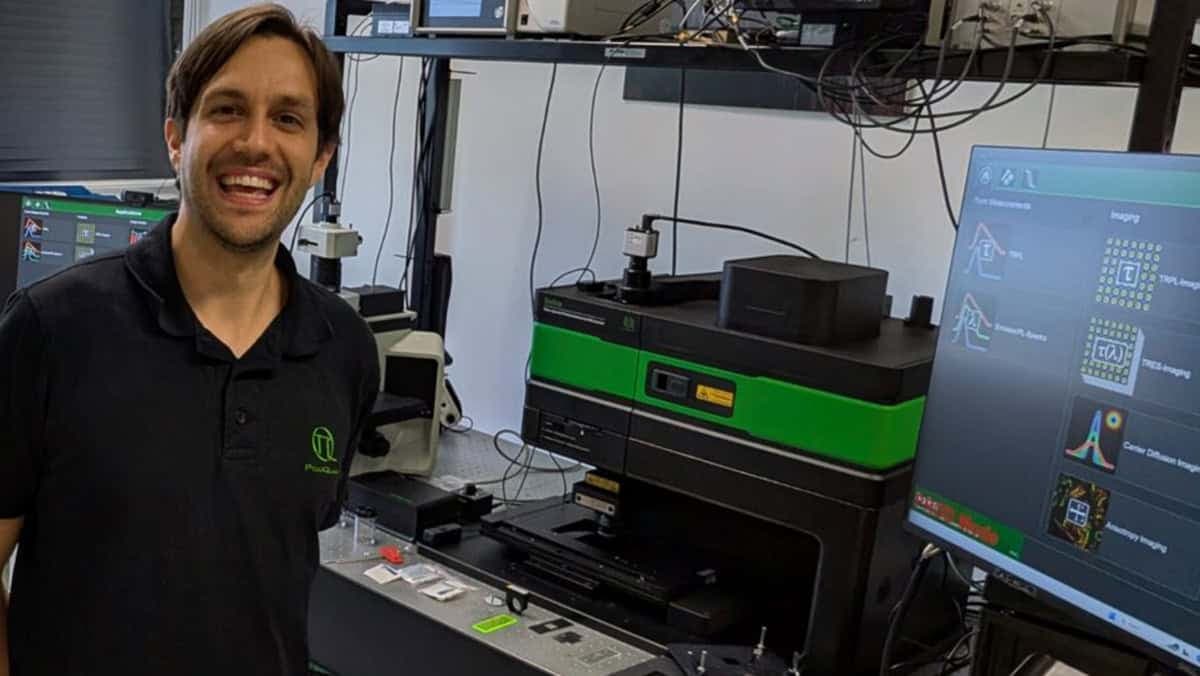
The study, published in Nature Communications, utilized a technique called tensor tomography at facilities including the Swiss Light Source and the European Synchrotron Radiation Facility. By rotating the tusk within an X-ray beam, researchers were able to map the orientation of collagen fibers and mineral crystals at the nanometer scale. What they found beneath the surface was an unexpected, dual-helix architecture that explains how the tooth maintains both extreme durability and flexibility in the harsh, hydrodynamic environment of the Arctic.
The Two-Helix Mechanical Advantage
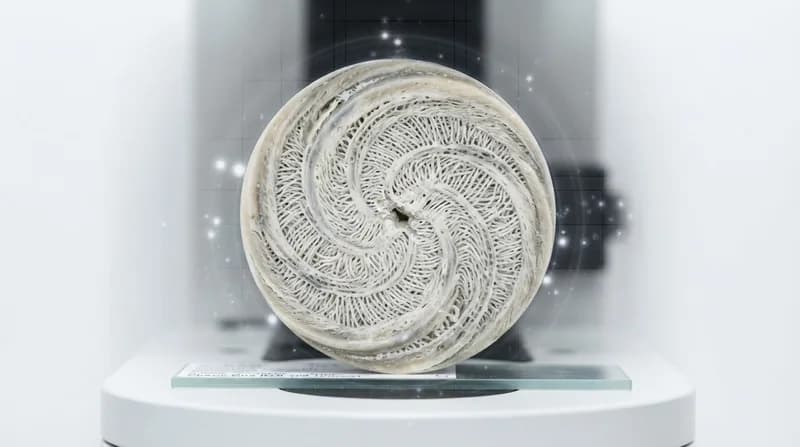
At the heart of the tusk’s strength is a complex, composite structure. The tooth is primarily composed of dentin—hard tissue reinforced with mineralized collagen—covered by an outer layer of cementum. While these materials are similar to those found in human teeth, their organization in the narwhal is unique. The researchers discovered that the outer cementum layer forms a left-handed helix, while the internal dentin structure twists in the opposite direction.
This opposing arrangement functions much like a high-performance rope. By intertwining two helices that twist in reverse directions, the tusk effectively counteracts torsion—or twisting forces—and high-pressure mechanical stress. This natural composite design allows the tusk to reach lengths of up to two meters without snapping under the constant hydrodynamic drag exerted during the animal’s rapid swimming. It is a biological equivalent to reinforced concrete, where the collagen acts as a flexible framework and the mineral crystals provide the necessary rigidity to prevent fracture.
Why It Matters: Biomimicry and Climate Archives
The implications of this discovery extend well beyond marine biology. Understanding how nature balances hardness and flexibility at a nanoscale level provides a blueprint for materials scientists developing next-generation synthetic composites. As we look toward creating materials that are both lightweight and highly resistant to mechanical failure, the narwhal's evolutionary solution offers a compelling model for biomimetic engineering.
Key Research Insights
- Advanced Imaging: Researchers used tensor tomography to reconstruct the internal 3D organization of the tusk at the nanometer level.
- Structural Logic: The tusk is not a single spiral, but a composite of two opposing helices that neutralize mechanical stress.
- Material Composition: The structure relies on mineralized collagen fibers, functioning similarly to a steel-reinforced concrete framework.
- Environmental Archives: Beyond its mechanical structure, the tusk grows in layers like tree rings, providing a nearly century-long chronological record of Arctic environmental conditions.
Looking ahead, the research team—led by Henrik Birkedal—is shifting focus to the environmental data stored within these tusks. Because the tusk grows continuously over the animal's lifetime, these layers act as a biological archive of Arctic climate shifts, food availability, and environmental changes. By studying these tusks, scientists hope to gain a clearer picture of how the Arctic has evolved over the past century, turning the “unicorn horn” into a critical tool for climate science.