Tech & GadgetsTechnical Deep Dive

Nvidia Commits $1 Billion to Supercharge US Scientific Computing

Published
EElectricBuzz Editorial Team
Nvidia Commits $1 Billion to Supercharge US Scientific Computing
3 min read477 wordsElectricBuzz Editorial Team

The Gist

“Nvidia is pledging a massive investment into American scientific infrastructure to bolster research in quantum computing, energy, and AI-driven discovery.”

A Billion-Dollar Bet on Scientific Sovereignty

In a major move to reinforce the United States' position in global scientific computing, Nvidia has announced a $1 billion commitment dedicated to advancing domestic research over the next five years. This strategic investment, revealed during a summit in Washington, DC, is designed to fuel breakthroughs in critical domains including quantum computing, advanced healthcare diagnostics, and national energy security. The initiative aligns closely with the federal government’s "Genesis Mission," a multi-agency strategy aimed at leveraging AI and high-performance computing to maintain technological supremacy.

This pledge marks a pivot for Nvidia, signaling its re-entry into the upper echelons of US government supercomputing. While Nvidia has historically played a supporting role in recent years—often eclipsed by AMD-powered platforms—the company is now preparing to deploy no fewer than seven massive AI-optimized supercomputers across the Argonne, Los Alamos, and Lawrence Berkeley National Laboratories. This shift signifies Nvidia’s intention to transition from a pure AI hardware vendor to a foundational architect of the next generation of American research machinery.

The Architecture of the Future

Central to this initiative is a shift in how supercomputing handles complex math. Nvidia’s upcoming systems, such as the 100,000 Blackwell-GPU-based Solstice machine at Argonne, are built to prioritize AI-centric workloads. Unlike traditional supercomputers that require high-precision double-precision (FP64) computation, modern scientific inquiry is increasingly relying on varied precision formats—including 16-bit, 8-bit, and even 4-bit—to accelerate the massive matrix operations common in neural networks and physics simulations.

To bridge the gap between traditional simulation and modern AI, Nvidia has introduced specialized libraries and architectural features, such as FP64 emulation via the "Ozaki scheme." By using these techniques in its forthcoming Vera Rubin platform, Nvidia can provide the necessary scientific accuracy for complex research without sacrificing the sheer matrix throughput required for AI-optimized discovery. This balance is critical for facilities like Los Alamos, which will utilize this tech alongside the Quantum-X800 InfiniBand to drive its upcoming Mission and Vision systems.

Why It Matters: Global Computing Competition

The urgency of this investment is underscored by the current state of international competition. With global peers like China continuing to advance their own exascale systems—such as the formidable LineShine supercomputer—the race for top-tier computing power has become a matter of national strategic interest. While Nvidia’s new systems represent a massive leap in AI-integrated supercomputing, the landscape remains diverse. Pure, heavy-duty FP64 performance for traditional research will continue to see competition from platforms like Oak Ridge National Laboratory’s upcoming Discovery system, which remains committed to AMD-based architecture.

By spreading its expertise across the national laboratory complex, Nvidia is positioning its hardware as the indispensable backbone for the next era of US-led innovation. Whether through optimizing quantum simulations or accelerating drug discovery pipelines, the $1 billion investment is a clear signal that the company intends to be the primary engine driving the next half-decade of American scientific output.


SPONSORED
The 5 Best Over-Ear ANC Headphones of 2026, Tested & Ranked
Editor's Pick Guide
92/100
Tech & Gadgets•12 min read

The 5 Best Over-Ear ANC Headphones of 2026, Tested & Ranked

We locked five over-ear ANC picks for 2026 — Sony WH-1000XM6, Bose QuietComfort Ultra 2, Soundcore Space One, Sennheiser Momentum 5, and Apple AirPods Max 2 — then stress-tested them on lab metrics, long-term owner truth, and live street prices.

Related Stories

Semantically matched articles, ranked by topic overlap and freshness.

Data Infrastructure in the Crosshairs: Yandex Cloud Facility Destroyed in Drone Strike
Tech & Gadgets

Data Infrastructure in the Crosshairs: Yandex Cloud Facility Destroyed in Drone Strike

A significant Yandex cloud availability zone has been taken offline following a drone strike, marking a growing trend of physical attacks on critical digital infrastructure.

AI-Assisted Hacking: CrowdStrike Uncovers 'YY' Operative's Digital Footprint
Tech & Gadgets

AI-Assisted Hacking: CrowdStrike Uncovers 'YY' Operative's Digital Footprint

A high-stakes cybersecurity breach involving South Korean banks has revealed a new, alarming trend: attackers are leaving behind AI session logs—including a resume—that trace back to their own operations.

Remembering Margaret Hamilton: The Architect of Apollo's Software Success
Tech & Gadgets

Remembering Margaret Hamilton: The Architect of Apollo's Software Success

Margaret Hamilton, the visionary software engineer who coined the term 'software engineering' and saved the Apollo 11 moon landing, has passed away at age 90.

The High Price of Skipping Cybersecurity: A Lesson in Vulnerability
Tech & Gadgets

The High Price of Skipping Cybersecurity: A Lesson in Vulnerability

A cautionary tale of a small business collapse after rejecting professional security, paired with a modern look at sophisticated man-in-the-middle phishing attacks.

Solar Orbiter Unlocks the Mystery of Sun's Magnetic 'Switchbacks'
Tech & Gadgets

Solar Orbiter Unlocks the Mystery of Sun's Magnetic 'Switchbacks'

New data from the European Space Agency's Solar Orbiter has finally pinpointed the origins of mysterious S-shaped magnetic kinks in the solar wind.

The Rise of Open-Source Alternatives to OpenAI's Persistent AI Agents
Tech & Gadgets

The Rise of Open-Source Alternatives to OpenAI's Persistent AI Agents

As OpenAI faces technical hurdles with its 'dots' agent platform, a surge of open-source competitors is emerging to offer developers more control and flexibility.

Microsoft Unveils Hybrid AI Intelligence: Bringing Agentic Power to the Desktop
Tech & Gadgets

Microsoft Unveils Hybrid AI Intelligence: Bringing Agentic Power to the Desktop

Microsoft is evolving its Windows ecosystem with a new 'hybrid intelligence' framework, allowing local AI agents to process sensitive data directly on your PC.

Argonne National Laboratory Unveils Breakthrough 'Conversational' X-Ray Microscope
Tech & Gadgets

Argonne National Laboratory Unveils Breakthrough 'Conversational' X-Ray Microscope

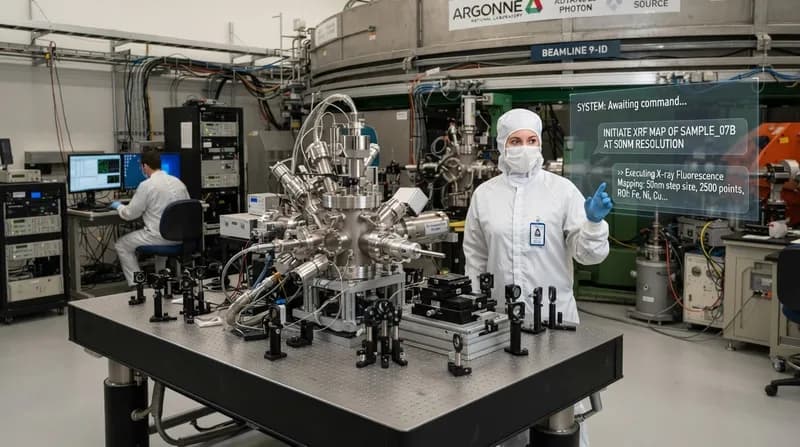
Scientists have integrated agentic AI into a powerful X-ray nanoprobe, allowing researchers to command complex imaging tasks using simple natural language.