The Anatomy of High-Performance Computing
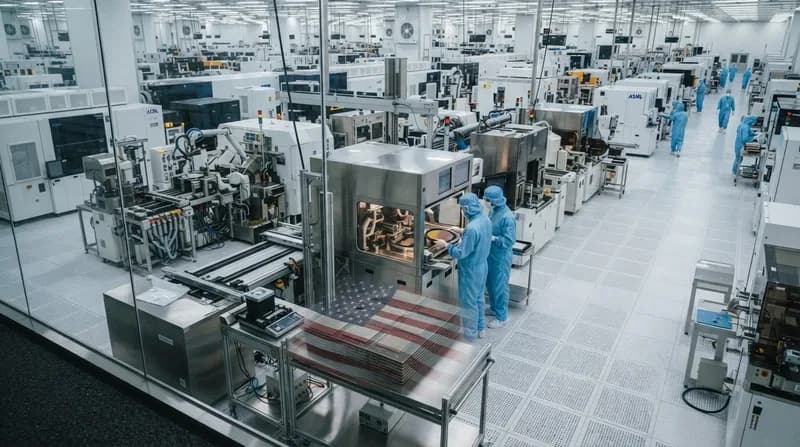
Running a supercomputer is often perceived as a task for an army of specialists, but for Mark O'Shea, the Lead for Supercomputing Operations at the Pawsey Supercomputing Research Centre, it is a role rooted in familiar principles. Pawsey serves as the home for Setonix, an HPE Cray EX supercomputer that stands as a behemoth of modern hardware. Boasting over 200,000 AMD EPYC CPU cores paired with hundreds of AMD Instinct MI250X accelerators, Setonix is a fixture on the prestigious TOP500 list. Managing such a system requires a deep understanding of cooling, power distribution, and massive-scale data throughput, skills O'Shea refined through years of experience in data center management.
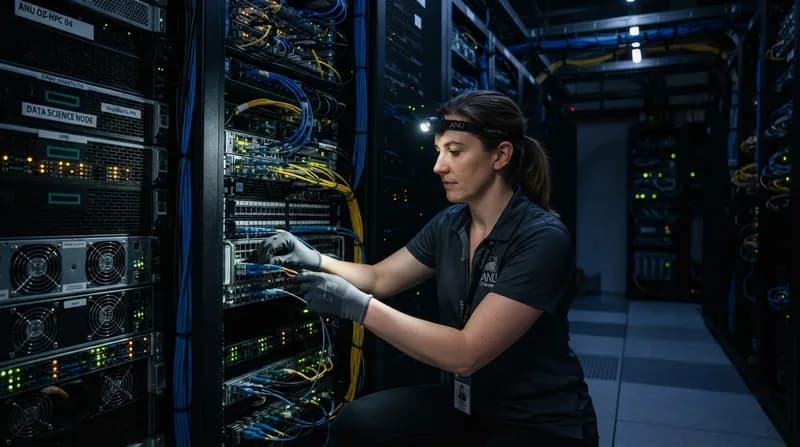
While the scale of Setonix is exponentially larger than a standard web hosting operation, the core challenges remain remarkably consistent. Administrators must treat the facility as a singular, living organism that requires precise thermal management and robust power delivery. For those working in the trenches of high-performance computing (HPC), the objective is to maintain maximum uptime for researchers who are attempting to simulate everything from climate models to galactic phenomena.
The Unconventional Path to Systems Administration
Unlike traditional software engineering or corporate IT roles, there is no standardized degree for supercomputer administration. Andrew Underwood, CTO for HPC and AI at Dell (Asia-Pacific, Japan, and China), notes that the field is largely populated by those who transition from scientific disciplines. A researcher in genomics or astrophysics often finds themselves diving deep into the hardware stacks required for their data-intensive studies, eventually realizing that their true calling lies in building the foundational architecture that supports the broader scientific community.
This organic growth into the profession creates a culture where the work is often viewed as a calling rather than a typical 9-to-5. Many administrators are former PhD candidates who fell in love with the engineering side of their respective research fields. Consequently, the community remains tight-knit, favoring deep technical knowledge and a mission-driven mindset over corporate pedigree. Industry experts argue that the next phase of growth for this sector will require formalizing these pathways and embracing a more diverse range of backgrounds through global forums, such as the SC Conference and international student cluster competitions.
Why it Matters: The Human-Hardware Nexus
The true value of a supercomputer is not found in the raw FLOPS or the cooling capacity, but in the scientific output it enables. For the team at Pawsey, the motivation is tangible. Whether it is processing a 43 TB dataset to render a high-fidelity image of a supernova remnant or accelerating complex simulations that unlock new understandings of materials science, the administrators find fulfillment in the results their users produce. This symbiosis between the "big iron" hardware and the scientific mission is what sustains the community, transforming raw silicon and electricity into the engine of modern progress.
Technical Context of the Setonix System
- Architecture: HPE Cray EX system.
- CPU Power: 200,000+ AMD EPYC cores.
- GPU Acceleration: Hundreds of AMD Instinct MI250X accelerators.
- Global Standing: Consistent presence on the TOP500 and Green500 lists for performance and power efficiency.