The Rise of Passive Surveillance
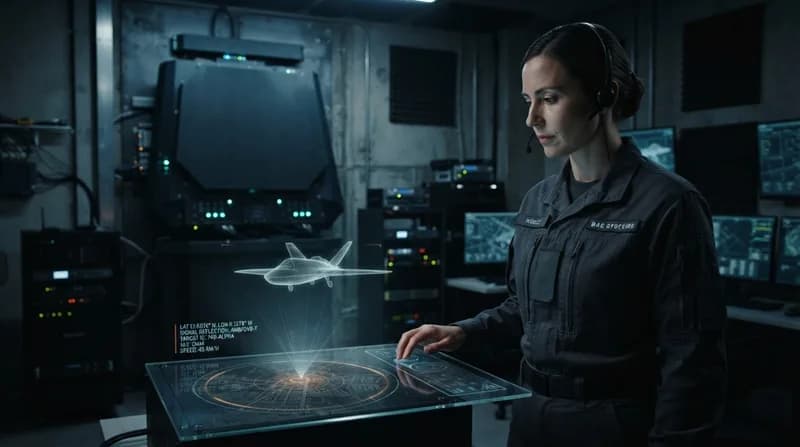
In the evolving landscape of aerial defense, the biggest vulnerability for any radar station is its own signature. Traditional active radar systems function like a massive, high-powered searchlight in a dark room; they illuminate the target, but they also broadcast their own coordinates to every enemy observer in the vicinity. BAE Systems is looking to change that paradigm with its latest innovation: a passive radar system that detects airborne threats by piggybacking on existing commercial signals.
Instead of emitting its own radio waves, this "ghost" radar architecture captures the reflections of ambient television, radio, and mobile network transmissions as they bounce off airborne objects. By processing these ubiquitous signals, the system can triangulate the position, speed, altitude, and heading of everything from tiny, low-flying drones to large aircraft. Because the system remains entirely silent on the radio spectrum, it maintains a low profile, making it significantly harder for adversaries to detect or jam the monitoring station.
Portability Meets Economic Efficiency
One of the most disruptive aspects of this technology is its physical footprint and cost profile. By leveraging commercial off-the-shelf hardware, BAE Systems claims it can manufacture and deploy these units at approximately one-tenth the cost of conventional active radar installations. The modular nature of the equipment is a major tactical advantage; the entire system is compact enough to be mounted inside a standard SUV, allowing for rapid deployment in dynamic, real-world environments.
The system is particularly suited for guarding sensitive areas like power stations, airports, and military bases. In high-traffic environments like airports, traditional radar often struggles with signal interference; since this passive system emits no radiation of its own, it operates without disrupting existing communications or navigational equipment. This "non-intrusive" approach ensures that the technology can secure critical infrastructure while the public continues their daily activities, such as watching television or browsing the web, without even realizing their broadcasts are being used to maintain airspace security.
Why It Matters
- Covert Operations: By remaining silent, the system eliminates the risk of being targeted by anti-radiation missiles or electronic warfare countermeasures.
- Cost-Effective Defense: Dramatically lower production costs allow for a wider network of sensors to be deployed across larger geographic areas.
- Regulatory Friendly: The lack of active transmissions simplifies the regulatory approval process for use in civilian areas, such as near public transit hubs or urban centers.
BAE Systems has confirmed that the technology will undergo comprehensive live trials throughout 2027. These trials will target a diverse range of potential users, including law enforcement agencies, defense contractors, and operators of critical national infrastructure. As the threat from small, low-cost uncrewed aerial systems continues to grow, this passive, low-cost sensing approach could become a cornerstone of modern defensive strategy, proving that sometimes, the most effective way to see the enemy is to simply listen to the world around you.