The Anthropic Cyber Mission
In a significant move to address the dual-use nature of generative artificial intelligence, Anthropic has officially unveiled its 'Anthropic Cyber Mission.' This initiative represents a concerted effort to provide defensive security tools to the very organizations that are increasingly targeted by AI-enabled cyberattacks. The company acknowledges a sobering reality: for the next two years, the advantage in cyber warfare likely rests with attackers, as malicious actors harness AI to identify and exploit vulnerabilities faster than human teams can mitigate them.
The program is bifurcated into two distinct pillars. The first, the Critical Infrastructure Defense Program, focuses on safeguarding the backbone of public utilities. The second, a specialized OSS Scanner, aims to provide robust security auditing for foundational open-source projects. By leveraging its most advanced models alongside human experts, Anthropic intends to turn the tide, theoretically tipping the scales back in favor of defenders by 2028.
Critical Infrastructure Defense Program
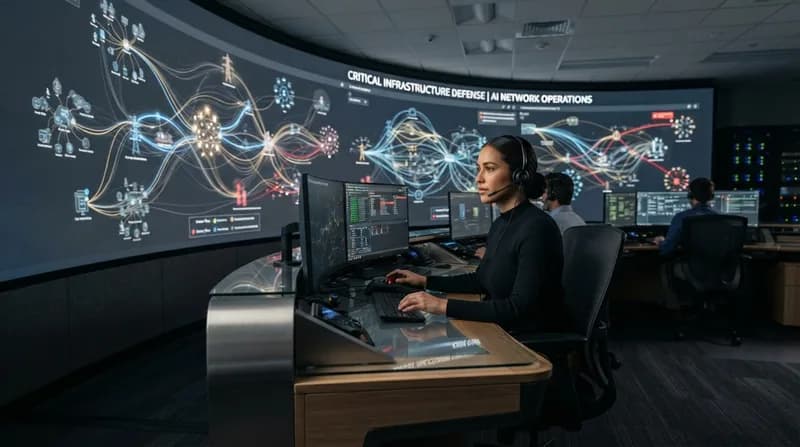
Protecting utilities—such as power grids and water systems—from SCADA-specific vulnerabilities has become a priority for Anthropic. To combat the threat of AI agents being used to disrupt these systems, the company is deploying 'forward-deployed engineers.' These specialists work directly on-site with organizations that may lack the specialized expertise required to navigate the complexities of AI-integrated security architectures.
This initiative is backed by a robust coalition of industry giants, including Deloitte, CrowdStrike, Palo Alto Networks, and Rockwell Automation. These partners provide the necessary reach into the technical frameworks that underpin public infrastructure. By integrating Anthropic’s frontier models with these companies’ existing security stacks, the program seeks to provide a preemptive defense mechanism, catching zero-day vulnerabilities before they can be weaponized by automated exploit agents.
OSS Scanner and the Future of Open-Source Security
Beyond massive industrial infrastructure, Anthropic is turning its attention to the open-source software (OSS) ecosystem, which serves as the bedrock for modern development. The new OSS Scanner service provides periodic security audits for influential projects. While not open to every hobbyist repository, the tool follows strict eligibility criteria modeled after Google's OS-FUZZ, targeting projects with critical impacts on user security and widespread deployment.
There is a catch for maintainers: participation in the scanner service comes with the expectation that project inputs and outputs may be utilized for further model training. However, Anthropic notes that most established open-source codebases have already been ingested into training datasets. The trade-off, according to initial feedback from project maintainers, is significant. AI-driven bug reporting has seen a massive evolution in efficiency, with Anthropic reporting that its models now identify over 85 percent of vulnerabilities—a massive leap from the 20 percent detection rate seen just eighteen months ago.
Why It Matters
- Defensive Parity: By offering its most advanced models for security auditing, Anthropic is attempting to provide defenders with the same technical advantages that hackers have enjoyed since the widespread adoption of coding agents.
- Bridge the Talent Gap: The use of forward-deployed engineers acknowledges that AI is not a 'set-and-forget' solution, emphasizing the need for human-machine collaboration in high-stakes environments.
- Evolution of Bug Reporting: The transition from 'AI-generated slop' to 'high-quality bug reports' marks a maturation of LLMs as specialized tools for cybersecurity professionals.