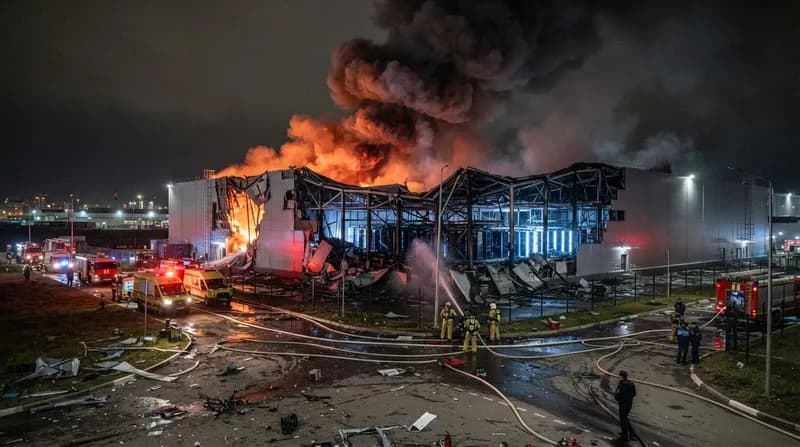
The Sasovo Incident
In a striking development for regional digital infrastructure, Russian web giant Yandex has confirmed that one of its primary cloud availability zones, identified as ru-central1-b, has been completely incapacitated following a drone attack. The incident occurred at the company’s data center located in Sasovo, a town situated roughly 300 kilometers southeast of Moscow. The facility, which serves as a critical node for Yandex’s sprawling ecosystem of search, email, and mapping services, was reportedly engulfed in fire as a direct consequence of the strike.
Yandex has officially acknowledged the severity of the situation, noting that all operations at the site have come to a standstill. In a sobering update to its cloud status page and communications with clients, the company stated that it is currently uncertain whether the facility can ever be brought back online. Users have been urged to pivot to alternative service restoration strategies, including migrating workloads to bare-metal servers, though the company explicitly warned that full service restoration is not feasible in the near future.
The Rising Threat to Global Data Hubs
This event marks a volatile escalation in the vulnerability of physical computing architecture during geopolitical conflict. Datacenters, once considered safe-haven infrastructure, are increasingly becoming direct targets. The destruction of the Sasovo site follows a similar high-profile incident earlier this year, in which an Amazon Web Services (AWS) facility in Bahrain was rendered irreparable following a drone attack attributed to Iranian forces. In that instance, the facility was targeted based on the belief that it hosted sensitive workloads for Western military suppliers.
Why It Matters
- Infrastructure Vulnerability: The strike underscores the physical fragility of the 'cloud,' proving that digital resilience is only as strong as the physical bricks and mortar housing the servers.
- Strategic Targeting: As digital and kinetic warfare continue to converge, cloud regions are being treated as essential tactical nodes rather than neutral civilian infrastructure.
- Resilience Limitations: While standard industry advice recommends geographically distributed availability zones to mitigate outages, options in restricted markets are limited, leaving businesses with few recovery paths when primary local hubs are compromised.
The incident highlights the grim reality long discussed by security experts: datacenters are now firmly classified as critical infrastructure. As these sites become targets, the reliance on singular national cloud providers creates a bottleneck that, when severed, leaves local enterprises with little recourse. With Yandex facing potential write-offs and a lack of easy migration options due to international sanctions, the Sasovo attack serves as a stark reminder of the geopolitical risks inherent in modern digital operations.