A New Chapter for the Pixo Name
Nissan has officially pulled the curtain back on the Pixo, an all-electric compact car designed specifically for the rigors of European urban environments. While the nameplate might sound familiar—having graced a small combustion microcar between 2009 and 2013—the new Pixo is a fundamentally different beast. By entering the competitive A-segment, Nissan is betting on the idea that future mobility isn't about larger dimensions or excess, but rather about smarter, more efficient packaging that simplifies the daily commute.
The development of the Pixo is a clear reflection of the strategic depth in the Renault-Nissan partnership. By leveraging Renault’s specialized EV platform and the rapid engineering capabilities of the 'ACDC' research center in Shanghai, Nissan has managed to fast-track a vehicle that combines Japanese design language with proven European electric hardware. This cross-pollination of expertise allows for a production process based in Novo Mesto, Slovenia, ensuring the vehicle is tailored to European sensibilities and regulations.
Technical Precision and Urban Capability
At the heart of the Pixo is a powertrain engineered for reliability and efficiency. The vehicle utilizes a 60 kW electric motor paired with a 27.5 kWh LFP battery, delivering a WLTP-rated range of up to 259 kilometers. This puts the Pixo in a sweet spot for urban dwellers, striking a balance between the Dacia Spring and the Renault E-Twingo. Performance metrics include a healthy 175 Nm of torque, which provides the punchy acceleration necessary for navigating tight city streets and heavy traffic.
Charging infrastructure support is equally robust. The Pixo comes standard with 11 kW AC charging and 50 kW DC fast charging, the latter capable of replenishing the battery from 10 to 80 percent in approximately 30 minutes. Notably, the Pixo includes bidirectional charging capabilities, allowing the vehicle to act as a mobile power source, a feature that adds significant utility in a modern connected home ecosystem.
Design and Interior Innovation
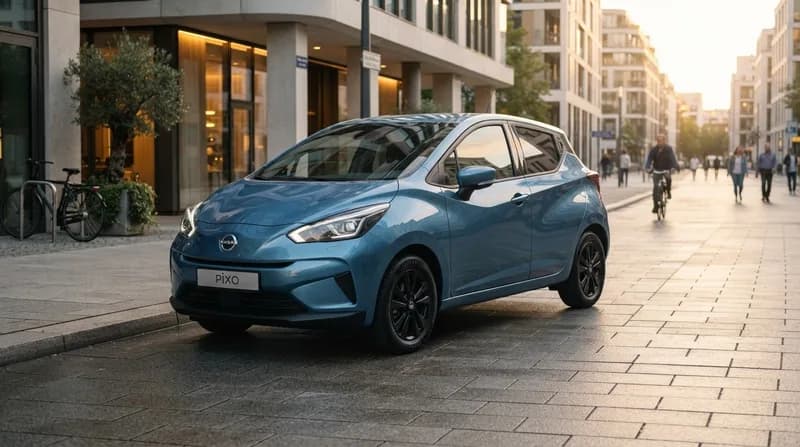
Visually, the Pixo carves out its own identity within Nissan’s electric lineup. While it shares some structural DNA with its French counterpart, Nissan has injected its own flair through pixel-inspired lighting signatures and a bold, voluminous front grille. The design emphasizes a flat, rising windscreen and a steeply sloping rear, maximizing interior volume while maintaining a compact footprint of 3,796 mm in length. Inside, the cabin is designed for versatility, featuring individually adjustable rear seats and a respectable 356 liters of cargo capacity, which includes a dedicated 50-liter stowage zone for charging cables.
The tech stack is perhaps the most significant differentiator. The Pixo is the first Nissan vehicle in the A-segment to integrate the Google ecosystem, featuring the Gemini AI assistant. This system supports natural voice interaction across 16 languages, handling everything from real-time navigation and route planning to media controls. These features, combined with a 7-inch driver display and a 10-inch infotainment screen, position the Pixo as a highly capable digital companion for the tech-savvy urban driver.
Why it Matters
- Strategic Partnership: The Pixo proves the efficiency of the restructured Renault-Nissan alliance, utilizing shared platforms to lower costs and accelerate time-to-market.
- Technological Integration: The debut of Google’s Gemini AI in a budget-friendly A-segment car represents a significant leap in how entry-level vehicles handle driver assistance and connectivity.
- Sustainability and Efficiency: By utilizing LFP battery chemistry and focusing on a compact design, the Pixo addresses the demand for affordable, lower-impact urban transportation.
Outlook and Market Positioning
With deliveries slated for early 2027, the Pixo represents Nissan’s tactical push to capture the entry-level EV market without sacrificing build quality or essential tech. While official pricing is currently under wraps, it is expected to mirror the competitive sub-€20,000 bracket set by its sister models. By balancing a youthful color palette with advanced driver assistance features like hands-free parking and lane-keeping assist, Nissan is clearly positioning the Pixo as an accessible, high-tech entry point for a new generation of EV drivers.