E-BUZZ ME Logo
ScienceTechnical Deep Dive

New Research Suggests Human Brain Expansion May Lack Evolutionary Purpose

Published
New Research Suggests Human Brain Expansion May Lack Evolutionary Purpose
1 min read181 words

The Gist

While it is often assumed that the large size of the human brain provided a specific evolutionary advantage, new scientific perspectives suggest the growth may have occurred without a particular reason.

For decades, the prevailing narrative in evolutionary biology has been that the significant size of the human brain is the result of direct natural selection, providing our ancestors with the cognitive tools necessary for survival. However, recent scientific discussions are challenging this long-held assumption.

Challenging Evolutionary Necessity

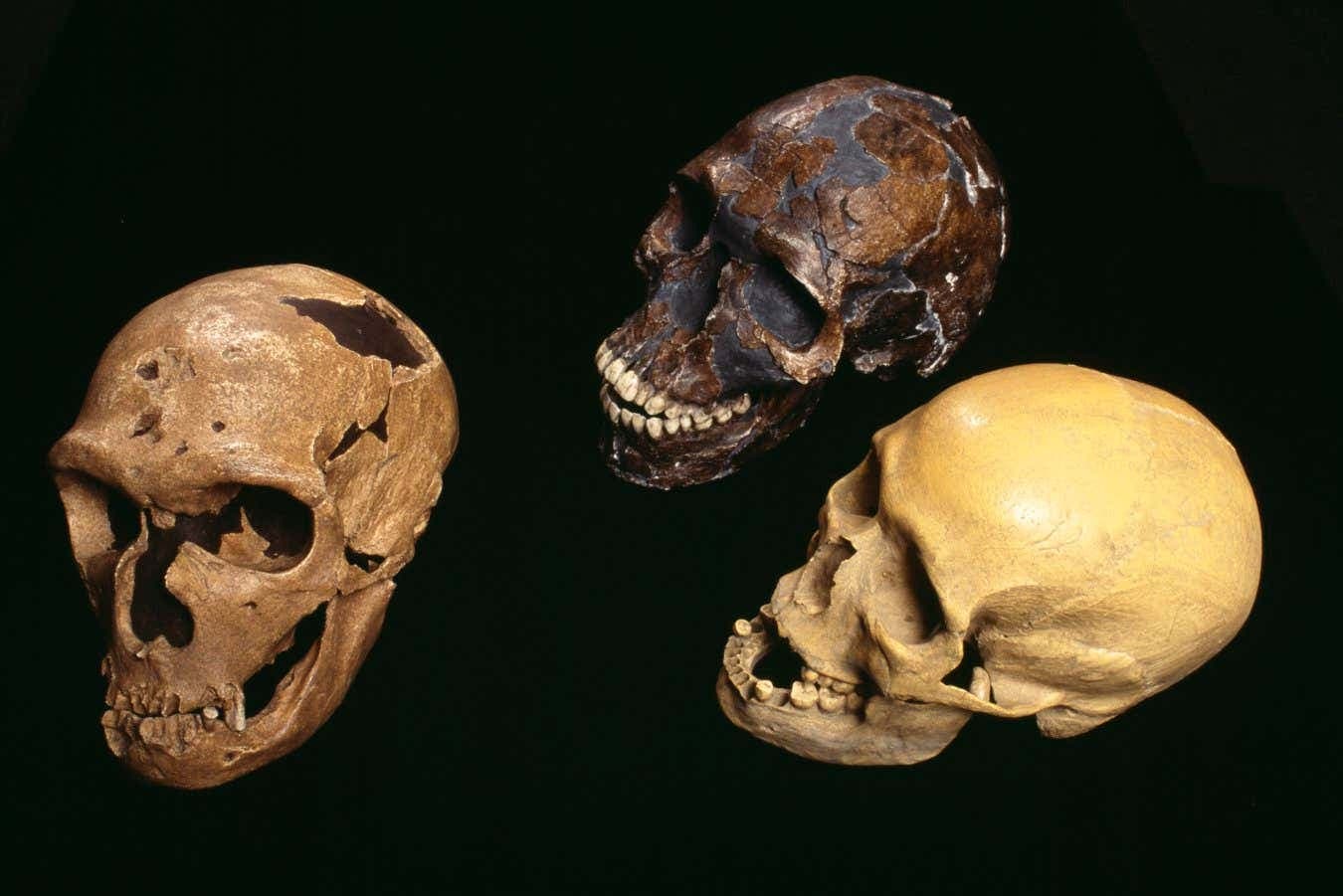
Our brains are exceptionally large compared to those of other animals, leading many to believe there must be a clear evolutionary benefit behind this development. Yet, researchers are now proposing that this expansion might not be tied to a specific advantage. Instead, the growth of the human brain could be a biological byproduct or a result of genetic drift rather than a targeted response to environmental pressures.

Rethinking Human Intelligence

This perspective shifts the focus from the 'why' to the 'how' of human evolution. If the increase in brain volume was not strictly necessary for survival, it suggests that the emergence of complex human intelligence might be more accidental than previously thought. While the large brain certainly facilitates advanced cognition, its initial growth may have lacked the tactical purpose scientists once attributed to it.

Related Stories

Semantically matched articles, ranked by topic overlap and freshness.

Neural Switch Discovered Controlling Bee Colony Labor Division
Science67%

Neural Switch Discovered Controlling Bee Colony Labor Division

Researchers have identified specific brain circuits that dictate the professional roles of honeybees as they age.

Simple AI Prompt Resolves Decades-Old Mathematical Conjecture
Science63%

Simple AI Prompt Resolves Decades-Old Mathematical Conjecture

For the second time in a week, artificial intelligence has disproved a long-standing mathematical conjecture using surprisingly basic prompts.

New Study Challenges the Existence of Dark Energy
Science62%

New Study Challenges the Existence of Dark Energy

A controversial research paper suggests that the universe’s expansion may not be accelerating, potentially eliminating the need for dark energy as a scientific explanation.

Predictable Antarctic Ice Loss Offers Decades for Sea Level Preparation
Science61%

Predictable Antarctic Ice Loss Offers Decades for Sea Level Preparation

New research suggests that Antarctic ice retreat may remain predictable through 2050, giving governments a critical window to implement coastal defenses.

Global Shift to Healthier Diets Could Slash Farm Emissions by 85%
Science61%

Global Shift to Healthier Diets Could Slash Farm Emissions by 85%

A transition toward more nutritious food choices could revolutionize global agriculture and significantly reduce the environmental impact of livestock farming by 2050.

Acoustic Stimulation: Can Sound Frequencies Boost Crop Yields?
Science60%

Acoustic Stimulation: Can Sound Frequencies Boost Crop Yields?

Startup Haivya is utilizing specialized acoustic signals to boost plant development, reporting significant yield increases in crops like soybean and pepper.

Super El Niño Set to Break 150-Year Temperature Records
Science60%

Super El Niño Set to Break 150-Year Temperature Records

A developing 'super' El Niño in the tropical Pacific has a 90 percent chance of becoming the strongest in recorded history, threatening unprecedented global heat.

Anish Kapoor’s Hayward Gallery Exhibition Explores the Science of Perception
Science59%

Anish Kapoor’s Hayward Gallery Exhibition Explores the Science of Perception

A new exhibition by Anish Kapoor at the Hayward Gallery uses light-absorbing Vantablack and visceral forms to challenge our understanding of reality and science.