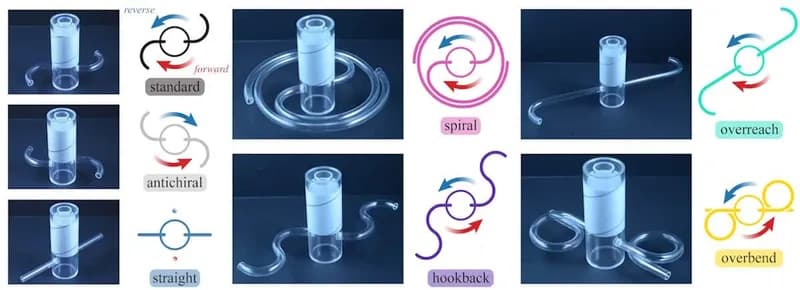
A long-standing puzzle in fluid dynamics, known as the reverse sprinkler problem, has received a new layer of clarity thanks to recent experimental research. The problem, which famously intrigued physicist Richard Feynman, asks which way a sprinkler will rotate if it is submerged in water and forced to suck liquid in rather than spray it out.
The Role of Angular Momentum
The latest experiments suggest that the motion of a reverse sprinkler is fundamentally driven by angular momentum induced at its center. As water is drawn into the device, the flow patterns create a torque that dictates the direction of rotation. Unlike a standard sprinkler, which relies on the reaction force of exiting water jets, the reverse mechanism depends on the internal dynamics of the fluid being sucked in.
These findings help reconcile conflicting theories regarding the behavior of such devices in submerged environments. By meticulously measuring the flow and the resulting forces, researchers have been able to demonstrate that the center of the sprinkler acts as the focal point for the momentum exchange that triggers movement.