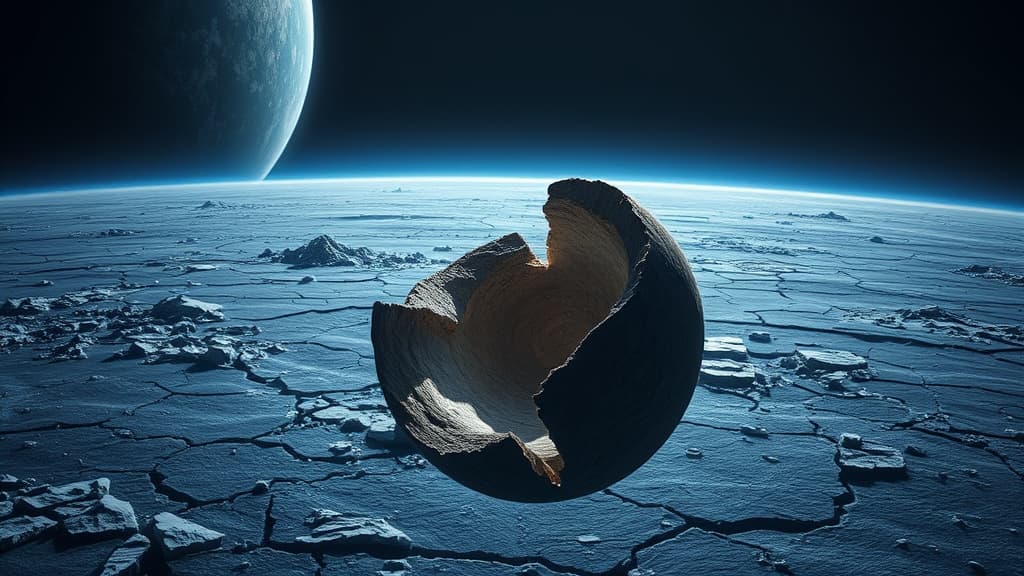
Neptune's inner moons have long been a subject of fascination for astronomers, and new research using NASA's James Webb Space Telescope has shed light on their mysterious origins. The discovery of clay-like minerals on the surfaces of these tiny moons suggests that they may be the remnants of a catastrophic event that shattered larger icy moons.
Key Insights
The research supports the theory that Neptune's original satellite system was destroyed when Triton, the planet's largest moon, was captured by Neptune's gravity. The clay-like minerals found on the surfaces of the inner moons indicate that they originated from deep inside larger icy moons, providing a glimpse into the violent history of Neptune's satellite system.