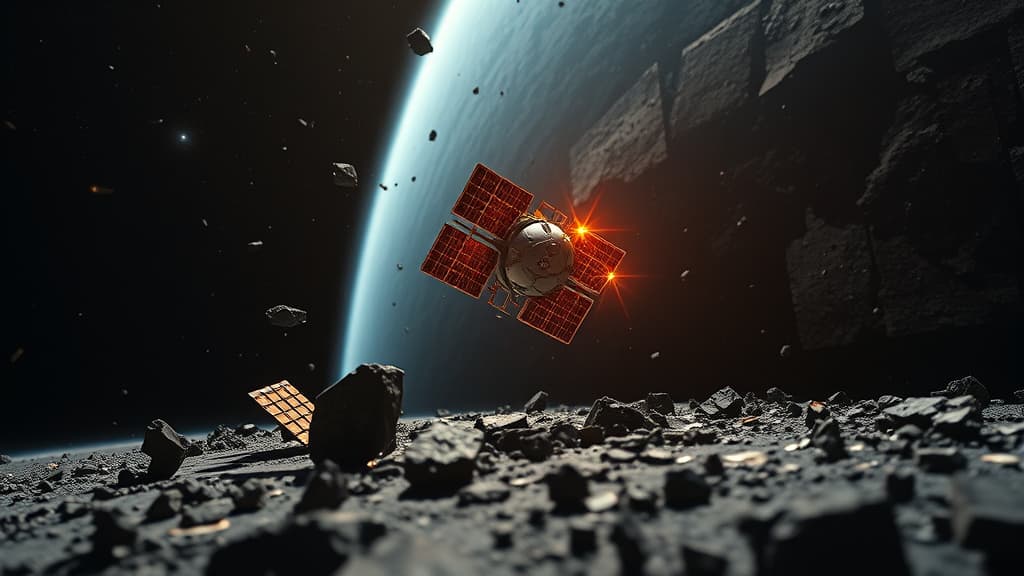
NASA has successfully tested its new satellite navigation system, FALCON, which enables autonomous navigation without relying on GPS. This innovative system utilizes space debris as reference points to determine orbital positions. During a span of just three days, FALCON improved the trajectories of over 200 objects, showcasing its potential significance for upcoming deep-space missions.
Key Features of FALCON
- The system was developed in partnership with EraDrive and is crucial for deep-space and lunar missions.
- FALCON enhanced the orbit knowledge of over 200 space objects without any ground-based intervention, demonstrating its accuracy against a database of 20,000 known objects.
- Utilizing onboard star tracker cameras, Starling detected major space objects, providing vital data for refining its own orbital calculations as well as those of other satellites.
- NASA program manager Roger Hunter highlighted FALCON's potential to transform on-orbit traffic management by reducing ground-based tracking dependency, thereby enhancing safety and navigation efficiency.
- This research began as a university project and has now progressed into commercially viable technology, underpinning NASA's commitment to advancing space navigation solutions.
This pioneering work not only emphasizes the importance of innovative navigation systems but also scouts new pathways for managing space traffic, ultimately facilitating safer exploration beyond Earth's atmosphere.