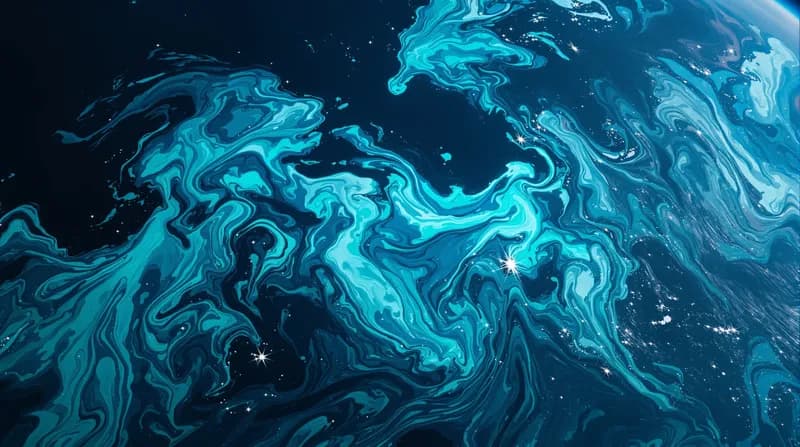
NASA has released stunning imagery showing the Black Sea undergoing a dramatic color transformation. The usually dark waters have turned a brilliant turquoise, a phenomenon captured by both the PACE satellite and astronauts aboard the International Space Station.
The Science Behind the Glow
This vivid color shift is caused by an annual phytoplankton bloom, specifically massive concentrations of microscopic organisms known as coccolithophores. These organisms are covered in tiny, white calcium carbonate plates. When they gather in high numbers, their reflective shells scatter sunlight, brightening the water significantly enough to be observed from orbit.
Orbital Perspectives
In addition to satellite data, an astronaut on the ISS photographed the bloom as it spread through the Bosphorus Strait. The images reveal intricate swirling currents, providing researchers with visual data on how these organisms move through the region's marine ecosystems.