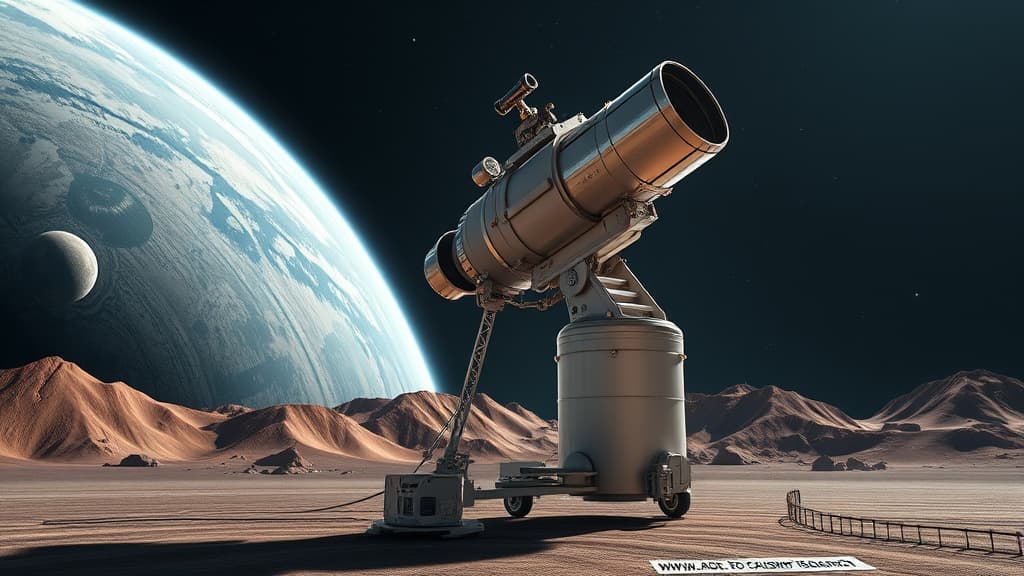
The Nancy Grace Roman Space Telescope is on track for a significant launch aimed at unraveling the cosmos. Encapsulated within a Falcon Heavy fairing, it is poised for liftoff on August 30, 2026, at 7:26 a.m. EDT. This mission represents a major leap in NASA's endeavor to explore the universe.
Key Points of the Mission
- The Roman Space Telescope will launch aboard a SpaceX Falcon Heavy rocket.
- Standing at 43 feet tall, the fairing will protect the telescope from extreme atmospheric conditions during ascent.
- Once operational, the telescope aims to identify approximately 100,000 exoplanets, significantly enhancing our understanding of planetary systems in the Milky Way.
- Beyond exoplanet research, the telescope will play a crucial role in studying dark matter and dark energy, which are essential for explaining the universe's accelerating expansion.
- It will operate from the Sun-Earth Lagrange point 2 (L2), providing a stable vantage point for continuous observations of the cosmos.
The Roman Space Telescope is part of NASA's broader strategy to delve into the mystery of our universe, particularly regarding the composition and behavior of celestial bodies. Equipped with advanced technology, it promises to augment our knowledge significantly, potentially leading to groundbreaking discoveries.
This mission not only represents a monumental technological achievement but also raises intriguing questions about the nature of exoplanets and the unseen forces shaping our universe. As the launch date approaches, excitement builds within the scientific community and beyond.