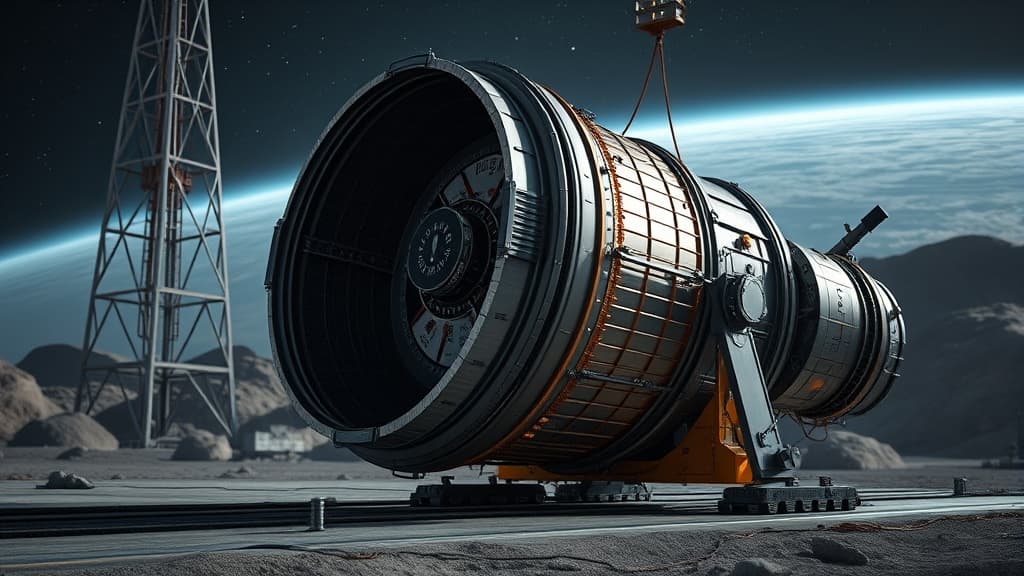
NASA's Nancy Grace Roman Space Telescope, poised for its long-awaited launch, is set to embark on an ambitious mission to explore the cosmos. Scheduled to lift off on August 30, 2026, at 7:26 a.m. EDT from NASA's Kennedy Space Center, the telescope will utilize a SpaceX Falcon Heavy rocket for its journey into space.
This remarkable observatory's primary mission includes discovering thousands of exoplanets while simultaneously conducting extensive studies on dark matter and dark energy, aiming to reshape our understanding of these mysterious elements of the universe.
Key Features of the Roman Space Telescope
- Launch Readiness: Encapsulated in a Falcon Heavy fairing, the telescope is ready for its launch, ensuring protection against extreme conditions during ascent.
- Exoplanet Discovery: Roman aims to detect around 100,000 exoplanets, significantly exceeding the discoveries of all previous missions combined.
- Observation Location: The telescope will operate from the Sun-Earth Lagrange point 2, a stable location ideal for deep-space observations, facilitating consistent data collection.
This innovative design will ensure the Roman Space Telescope can withstand the challenges posed by the launch and initial phases of flight. Positioned strategically, Roman is set to revolutionize our cosmic exploration efforts, offering insights into the formation of planetary systems and the nature of dark energy and matter.