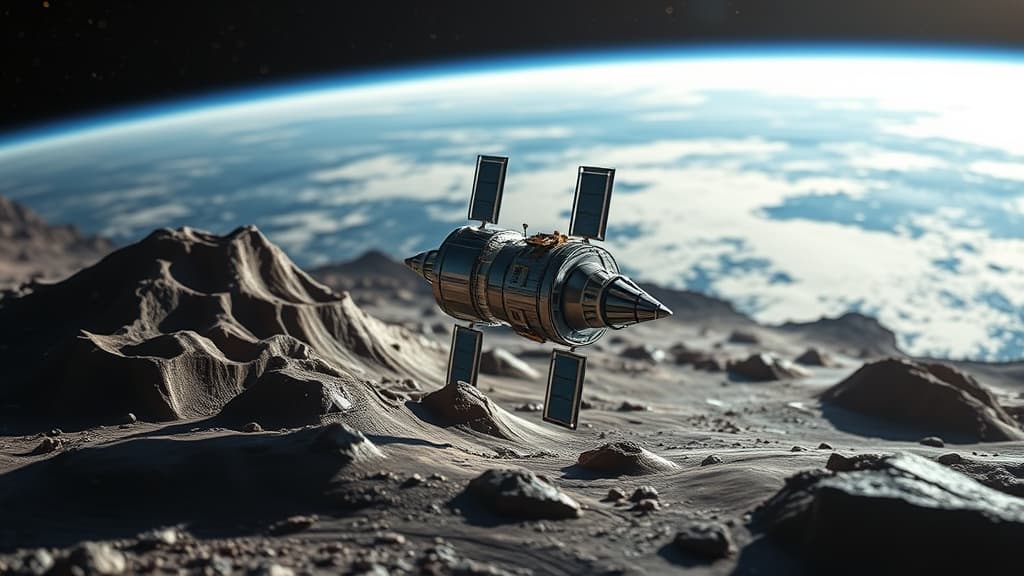
NASA has successfully tested its innovative FALCON technology, which enhances autonomous navigation for spacecraft. This system enables satellites to determine their orbits using nearby objects instead of relying on GPS, an essential capability given the limitations of GPS in deep space.
During a focused three-day testing period, FALCON demonstrated its potential by improving the orbital data of over 200 space objects. The technology relies on onboard cameras to autonomously compare visual data with a catalog maintained by the U.S. Department of War, enabling high-precision navigation.
Key Features of FALCON
- Developed by NASA in collaboration with EraDrive.
- Autonomous navigation using nearby spacecraft and space debris as reference points.
- Enhanced the orbits of 200+ space objects in just three days.
- Critical for future lunar and Martian missions where GPS is weak or absent.
- Future expansion planned in 2026 with connected tracking among four Starling spacecraft.
Why it matters: The ability to navigate in environments where GPS signals are absent is crucial for future space exploration missions, especially those targeting the Moon and Mars. FALCON sets a new standard for autonomous navigation, enabling spacecraft to operate independently and efficiently in space.
The success of the Starling mission, which utilized optical navigation, exemplifies the cutting-edge advancements in spacecraft technology. With plans to expand FALCON's capabilities in 2026, the implications for better collision avoidance and orbit tracking in increasingly crowded orbital environments are significant.