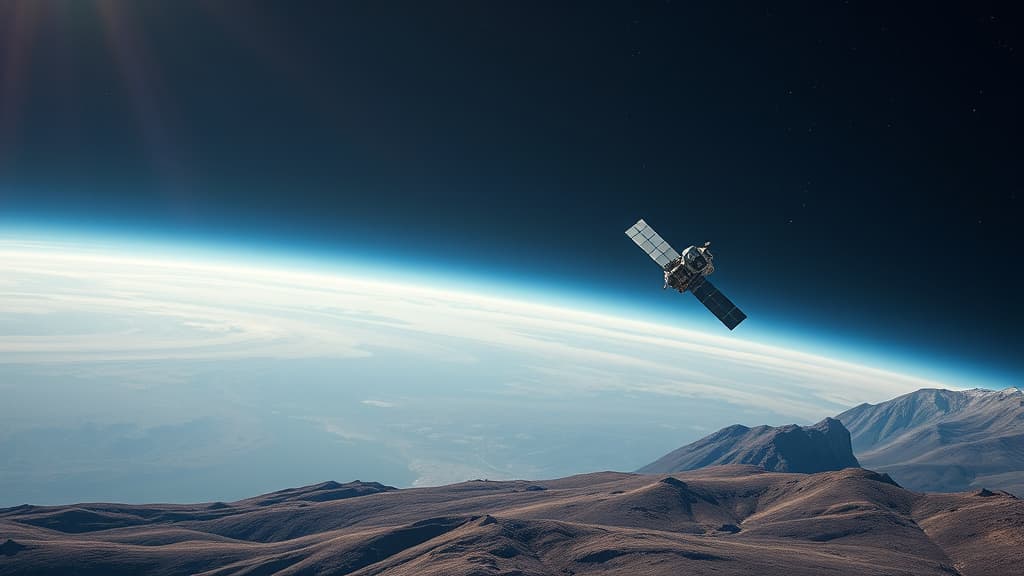
NASA has made a significant leap in satellite navigation technology with the successful testing of its Fast Autonomous Lost-in-space Catalog-based Optical Navigation (FALCON). This breakthrough was showcased during the Starling mission, launched in 2023, demonstrating the ability of satellites to determine their orbits without relying on GPS.
Over the course of just three days, FALCON improved the orbital accuracy of more than 200 space objects. This marks a pivotal advancement in supporting autonomous navigation for future space missions beyond Earth.
Key Features of FALCON
- Autonomous Navigation: FALCON enables satellites to navigate independently, enhancing their self-sufficiency during missions.
- Collaboration: The technology was developed by NASA in partnership with EraDrive, showcasing cooperative innovation in space technology.
- Object Tracking: Utilizing onboard star tracking, FALCON identifies and verifies nearby spacecraft and debris, referencing a catalog of approximately 20,000 objects from the U.S. Department of War.
- Improved Predictions: The system generates superior onboard predictions of the positions of other space objects, bolstering space traffic management and collision avoidance efforts.
- Future Enhancements: Later in 2023, the Starling mission will expand FALCON’s capabilities to allow multiple satellites to share tracking information, refining their collective orbital positions.
This progression in satellite navigation indicates a promising shift toward more autonomous and reliable space operations, essential for addressing the increasing demands of space traffic management in an ever-crowded orbit.