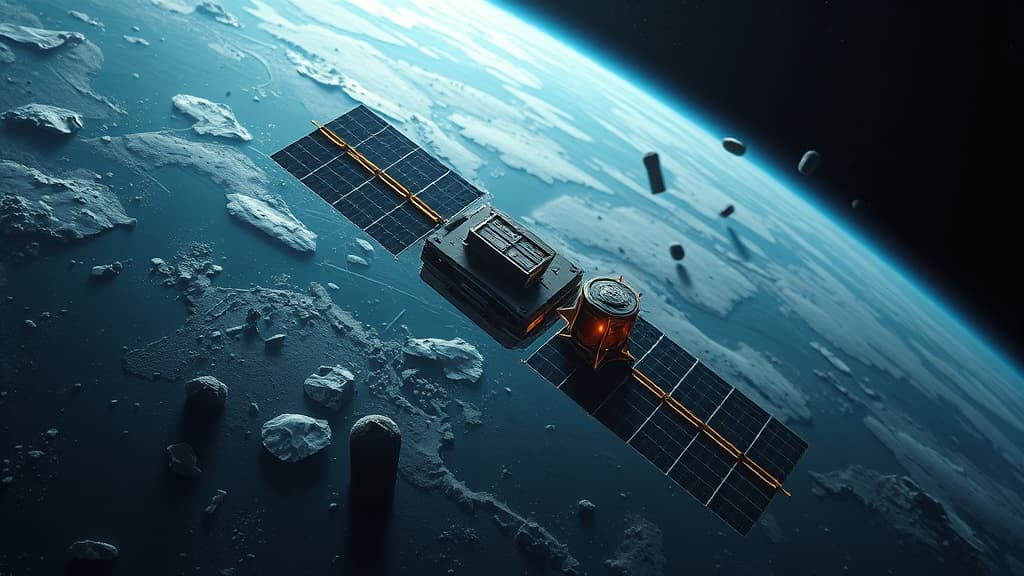
NASA has successfully tested its FALCON (Fast Autonomous Lost-in-space Catalog-based Optical Navigation) system, which enables satellites to navigate autonomously without reliance on GPS. This innovative technology uses nearby spacecraft and orbital debris as navigational landmarks, marking a significant advancement in satellite navigation.
During a rigorous three-day trial, the FALCON system autonomously identified and enhanced the orbits of over 200 space objects. This method shows a marked improvement in precision over existing orbital data maintained by the U.S. Department of War, demonstrating its potential use in future missions where GPS signals may be weak or unavailable.
Key Points
- FALCON shows a revolutionary approach to satellite navigation by employing nearby objects, allowing for precise location tracking.
- The trial leveraged a catalog of approximately 20,000 known space objects, integrating EraDrive's flight software with onboard cameras from the Starling mission.
- This system signifies a major advancement in autonomous navigation techniques, essential for missions to the Moon and Mars.
- The success of the Starling mission highlights NASA's commitment to converting academic research into commercial applications.
This breakthrough could fundamentally alter how satellites locate themselves in orbit, especially in environments lacking sufficient GPS infrastructure. With rising interest in space exploration and increasing satellite congestion, technologies like FALCON play a crucial role in ensuring safe and effective navigation.
As NASA continues to develop these capabilities, the implications for future exploration missions are profound. Autonomous navigation could streamline operations, reduce dependence on ground control, and increase the safety and efficiency of upcoming missions to other planetary bodies.