E-BUZZ ME Logo
ScienceTechnical Deep Dive

mRNA Injection Reduces Chromosome Errors in Older Human Eggs

Published
mRNA Injection Reduces Chromosome Errors in Older Human Eggs
1 min read159 words

The Gist

New research suggests that an mRNA injection can significantly lower the risk of chromosomal abnormalities in eggs from older donors by restoring a critical protein.

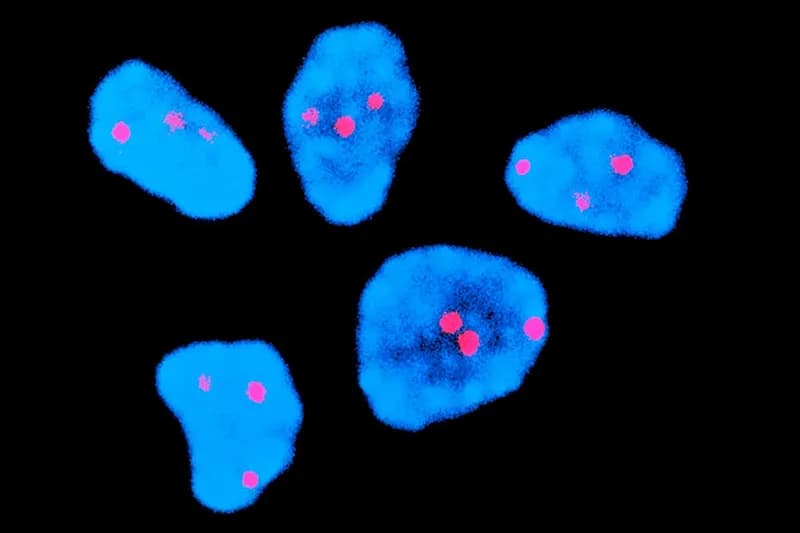
A breakthrough study has identified a potential method to improve the viability of human eggs, particularly those from older individuals. Scientists have discovered that egg cells lacking a specific protein are significantly more likely to develop with an incorrect number of chromosomes, a condition known as aneuploidy which often leads to pregnancy loss or developmental disorders.

Restoring Protein Levels with mRNA

The research demonstrates that by using an mRNA injection, these egg cells can be prompted to produce the missing protein. This intervention effectively halves the risk of chromosome errors, offering a promising new avenue for fertility treatments. The technique targets the cellular machinery responsible for chromosome segregation, which naturally degrades as part of the aging process.

While the study is currently in the experimental phase, it provides a foundational understanding of how molecular interventions could mitigate age-related fertility challenges. Future applications could potentially integrate this mRNA technology into IVF procedures to increase the success rates for older patients.


Related Stories

Semantically matched articles, ranked by topic overlap and freshness.

Breakthrough Fluoride-Free Gel Could Regrow Damaged Tooth Enamel
Science66%

Breakthrough Fluoride-Free Gel Could Regrow Damaged Tooth Enamel

Researchers have developed a protein-inspired gel that mimics natural tooth formation to repair microscopic cracks and rebuild enamel.

Natural Plant Compound Shows Promise in Combating Rheumatoid Arthritis
Science62%

Natural Plant Compound Shows Promise in Combating Rheumatoid Arthritis

Researchers have identified a plant-derived compound that reduces joint damage and rebalances immune activity in animal models, offering a potential new treatment pathway.

Neural Switch Discovered Controlling Bee Colony Labor Division
Science61%

Neural Switch Discovered Controlling Bee Colony Labor Division

Researchers have identified specific brain circuits that dictate the professional roles of honeybees as they age.

Predictable Antarctic Ice Loss Offers Decades for Sea Level Preparation
Science61%

Predictable Antarctic Ice Loss Offers Decades for Sea Level Preparation

New research suggests that Antarctic ice retreat may remain predictable through 2050, giving governments a critical window to implement coastal defenses.

Global Shift to Healthier Diets Could Slash Farm Emissions by 85%
Science60%

Global Shift to Healthier Diets Could Slash Farm Emissions by 85%

A transition toward more nutritious food choices could revolutionize global agriculture and significantly reduce the environmental impact of livestock farming by 2050.

Simple AI Prompt Resolves Decades-Old Mathematical Conjecture
Science59%

Simple AI Prompt Resolves Decades-Old Mathematical Conjecture

For the second time in a week, artificial intelligence has disproved a long-standing mathematical conjecture using surprisingly basic prompts.

Super El Niño Set to Break 150-Year Temperature Records
Science59%

Super El Niño Set to Break 150-Year Temperature Records

A developing 'super' El Niño in the tropical Pacific has a 90 percent chance of becoming the strongest in recorded history, threatening unprecedented global heat.

NASA to Conduct Orbital Rehearsals with SpaceX and Blue Origin Landers
Science59%

NASA to Conduct Orbital Rehearsals with SpaceX and Blue Origin Landers

NASA astronauts will perform critical docking tests with prototype lunar landers from SpaceX and Blue Origin during the Artemis III mission in 2027.