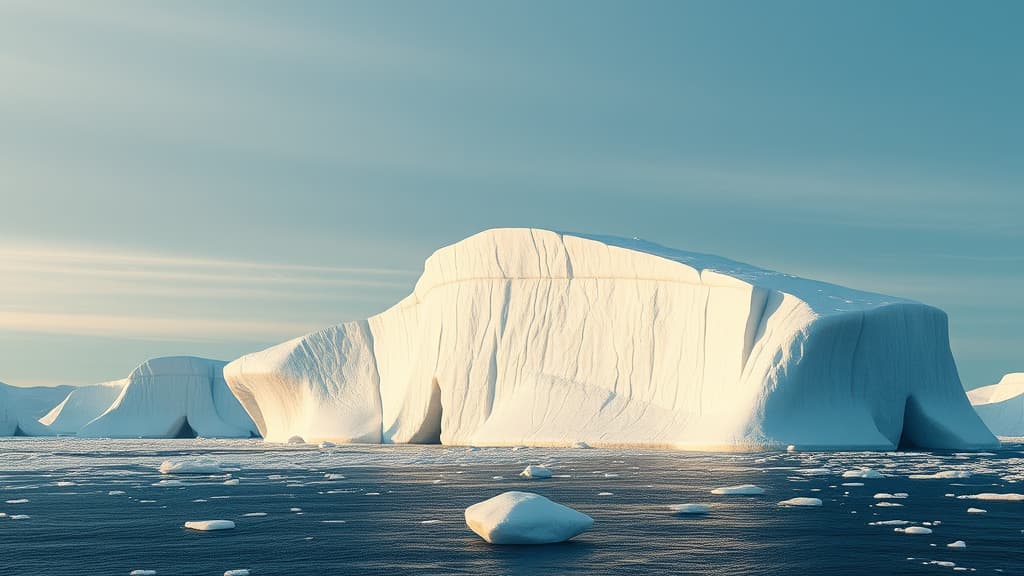
On August 4, 2026, a significant calving event occurred at Greenland's Petermann Glacier, resulting in an ice island 76.4 km² in size, reminiscent of Manhattan. This detachment marks the largest loss of ice from the glacier since 2012, raising alarms among scientists who have been closely monitoring the glacier's health.
The calving event showcased an ice island with a thickness reaching up to 150 meters, providing a rare opportunity for scientific investigation into glacial dynamics. Long-term satellite observations, initiated in 2019, detected expanding fractures in the ice tongue, enabling researchers to anticipate this significant calving.
Key Facts
- The newly detached ice island is roughly the same size as Manhattan.
- Current projections indicate the potential detachment of two additional major sections, totaling approximately 178 km².
- If these sections detach, it will add to a cumulative loss of about 254 km² from Petermann Glacier.
- The Canadian Ice Service is actively monitoring the drifting ice island for possible risks to shipping and offshore operations.
- This event is part of a broader pattern of glacier retreat linked to climate change, prompting ongoing research into Arctic dynamics.
The potential loss of additional ice is concerning, as it could have significant implications for the glacier's stability and the surrounding ecosystem. Scientists emphasize that large ice pieces can fracture further and become difficult to track, posing risks to maritime navigation.
This calving event is not isolated; it fits into a larger trend of glacial retreat driven by rising global temperatures. Continuous research in the Arctic will be essential to better understand these processes and their implications for sea-level rise and climate change impacts globally.