E-BUZZ ME Logo
ScienceTechnical Deep Dive

Massive Cosmic Winds Linked to Galactic Disruption in the Early Universe

Published
Massive Cosmic Winds Linked to Galactic Disruption in the Early Universe
1 min read162 words

The Gist

Astronomers have identified a colossal plume of gas escaping a distant galaxy, suggesting that powerful cosmic winds could halt star formation and dismantle early galactic structures.

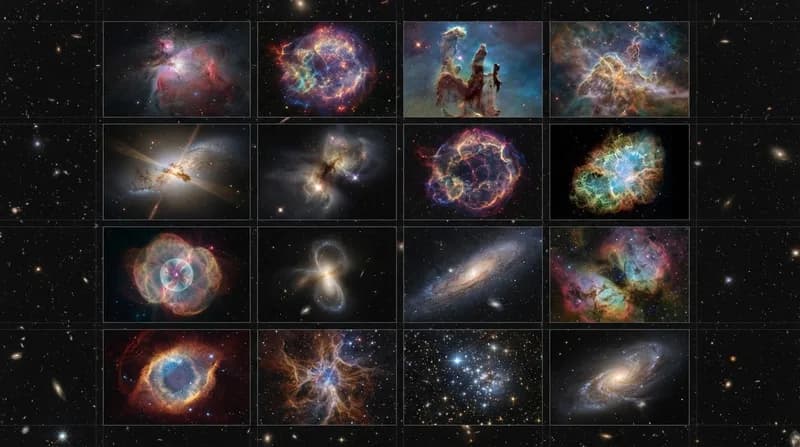
Astronomers have uncovered new evidence regarding the volatile nature of the early universe, identifying a massive plume of gas streaming out of a galaxy during a period of intense star formation. These powerful cosmic winds are believed to be capable of essentially 'starving' a galaxy by ejecting the very material needed to create new stars.

The Impact of Rapid Star Formation

The discovery highlights a critical feedback loop in galactic evolution. As stars form at an accelerated rate, the resulting energy and radiation pressure can trigger immense outflows of gas. This phenomenon, while a natural part of a galaxy's lifecycle, can become so violent that it destroys the structural integrity of the galaxy or prevents future generations of stars from forming.

This observation provides a clearer picture of why some galaxies in the early universe appeared to stop growing abruptly. By studying these high-velocity gas streams, researchers can better understand the balance between gravity and internal pressure that shaped the modern cosmos.


Related Stories

Semantically matched articles, ranked by topic overlap and freshness.

GPS Satellite Network Provides Two Decades of Space Radiation Data
Science70%

GPS Satellite Network Provides Two Decades of Space Radiation Data

A massive cross-calibration effort involving 25 GPS satellites has unlocked twenty years of continuous space radiation tracking.

New Class of Magnons Exhibits Hundred-Fold Increase in Lifespan
Science67%

New Class of Magnons Exhibits Hundred-Fold Increase in Lifespan

A breakthrough discovery of long-lived magnons could pave the way for scalable, nanoscale quantum information technologies on-chip.

The Physics Behind the Snap: Understanding the Venus Flytrap
Science65%

The Physics Behind the Snap: Understanding the Venus Flytrap

New research delves into the complex physics that allows the Venus flytrap to snap shut with incredible speed to capture its prey.

The Future of Open Access: Navigating Structural Challenges and AI Integration
Science65%

The Future of Open Access: Navigating Structural Challenges and AI Integration

As the scientific community pushes for an open-access future, experts warn that systemic issues and the rise of AI must be addressed to ensure sustainability.

John Bell and the Legacy of the Journal 'Physics'
Science65%

John Bell and the Legacy of the Journal 'Physics'

A look back at the short-lived journal where John Bell published his ground-breaking theorem, forever changing our understanding of quantum mechanics.

NASA’s Deep Space Network Threatened by Wildfire
Science61%

NASA’s Deep Space Network Threatened by Wildfire

One of the three critical communication stations enabling NASA to talk to deep space missions is currently facing a direct threat from an active wildfire.

China’s Tianwen-1 Orbiter Captures Rare Footage of Interstellar Comet 3I/ATLAS
Science60%

China’s Tianwen-1 Orbiter Captures Rare Footage of Interstellar Comet 3I/ATLAS

The Tianwen-1 Mars orbiter has successfully imaged the interstellar visitor 3I/ATLAS, providing a rare look at material originating from outside our solar system.

New Giant Salamander Species Identified from 3.5-Million-Year-Old Japanese Fossils
Science58%

New Giant Salamander Species Identified from 3.5-Million-Year-Old Japanese Fossils

Researchers have identified a new genus and species of giant salamander, Limnospondylus ajimuensis, from fossils originally discovered over two decades ago.